


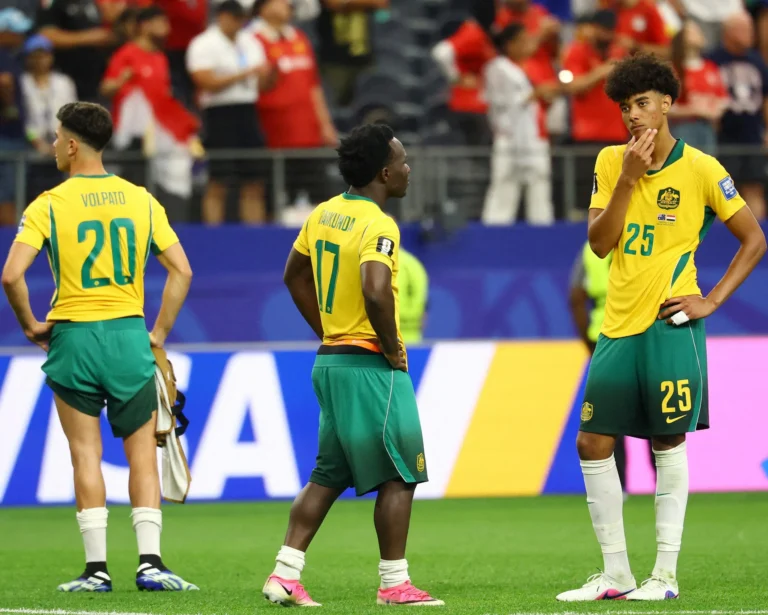

Lucas Herrington, at just 18 years old, found himself at the center of a heartbreaking defeat for the Socceroos. As the youngest player ever to start for Australia in a World Cup, he now bears the weight of a significant loss in the nation’s football history.
His penalty miss, a side-footed attempt that struck the crossbar, marked the beginning of a painful chapter. Afterward, Awer Mabil approached him, recognizing the emotional burden that would linger. Following Egypt’s swift conclusion to the shootout, Herrington turned away from the crossbar that betrayed him, running his hand through his curly hair in despair.
Overcome with emotion, he bent over, clearly affected by the moment. Jackson Irvine’s approach indicated a raw sense of shared anguish. Soon, Nestory Irakunda, significantly shorter in stature, wrapped his arms around Herrington. Both players represent the future of Australian football, yet they were unable to escape the sting of the present.
Australia now faces a prolonged wait for another opportunity to secure a World Cup knockout round victory, with doubts lingering about when they might face a similar chance again.
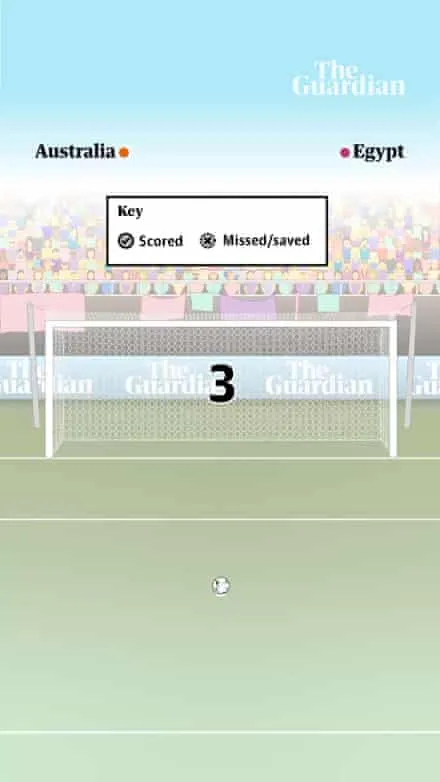
However, Herrington wasn’t the only player wishing for a do-over on the shootout. Harry Souttar was the first to step up, visibly fatigued after a grueling 120 minutes, only to see his penalty sail over the bar, handing Egypt the upper hand.
Even coach Tony Popovic’s last-minute decision to substitute in captain Maty Ryan could not turn the tide, as Egypt converted all four of their penalty attempts, concluding the shootout prematurely.
With three hours of tournament play yielding no goals and trailing 1-0 at halftime, the Socceroos entered the break with spirits at an all-time low. This sense of defeat deepened when Jordy Bos, attempting to put weight on his injured knee, struggled to walk. Aside from a few half-chances, Australia found it nearly impossible to break through Egypt’s tightly organized defense during a first half characterized by tactical exchanges and evasive maneuvers.
The initial optimism displayed by the Australians—highlighted by Cristian Volpato’s near-miss that struck the crossbar and Bos’s aggressive run into the box—was quickly dashed by the game’s opening goal. A breakdown in their defensive press allowed Egypt to exploit the right flank, leading to a foul by Jackson Irvine on Ziko in a key moment.
Emam Ashour’s free-kick was blocked by Irvine, but the ball rebounded to the unmarked Egypt No. 8 at the back post, who headed it in, reminding the Socceroos of Egypt’s striking prowess and placing them at a disadvantage.
After Bos was replaced in the second half, Kai Trewin made his World Cup debut at right-back. His entrance was almost disastrous, as the opening moments of the second half nearly sealed Australia’s fate.
However, the Socceroos managed to steady themselves and accomplished something they hadn’t done throughout the tournament: they scored after going behind. Officially credited as an own goal by Mohamed Hany, the score was nevertheless a testament to Aiden O’Neill’s beautiful looping cross from the left side.
Surrounded by 24,000 empty parking spaces, this stadium in Arlington serves as a shrine to American sports, now embracing soccer. Yet, this match did little to convert skeptics. The game was marred by delays, prompting some to suggest that additional advertising breaks would have been welcome. After 100 minutes of play, the teams had managed just four shots on goal combined.
For fans of both Australia and Egypt, the match was filled with tension as the score remained tied at 1-1. Crosses were sent in and desperately defended. By Patrick Beach’s punch and the resolute Egyptian defense, the damage was contained despite their physical limitations.
In the final minutes of regular time, Mo Salah finally made his presence felt, delivering a cross to Ramy Rabia, who seemed poised to score until Beach made a crucial save. Salah himself had a chance shortly after, before setting up a final opportunity that Souttar blocked, preventing a certain goal.
Concerns about Salah’s fitness were allayed by his vigorous play during that sequence, and his smile at Souttar during the coin toss for extra time indicated his readiness. However, even Salah displayed fallibility, misfiring a shot early in extra time.
As the clock wound down, neither team could find a breakthrough, even as Egypt relentlessly attacked the Australian goal. Both were on the brink of making history in their pursuit of a first knockout victory, but the shootout would only grant that honor to one.
- World Cup 2026
- Australia national football team – Socceroos
- Egypt football team
- World Cup
- Australia sport
- analysis