


Approximately 25 years ago, I found myself at a sports newspaper in Bucharest, spending a Saturday afternoon with local journalists following the Premier League matches. With just five minutes remaining, Chelsea was behind 2-1. One of the reporters, having bet on Chelsea to lose, waved his betting slip in the air. Chelsea managed to score, and soon after, they netted another goal. The reporter discarded his slip in frustration. While I witnessed a dramatic turnaround, the Romanians interpreted it as evidence of a fix.
This highlights the critical importance of integrity and the perception of it within sports. I firmly believe that particular match was not rigged; there is no proof to suggest otherwise. Considering the hefty salaries players earn and the advanced systems in place to detect unusual betting patterns, it is highly unlikely that Premier League matches are manipulated. However, for those who grew up during the decline of the Ceaușescu regime or the chaotic aftermath that followed, when match-fixing was an open secret, skepticism is an instinctive reaction.
This skepticism can be detrimental. The unpredictability of sports is what makes them truly captivating. Unexpected occurrences can unfold, such as a team scoring two quick goals, a player executing a brilliant play, or a referee making a baffling call. Football, being a low-scoring game, is often less predictable than other sports; it allows a weaker side to defend for the full 90 minutes, hoping to clinch victory through a counterattack or set piece. A team can dominate with 30 shots while their opponent manages only one, yet still lose. Miracles happen, incredible resilience is demonstrated, and unforgettable climaxes unfold. This authenticity lends significance to the sport.
When outcomes are scripted, the excitement vanishes. Imagine a new play where Dan Burn heads the ball multiple times, leading England to a 3-2 victory at the Azteca despite a red card? Dull. A new novel where a slowly gaining respect USA team finds itself loathed due to its president’s decisions and suffers a limp defeat against Belgium? Dull. A new film where Argentina falls behind 2-0 to Egypt, faces questionable refereeing, and then Messi performs a stunning feat to secure victory? Dull. But if these events occur in reality, they become the finest drama imaginable.
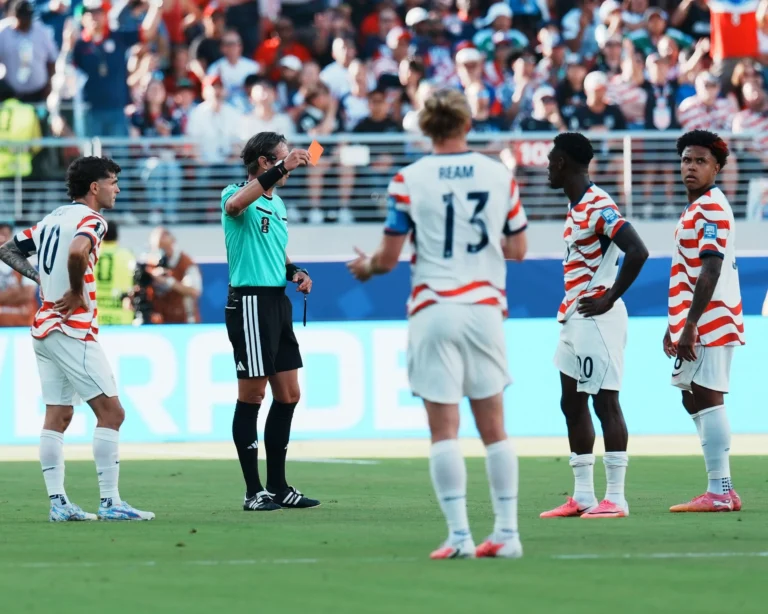
That is precisely why Gianni Infantino’s decision to suspend Folarin Balogun’s ban is so perilous. Undermining the sport’s credibility risks its very existence.
This World Cup has unfolded in an unusual manner. The seeding of the four top teams created a more equitable draw than has been typical, yet the absence of genuine surprises stands out. Major teams have struggled to secure victories, and apart from Paraguay’s penalty shootout win against Germany, the only notable upset was Norway’s unexpected triumph over Brazil—an outcome surprising mainly in relation to the world rankings, rather than the performances of either team over the past year.
This lack of upsets has resulted in a captivating group of quarter-finalists: renowned teams, big names, and Switzerland. If one were handpicking candidates, including Colombia and Senegal for geographical variety and fan support would have been ideal (although Senegalese fans in their vibrant red, yellow, and green outfits would be an immigration dream beyond US regulations). Nonetheless, the actual list closely resembles what one would have envisioned.
The race for the Golden Boot has become a marketer’s fantasy. The favorites continually find themselves on the edge yet manage to advance, presenting an ideal scenario (while it would have been entertaining, teams like the Democratic Republic of the Congo, Cape Verde, or Egypt would not attract nearly as large TV audiences as England or Argentina).
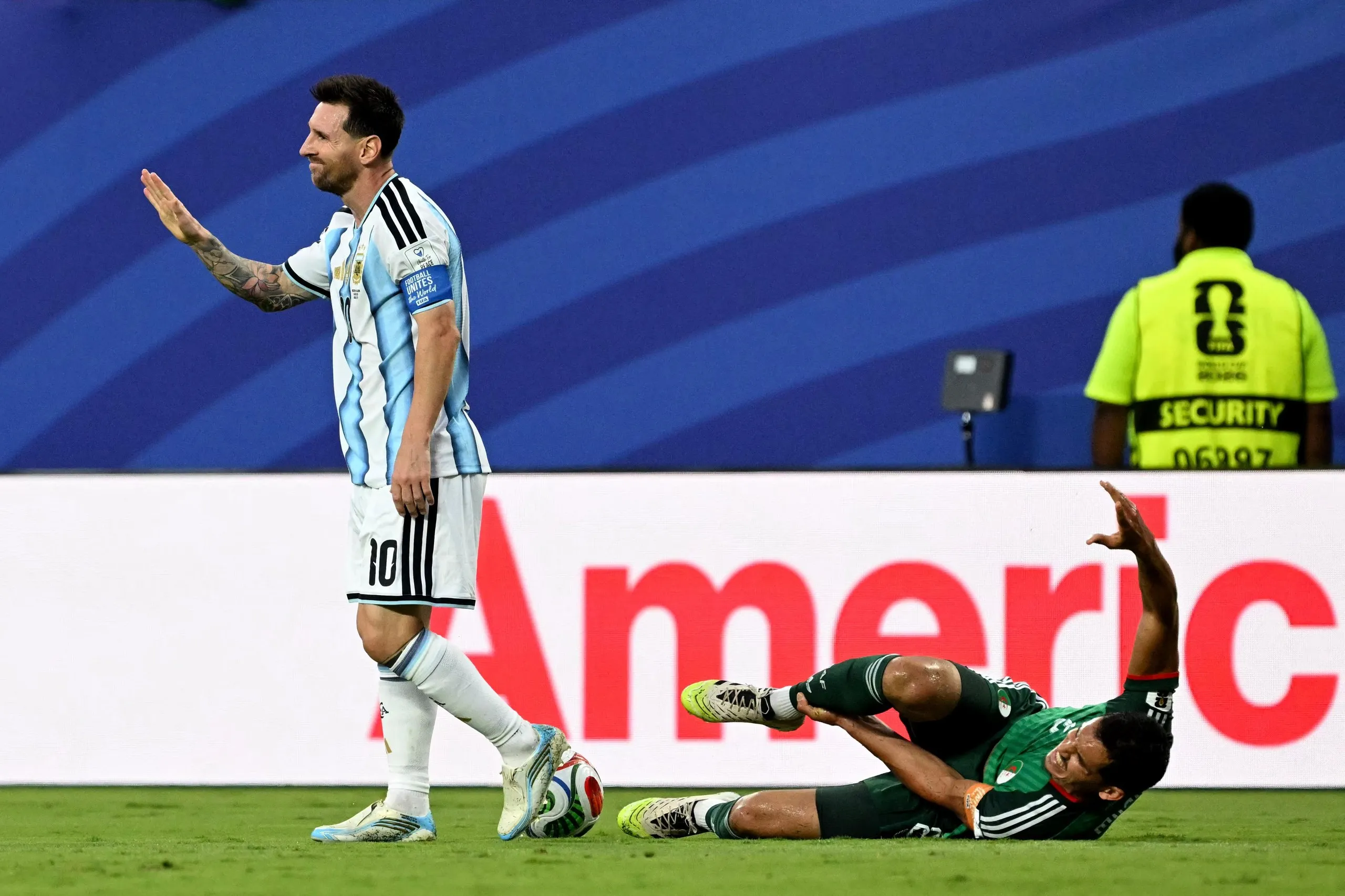
However, doubts are beginning to surface. What if the financial interests are favoring the bigger teams? Should Messi have received a red card for his tackle on Algeria’s Aissa Mandi? (And if that had happened, would the subsequent suspension have been overturned as Balogun’s was?) Was the penalty awarded to Argentina against Austria truly a glaring error that warranted VAR intervention? Did Alexis Mac Allister commit a foul in the buildup to Messi’s goal during that match? Why was an Egyptian goal disallowed for a foul while Argentina’s winning goal was accepted?
The officiating throughout the tournament has been inconsistent; while much of it has been satisfactory, there have been instances—particularly during France’s victory over Paraguay—where attempts to let the game flow have legitimized blatant foul play. Similarly, efforts to curb simulation have resulted in clear infringements being overlooked. VAR has also been erratic, at times excessively lenient and at other times overly nitpicky.
Perhaps this inconsistency is simply a reflection of human imperfection. Refereeing is a challenging task, and establishing a uniform standard for 52 referees from around the globe is no easy feat. Fan conspiracy theories regarding officiating are among the most tiresome aspects of contemporary football, often rooted in their team’s unfavorable 50-50 decisions and exacerbated by VAR. This has fostered an environment where perfection is expected, leaving no room for human error or even ambiguity. Typically, such theories can be easily dismissed.
However, when the president of the United States boasts about persuading Infantino to suspend Balogun’s ban, suspicions arise. Had there been a formal appeals process concluding that his red card was mistakenly issued, few would have objected. But the absence of such a process made justice appear capricious. FIFA appeared to adjust regulations to favor the USA. What are we to make of Infantino’s unusual response to Cape Verde’s second equalizer against Argentina? What about the perception that many marginal calls have favored Argentina?
Initially, the outburst from Egypt’s manager, Hossam Hassan, regarding the necessity of keeping Messi in the tournament could have been dismissed as the bitter musings of a disgruntled man. However, one must recall that FIFA manipulated the qualifying process for the Club World Cup to ensure Inter Miami and Messi’s participation, and that FIFA suspended two of Cristiano Ronaldo’s three-game ban for his red card in qualifying to allow him to play in every group stage match (after which they had to declare an amnesty for three other suspended players).
FIFA prioritizes the involvement of star players. What if the desire for entertainment and the relentless pursuit of growth have eclipsed genuine sporting concerns?
This is the precarious situation Infantino finds himself in. Football only holds significance when it is credible: without faith, the game is meaningless. Marketing must never overshadow the integrity of the sport. Once the perception of integrity is compromised, doubts will persist—as they did for Romanians at the turn of the millennium. If those doubts linger too long, the sport could be doomed.
- World Cup 2026
- Inside football
- World Cup
- Gianni Infantino
- FIFA
- Football politics
- Commentary