


World Cup matches carry immense significance. England has participated in just 79 finals matches over the 76 years since their inaugural entry, a number that reflects slightly more than two full Premier League seasons. The magnitude of these games is evident as over 17 million viewers in the UK tuned in to witness Saturday’s victory over Norway, despite the late hour of the match’s conclusion. In many nations, World Cup encounters are scrutinized and analyzed more than any other sporting event, becoming pivotal moments that unite countless fans in anticipation, anguish, joy, and sorrow. They are woven into the cultural fabric.
Memorable moments from these games become reference points. References to matches from decades past are made with the expectation that they will resonate. This phenomenon creates a peculiar distortion; far more weight is attributed to individual games than would typically occur in league play. For instance, Senne Lammens’s blunder that led to Belgium’s defeat against Spain in the quarter-finals drew an audience far exceeding that of a typical Manchester United match. Unlike regular league fixtures, there won’t be another game in a few days to overshadow Lammens’s mistake, which will remain a part of his narrative, even if he achieves redemption in future tournaments.
The rarity of these games contributes to their significance. Each encounter holds considerable weight, underscoring the importance of resisting proposals to hold the World Cup every two years, which would dilute its impact. Familiarity with the tournament’s history intensifies the psychological stakes, meaning every nation is, in some way, contending with the ghosts of its past. The psychological aspect is more pronounced in World Cup football than in any other format.
Historical Context for Spain and France
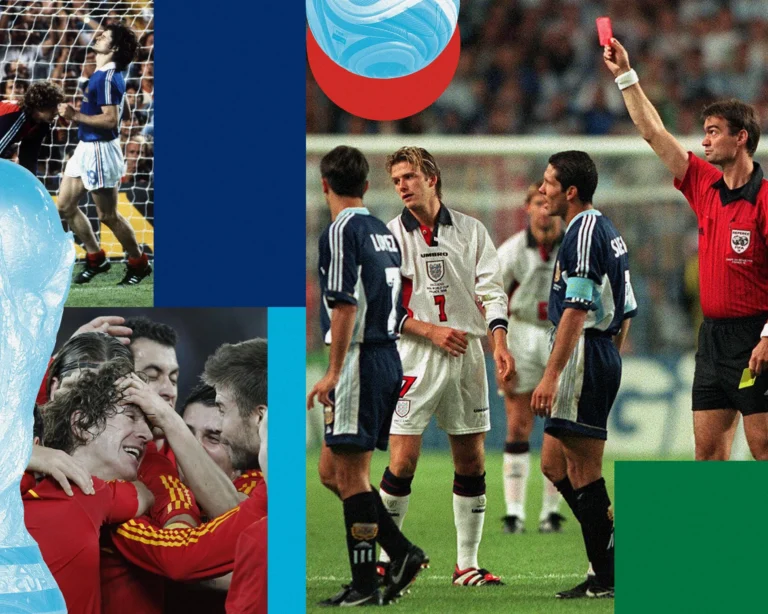
Spain has only reached one World Cup semi-final previously, triumphing 1-0 against Germany in 2010. This match showcased their hallmark control, culminating in Carles Puyol’s 73rd-minute header. This victory marked a turning point in their history of underachievement, especially prior to their Euro 2008 success. They have reached the semi-finals of the Euros six times, winning five. While they are strong in the latter stages of tournaments, they lost their only major final in 1984 to France, their opponents in the upcoming semi-final. Additionally, they faced France in the memorable Euro 2000 quarter-final, where Raúl’s missed penalty could have equalized the score.
France carries its own burdens from history, particularly in semi-finals. The infamous 1982 match in Seville stands as one of the darkest days in French football. With the score tied at 1-1 and an hour played, substitute Patrick Battiston suffered a brutal, unpunished challenge from West Germany’s goalkeeper, Toni Schumacher, resulting in severe injuries. Despite leading 3-1 in extra time, France ultimately lost in the first penalty shootout in World Cup history after West Germany rallied to equalize. They faced a similar fate against West Germany in the semi-finals four years later. Although three consecutive semi-final victories might have eased some anxieties, the nature of such demons can resurface unexpectedly.
England and Argentina’s Historic Rivalry
The shared history between England and Argentina is far richer. Memorable moments include Bobby Charlton’s goal in 1962, Antonio Rattín’s sending off in 1966, Diego Maradona’s infamous