


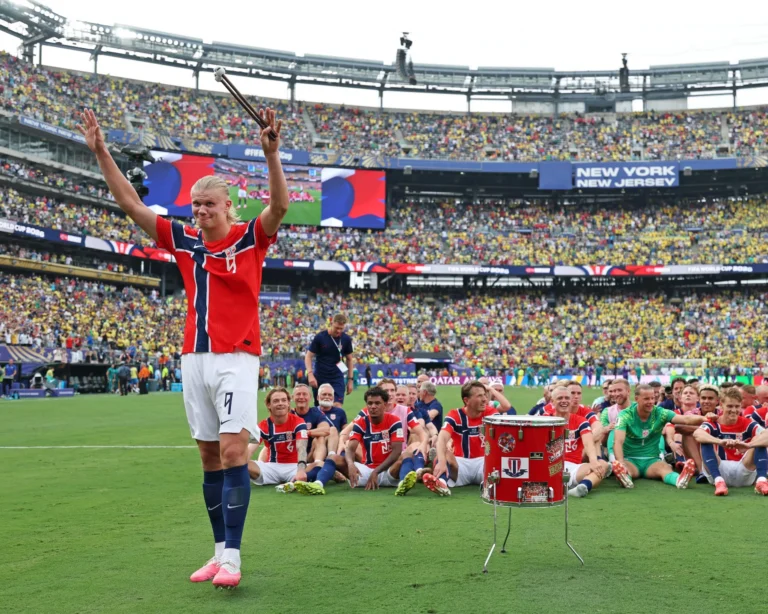
As the final whistle blew, the reality seemed surreal. A nation of just 5.5 million people, returning to the World Cup stage after a 28-year absence, had triumphed over five-time champions Brazil to secure a place in the quarter-finals.
In Norway’s match against Brazil, the contrast between the nimble Vinícius Júnior and the powerful Erling Haaland was evident. However, the different upbringings of these players tell a more compelling story. While Neymar, Matheus Cunha, and Vinícius were nurtured in a system focused on identifying young talent and fast-tracking them through single-sport academies, Haaland, Martin Ødegaard, and Antonio Nusa experienced a markedly different approach.
This shift in perspective was established in 2007 when the Norges idrettsforbund (NIF), Norway’s sports governing body, updated the eight “To enjoy football and make it the thing you like to do most in life,” originally outlined in 1987 to ensure that every child participating in sports enjoyed safety, participation, and fun. These regulations, which are mandatory for all NIF-registered coaches and clubs, stand in stark contrast to the talent-centric culture prevalent in much of global sports.
Children under nine in Norway engage solely in local club matches, with no results, league standings, or trophies. Competitive play begins at age 11, but rankings and scores remain undisclosed. It isn’t until the age of 13 that young athletes can participate in events resembling national championships.
Among the eight rights, two notably counter the prevailing trend of aggressive sports parenting: the rights to mastery and to choose. This philosophy allows children the opportunity to explore various sports rather than being pushed into one discipline prematurely. For talented youths, this broad exposure enhances the skill set they bring to the sport they ultimately select.
Haaland, the most renowned product of this framework, was only six years old when the changes were implemented. His father, Alf-Inge, shared with Manchester City’s website that Erling spent the next eight years participating in handball, athletics, cross-country skiing, and football. It is said that Norway’s handball community sought him before he ultimately chose football at the age of 14.
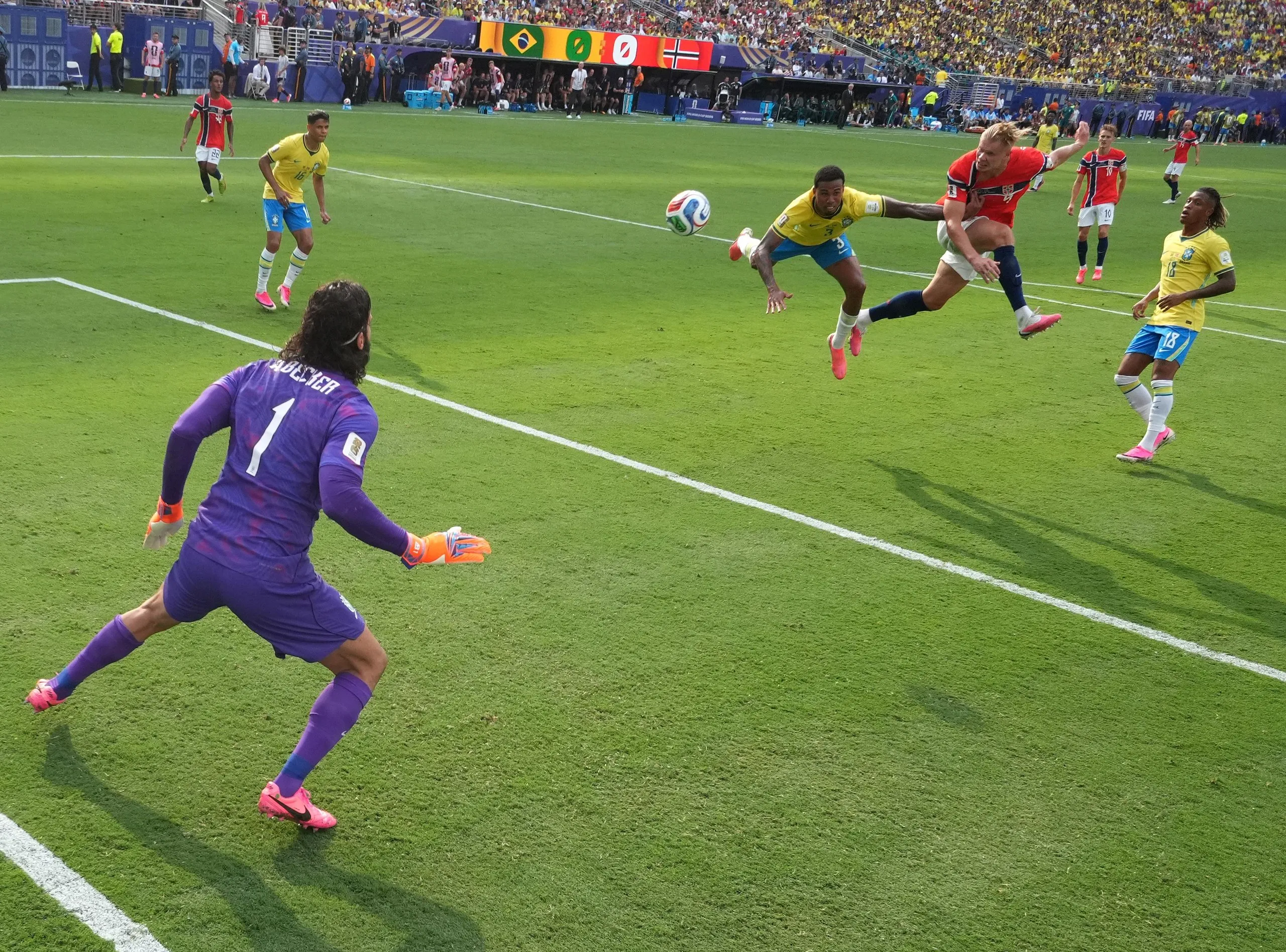
When observing his goals, one can see the influence of his diverse background: a leap for a header reminiscent of the dynamic jumps made in handball, combined with the powerful, measured strikes of someone who learned to harness force efficiently, much like a skier navigating a challenging slope. Although football training has been crucial, the skills developed through other sports remain a vital aspect of his game.
Teammate Alexander Sørloth also represents this multifaceted upbringing, having spent his childhood in Trondheim immersed in football, handball, and speed skating. Like Haaland, he comes from a family of athletes, with a father who played for Norway in the 1994 World Cup and a mother who was a handball competitor. These two imposing forwards transitioned to football only after years of honing their athletic abilities across multiple sports.
Norway’s goalkeeper, Ørjan Håskjold Nyland, was 17 when these rules were enacted and thus not shaped by them. Nevertheless, he exemplifies how such an approach can foster natural instincts. Before focusing on football, he also engaged in handball and alpine skiing.
Nyland’s background perhaps became evident during the match against Brazil. His lateral agility, akin to that of a skier, enabled him to save a penalty, and a crucial deflection from Kristoffer Ajer was expertly handled with the type of acrobatic movement typical of a handball player.
This situation illustrates the advantages of cultivating patience in childhood sports rather than fostering a sense of urgency. Norway has a track record of success; they topped the Winter Olympics medal table for the fourth consecutive Games in February, claiming a record 18 gold medals and surpassing nations 60 times their size.
While many countries adopt Brazil’s model of early talent identification, which has yielded exquisite football, Norway’s achievements prompt a reevaluation of the benefits of allowing children to choose their paths. Legislating patience may be uncommon, but the rarity of winning while doing so is even more striking.
The eight rights were not crafted to secure World Cup victories; they exist to ensure that children can participate in sports without the fear of embarrassment. The essence of these regulations allows a young talent to enjoy being just a child, despite their skills. The football world may remember this team’s victory, but it is the joy that these laws were designed to uphold that truly matters.
“The most important thing is, don’t put too much pressure on the kids.” reflected Erik Thorstvedt, former Norway and Tottenham goalkeeper. “The most important thing is, don’t put too much pressure on the kids.”
Following the final whistle against Brazil, Norwegian fans erupted into a Viking chant, a slow rhythm that builds into a thunderous roar. While it could be interpreted as mere tribal expression, it takes on deeper meaning knowing the upbringing of this team: a supportive sound reminiscent of parents who allow their children to explore sports at their own pace, cheering them on every weekend.
On Saturday, Norway will face England, a nation renowned for its academy success stories, aiming to create history once more by reaching the semi-finals. Their narrative can be viewed solely through the lens of football, as an underdog team that overcame the odds. However, there is a more profound, nuanced tale. It is a story of a small nation that chose to let its children experience the joy of play, to explore different sports freely, and to truly enjoy their pursuits. The fact that they managed to defeat Brazil is almost secondary to the broader achievement: an entire nation had the chance to witness its children soar on the field.