


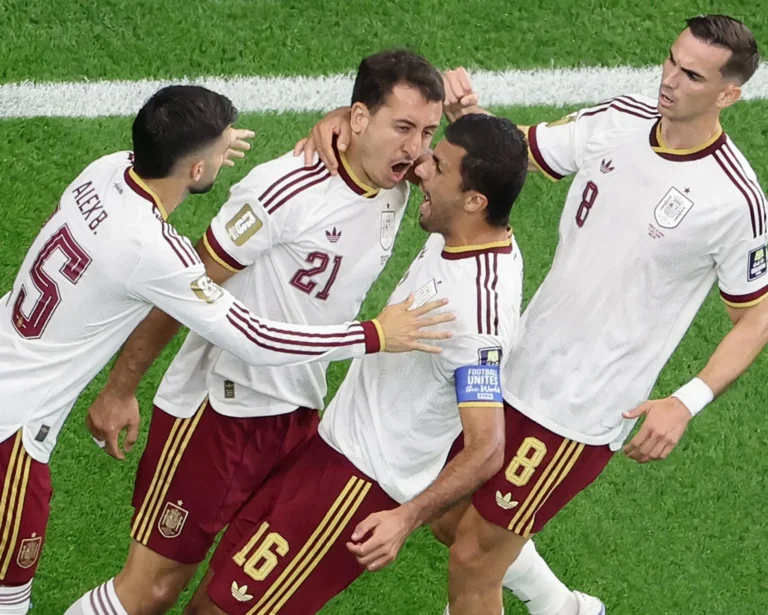
As the World Cup unfolded in North America, the spotlight inevitably shone on its star players, especially with the final taking place in a major media hub.
Fox’s coverage often portrays each match as a showdown between individual superstars rather than a collective team effort over the course of 90 minutes. One semi-final was marketed as MESSI versus KANE (or MESSI against BELLINGHAM, depending on the network). The other semi-final hinged on hopes that Lamine Yamal’s hamstring would finally be fully healed after his injury in April. The matchup of MBAPPÉ versus 600 PASSES PER GAME lacked the same punch.
Despite being the reigning champions of Europe, Spain has not captured the same enthusiasm during their journey to a second World Cup final as their rivals. Doubts lingered about their ability to compete with France, with some online critics labeling Luis de la Fuente’s squad as dull.
There was no dramatic scene of Spain’s coach rallying the 70,176 fans in Dallas with cries of whether they were entertained. Winning the tournament remains their ultimate goal, and while some viewers may find Spain’s style less thrilling compared to their more frenetic counterparts, as France discovered on Tuesday, their method can be deadly when executed correctly.
At Euro 2024, De la Fuente’s team adopted a similar approach, clinching their fourth continental title. They aimed to dominate opponents by forcing them to endure without the ball. Rodri bolstered his Ballon d’Or candidacy by anchoring the midfield, allowing his teammates to engage more offensively through his skilled defensive coverage. Álvaro Morata silenced his critics by capitalizing on opportunities, proving to be the focal point needed to unlock Spain’s potential. On the flanks were two of the world’s most elusive young wingers: Nico Williams on one side and Lamine Yamal on the other.
Most of these key players returned for the World Cup. Unai Simón, from the back, has confidently ventured out of his box as the team positioned themselves higher up the pitch. Rodri has shown exceptional form this summer, a welcome sight following an injury-plagued 2025-26 season after an anterior cruciate ligament tear. Fabián Ruiz has emerged as a competent partner in a double-pivot role, effectively distributing the ball to the flanks when opportunities arise.
Nevertheless, significant attention has focused on Spain’s struggle to convert their impressive team play into goals. Both Lamine Yamal and Williams returned from spring injuries; Williams has logged only 98 minutes across seven matches, and Lamine Yamal hasn’t yet reached his peak form. Morata’s absence from the World Cup squad was due to a dip in form with Como. Consequently, Spain’s intricate buildup has too frequently faltered in the final third.
Spain’s system of play appears less glamorous without a commanding striker. Much like the music of Queen without Freddie Mercury or U2 without Bono, even the finest rhythms can fade into the background without a captivating presence. A fully fit Lamine Yamal could have filled that role, yet this tournament has been characterized by the dominance of strikers and goalkeepers rather than inverted wingers who have thrived in recent Champions League and Premier League seasons.
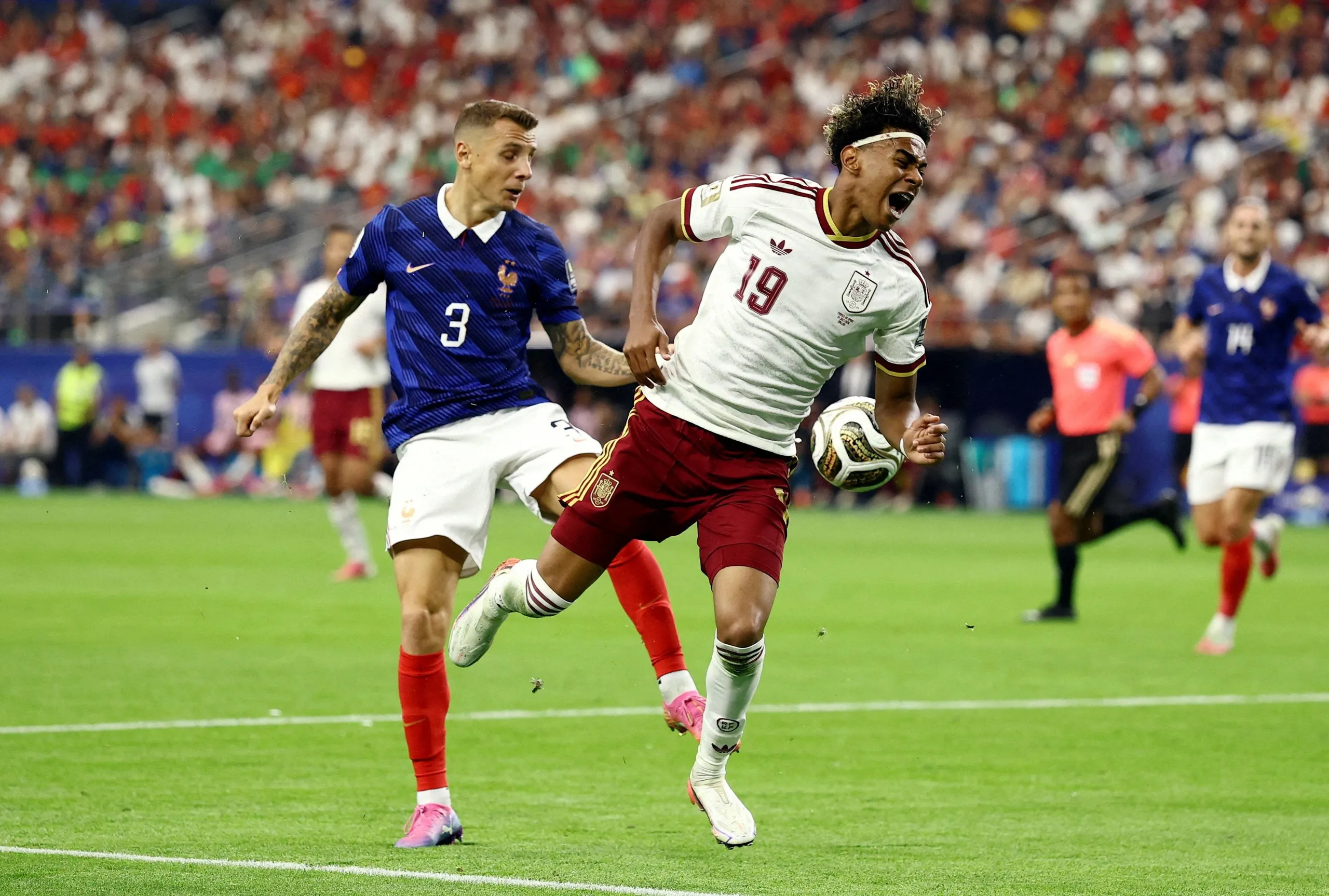
However, Lamine Yamal did make a vital contribution in the match against France. Attackers are always on the lookout for defenders who overcommit and fail to track plays, as Mathys Tel discovered in May. As Lucas Digne prepared to execute a side-volley clearance, he inadvertently opened a door for Lamine Yamal to exploit off the ball. Although Yamal does not receive an assist for the penalty he drew, his effort generated a 0.78-xG opportunity in a tightly contested match.
From that point, Spain’s control and precise execution proved too much for France’s unpredictable style. Except for their game against Paraguay, a team regarded as less talented on paper, France managed to navigate through less organized opponents. Their effectiveness against these teams had established them as tournament favorites, despite their relatively easy path to the quarter-finals. Morocco was anticipated to provide a real challenge but arrived in Foxborough looking disoriented and without a plan.
In contrast, Spain exhibited no such timidity, having previously defeated France at the same stage of Euro 2024 and during the 2025 UEFA Nations League. Few national teams possess the cohesion of Spain, with many players having developed their skills in the post-Guardiola era. This is the football they aspired to play, the matches they envisioned winning. And through an exceptional commitment to their defensive duties, they managed to stifle a France team that had previously been prolific in front of goal.
Of course, the case for De la Fuente’s pragmatic style weakens if Spain fails to capitalize on the fortune they created. If Lamine Yamal hadn’t drawn that penalty, France would have been less pressured before halftime. If Olmo had failed to deliver that perfect ball into Pedro Porro’s path while under pressure, Spain wouldn’t have enjoyed a two-goal advantage. The worst-case scenario unfolded in their draw against Cape Verde, yet De la Fuente remained steadfast in his principles. After all, a team as capable as Spain can often find a breakthrough if they remain unified.
Spain’s approach is designed to make opponents uncomfortable if they are not performing at their best. This strategy can be effective against any team on the international stage, even—especially—against formidable opponents like France.
- World Cup 2026
- Spain
- France
- World Cup
- analysis