


“Enn-JOYYY this unforrrgGEDDABLE Fifa Worrrld Cup … expPERRIENCE!!”
the oddly earnest American-accented public address system proclaimed, with 40 minutes still remaining before the postponed kick-off in Mexico City.
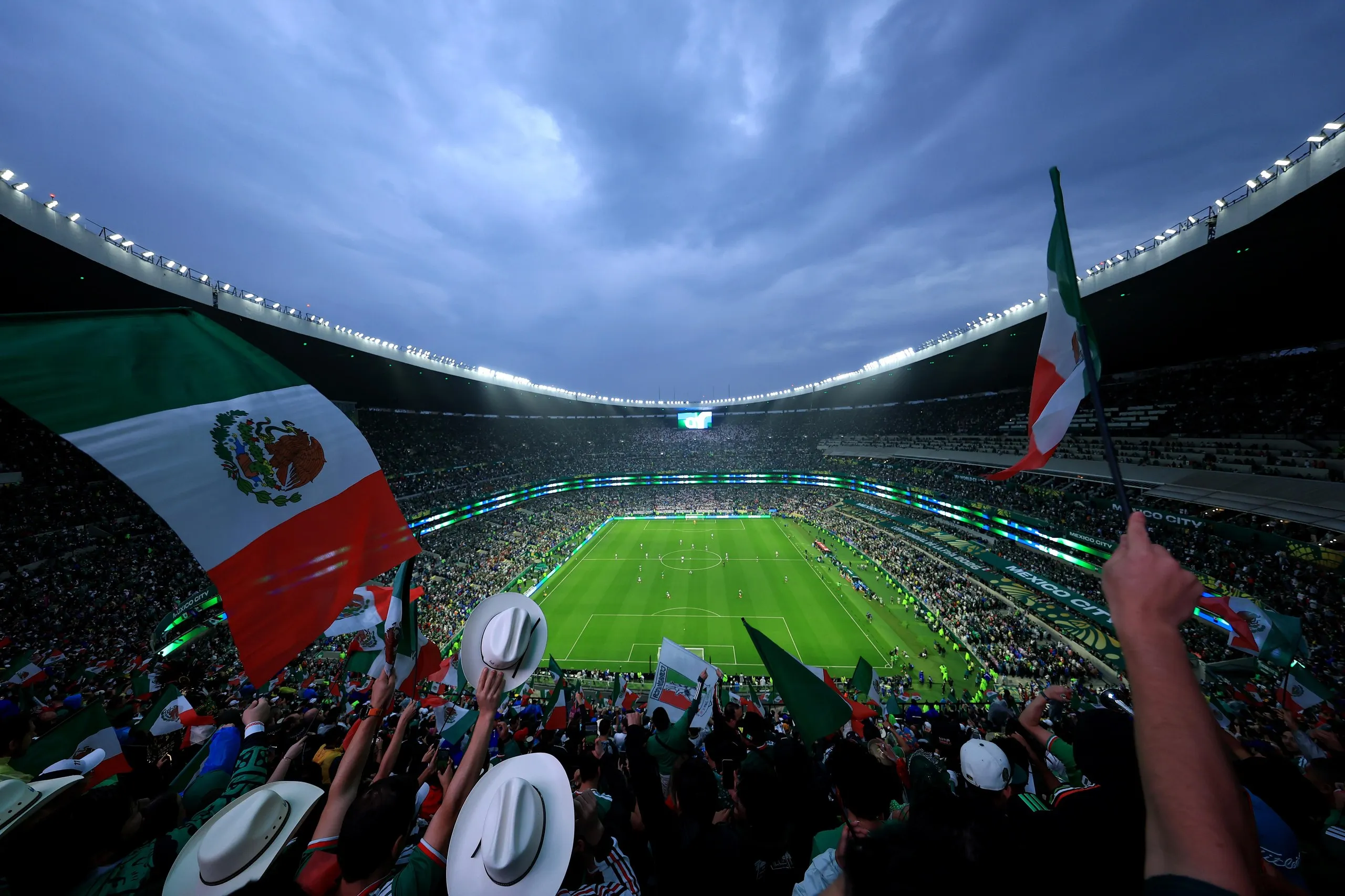
Looking out over the fog-laden cliff face of the Estadio Azteca, soaked to the core in generational rain, and overwhelmed by the relentless waves of noise, it was hard to find a word that encapsulated the experience of enjoyment.
England faced not just a football match but an event that loomed large here. The conventional wisdom advises against letting the occasion dictate play, yet in the Azteca, where history and atmosphere collide, the only alternative to engaging with the spectacle was opting out entirely.
This contest unfolded into an extraordinary and torturous spectacle—an embodiment of mind, body, and spirit. England didn’t just overcome the Mexican national team during the 90 minutes plus an eternity of stoppage time; they battled against an event, its symbolism, and the many ghosts it conjured.
With the team reduced to 10 men and under the relentless pressure from the charged Azteca crowd, England players delved deep into their reserves. The match felt at times like a surreal encounter, as if watching Colonel Kurtz engage in a high-stakes, full-contact death-match ping-pong.
Now, England turns its focus to Miami, where they will face Norway on Saturday for a chance to reach the World Cup semi-finals, marking what stands as their most significant overseas knockout victory in the tournament’s history.
Playing nearly 50 minutes with a man down against the host nation in their own fortress, England twice grasped victory only to nearly relinquish it, ultimately clinging to their lead until the final whistle, with Jordan Henderson even landing in the hospital while celebrating in a manner that felt appropriate.
Time seemed to bend and distort on this day in ways that were both strange and unsettling. As the match drew to a close, the last 20 minutes felt surreal, akin to a carefully orchestrated peyote-induced vision.
At that juncture, Raúl Jiménez had converted a penalty, narrowing the score to 3-2 in favor of England, who were already a man down following Jarell Quansah’s dismissal. The question loomed: how could they navigate the remaining 20 minutes of regular time with their air supply dwindling as Mexico pressed them back into their own defensive line?
On days like this, football morphs into an abstract concept, transcending the constraints of teams and strategies. Even in quieter moments, Mexico City pulsates with energy, reminiscent of a bustling rebel metropolis from a sci-fi narrative, where construction never ceases.
This was one of those quieter moments. From dawn, football filled the air, with the roads surrounding the Ángel de la Independencia alive with honks, drums, and exuberant fans dressed in green gathering around the ceremonial Birdman, as streets began to close.
The atmosphere in the city during this prolonged buildup was pleasantly chaotic, hinting at an enormous and unruly event on the verge of unfolding—an emotional storm waiting to break.
As midday struck, a storm reminiscent of Nosferatu unleashed upon the city, with sharp bolts of lightning illuminating the sky and thunder shaking the very foundations of buildings. When it rains this heavily, the streets transform into a sprawling network of water features, overflowing drains, and torrents. Were England adequately prepared for such cold, damp conditions? Could they perform on this chilly, wet night in Santa Úrsula?
The Azteca, while renovated, retains its brutalist architectural splendor, with its indestructible walkways and sci-fi inspired wings encircling the bowl. Even the delay before kick-off felt monumental, as if one were being tasked with climbing Everest just to reach the starting line.
Despite the circumstances, the noise remained unrelenting, intensifying for the pre-match rendition of Wonderwall, which was met with a chorus of boos. It seemed there were quite a few Blur fans among the crowd.
The national anthems, the vibrant white and green jerseys, and the absurdity of FIFA’s pageantry all contributed to an atmosphere of grandeur. In this moment, football created a self-sustaining world where nothing else seemed to exist beyond its confines.
Fast forward to the final 10 minutes, and England found themselves gasping for breath in the Azteca air, leading 3-2 but fighting against the specter of defeat. The passage of time in football rarely favors the players. How had it only reached the 80-minute mark? Thomas Tuchel was acutely aware of every second, channeling his energy into deciphering the game’s intricate, soggy moments.
He introduced Dan Burn, Djed Spence, and John Stones, stacking the defense as Mexico applied pressure without truly threatening, akin to being beset by a gentle shower of dandelion seeds.
All England players were now fully immersed in the experience—the close-quarters tussles, the delicate angles, the imperative to remain upright amidst the chaos, where each ticking second transformed into a moment of significance.
However, England were also competing against the weight of history. Mexico kicked off with an unbeaten record in 10 World Cup matches at this venue, and in many ways, this stadium embodies the World Cup itself. Its legacy extends beyond mere statistics, marked by a record 24 games played, rich in myth and imagery. It represents hazy summer light, El Diego redefining superstardom, and the 1970 World Cup, where crowds swarmed the pitch, overwhelmed with joy at the beauty and artistry of football.
What memories did England hold of this place before tonight? El Diego’s brilliance, the trickery, and Peter Shilton flailing like a distressed orangutan against a barrage of hornets. That was four decades ago, and time is indeed a curious construct.
As the clock ticked down to 86 minutes, a wave of relief washed over England fans as a Mexican player was caught offside, and a yellow card was awarded, consuming precious seconds.
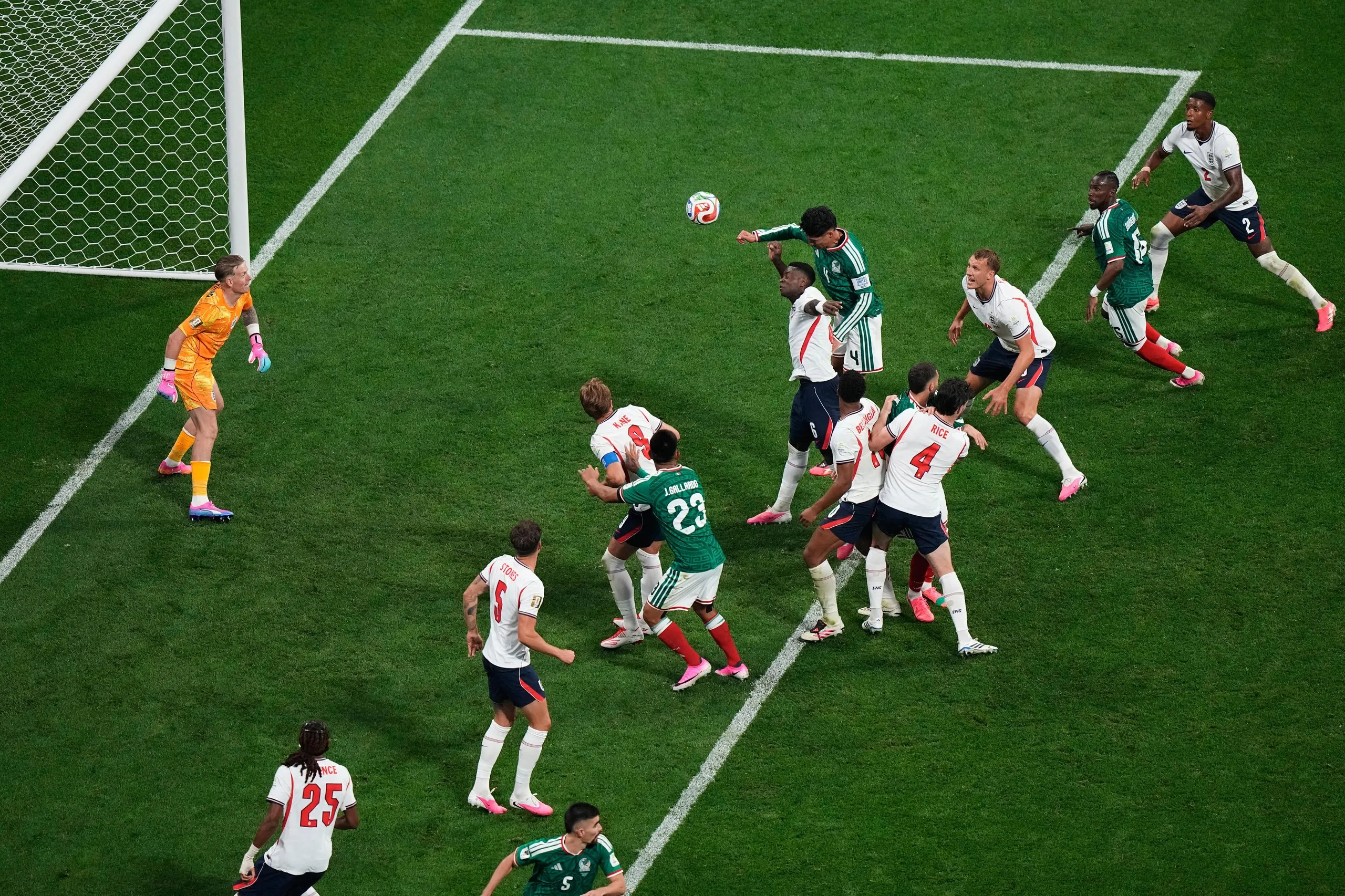
With 88 minutes gone, the match had now become an event focused solely around the England goal. Spence executed an impressive backspin to clear the ball from two Mexican players right in front of the goal, a defensive maneuver that showcased their determination.
Harry Kane was substituted after exhausting every ounce of energy. The shock of 11 minutes of stoppage time passed swiftly,
It was challenging to recall that earlier in the day, this match had indeed begun. Tuchel opted for a solid start, bringing Quansah in at right-back. England’s first action was a powerful, low kick from Jordan Pickford that traveled deep into the Mexican area. This strategy appeared sound; Mexico often initiates play in a frenzied manner. England, in contrast, preferred a more leisurely approach, akin to a slow-moving elder struggling to rise from bed.
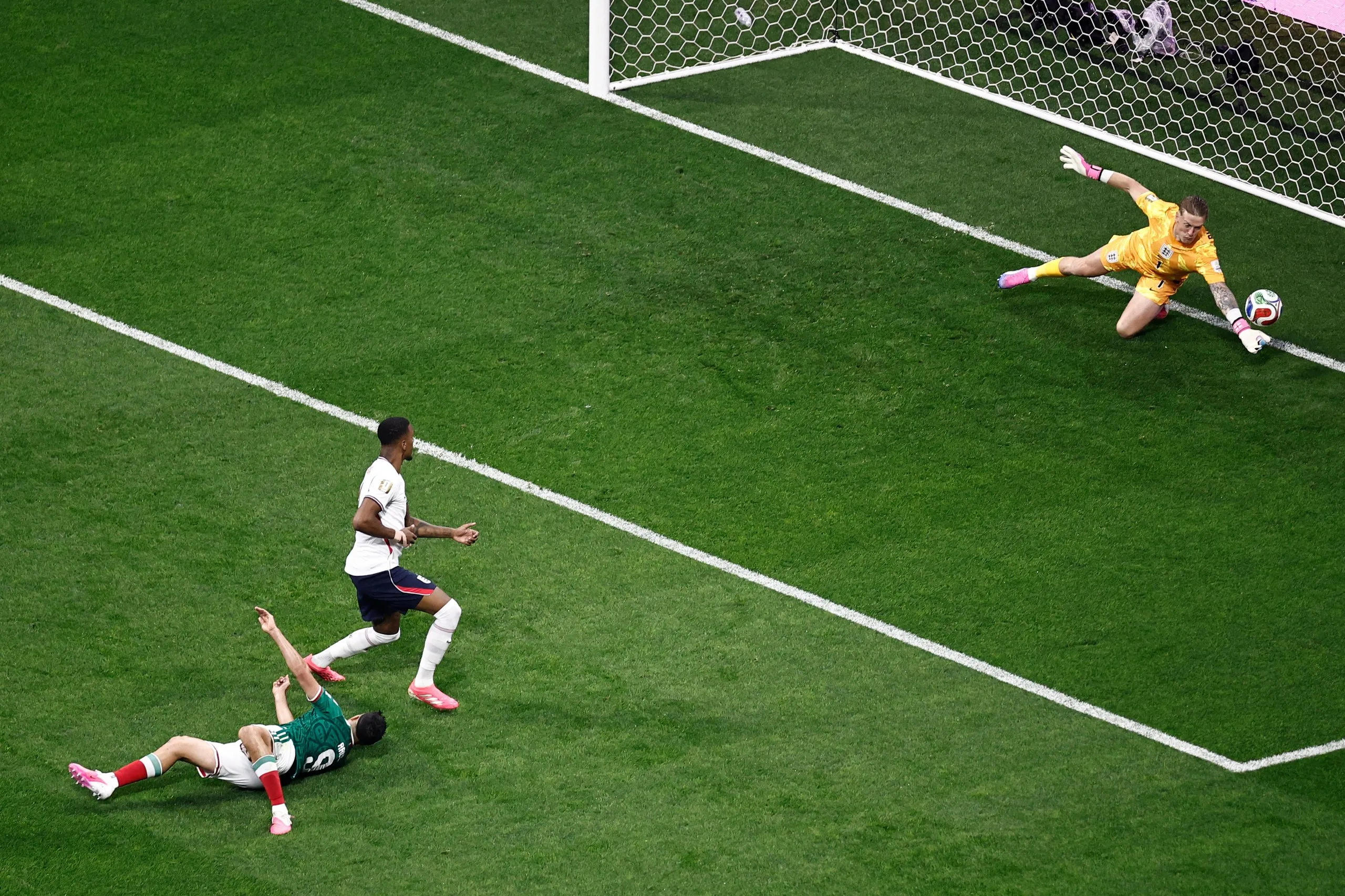
England demonstrated strong performance in the first half, initially playing at a deliberate pace that incited an explosion of boos and whistles. Tuchel, clad in a blue raincoat and waterproof trousers, resembled a frail duke walking the hounds, animatedly urging his players as Pickford made a spectacular save from a Jiménez header in the 15th minute.
Kane had only two touches in the first 30 minutes, but in the 36th minute, England broke the deadlock. Bukayo Saka delivered a delightful cross that Jude Bellingham converted with a header. Shortly after, Bellingham found the net again after England’s counterpressing efforts.
Perhaps a 2-0 lead is a precarious one. England stumbled momentarily and conceded a goal before halftime, as the stadium erupted with energy. The halftime whistle sounded like a much-needed lifeline. After the break, England appeared revitalized, maintaining their lead until Quansah’s unfortunate red card for a reckless challenge in the 53rd minute. Until that moment, he had played commendably, moving confidently like a police boat navigating the Thames.
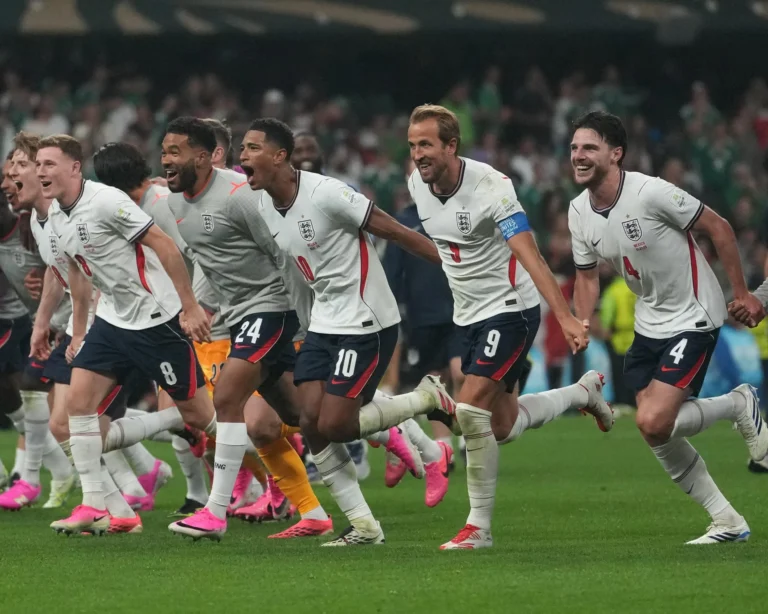
England scored again, with Kane converting a penalty. Thus began the agonizing phase of the match. By the end, Mexico was taking hasty shots from awkward angles, visibly faltering under pressure. The match concluded with the players collapsing where they stood, marking the end of an event that had tested their limits.
Recovery from this encounter will take time. “The players are exhausted to the next level and it is beautiful to see,” Tuchel remarked, wearing a peculiar, lopsided grin. He was right; they were indeed exhausted, and it was a sight to behold.
- England
- World Cup 2026
- Mexico
- World Cup
- analysis