


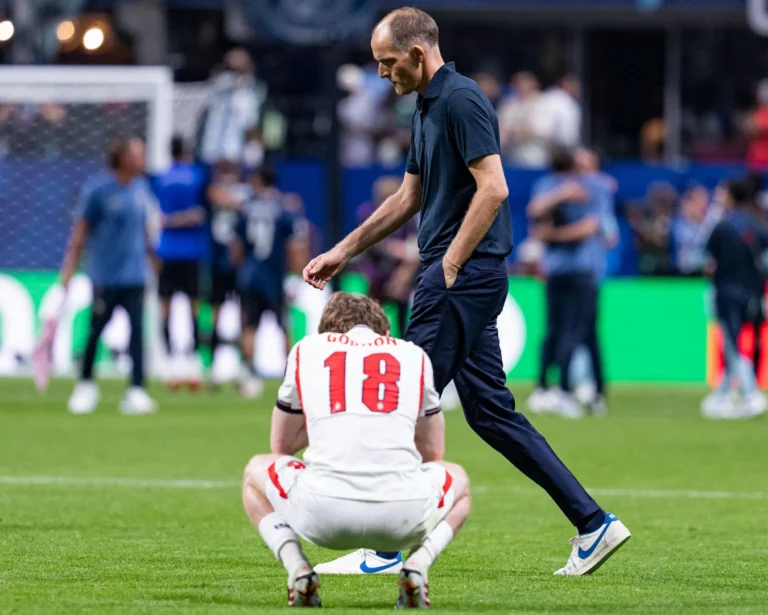
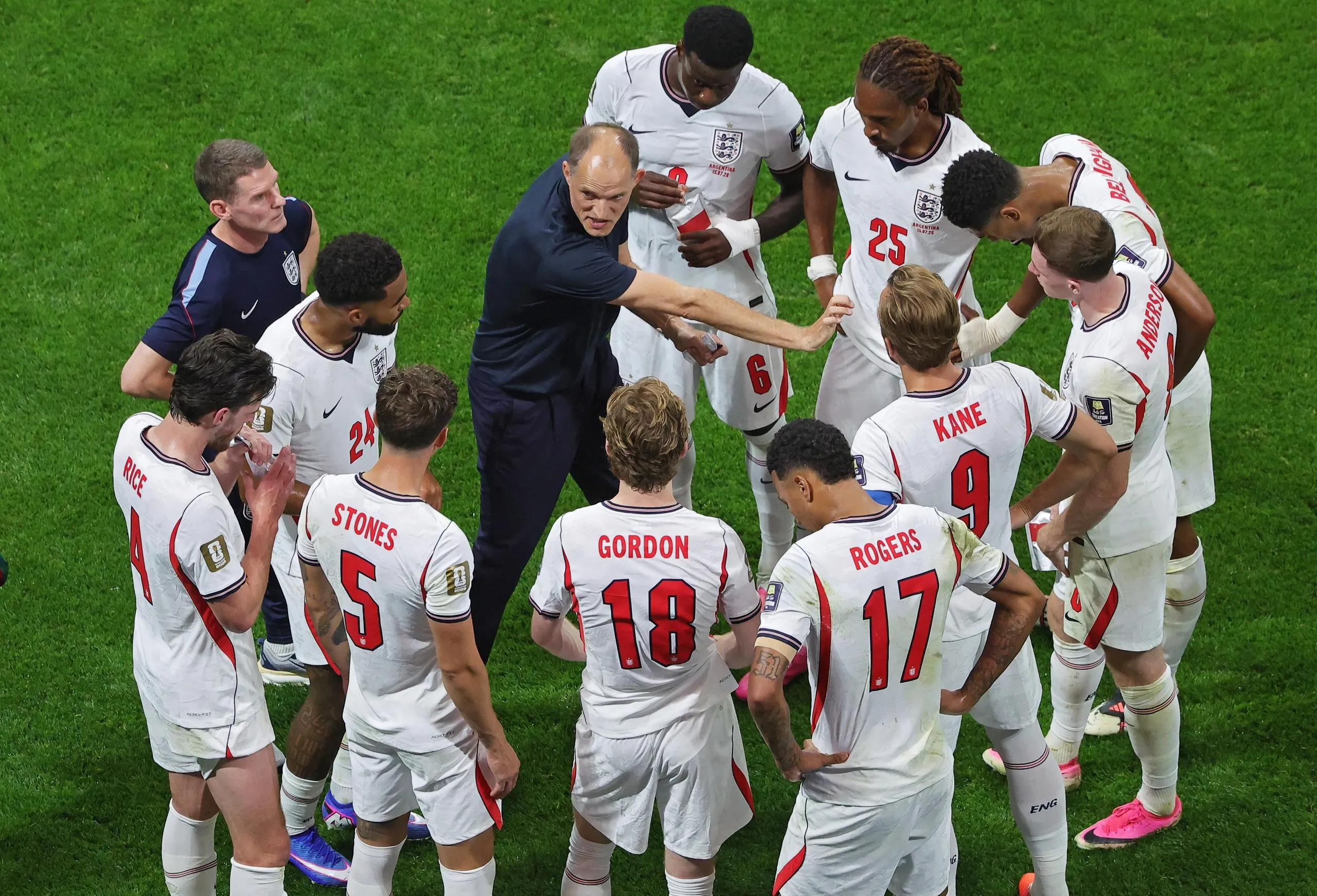
Lionel Messi has faced numerous defensive strategies throughout his career, and England’s approach in the World Cup semifinal was nothing novel. When England opted for a conservative style, dropping back as they aimed for a spot in the final, it was clear they were setting themselves up for disappointment. The predictable negativity led to Argentina’s swift and clinical response in Atlanta.
After Anthony Gordon scored early in the second half, England had a golden opportunity to seize control of the match. Instead, they fell back into their old habits, demonstrating a passive mentality that suggested fear of victory. The players lacked the confidence to dominate, with Harry Kane largely absent from the game and the midfield thoroughly outclassed by Argentina’s Alexis Mac Allister and Enzo Fernández. Meanwhile, Thomas Tuchel found himself outmaneuvered by Lionel Scaloni, whose timely substitutions proved effective as England retreated too quickly.
This match was anticipated as a moment for Tuchel to showcase his tactical prowess. Known for his strategic acumen, the German coach had seen success throughout the tournament, making impactful changes that led to knockout wins. Initially, his decision to start Morgan Rogers on the right seemed promising.
Rogers assisted the opening goal in the 55th minute, setting up Gordon for a strike at the far post. However, after this moment of celebration, England’s performance deteriorated. They struggled to mount any further attacks, failing to string together passes and resorting to frantic clearances as Argentina pressed for an equalizer. This defensive mindset, characterized by panic, ultimately proved to be their downfall.
A deeply ingrained English tendency to protect a lead against stronger teams resurfaced in this match. Similar patterns had emerged under previous coaches, such as Sven-Göran Eriksson at Euro 2004 and Gareth Southgate in earlier knockout matches. Despite hopes that Tuchel would bring a different approach, England’s inability to capitalize on their advantage echoed past failures.
Tuchel, pivotal in Chelsea’s triumph over Manchester City in the 2021 Champions League final, was expected to inspire a more proactive England. His energetic presence on the sidelines and strategic insights had previously fueled England’s journey to the semifinals. However, the team appeared to lack a coherent identity, often struggling against well-organized defenses, and their inability to deliver a complete performance was evident.
After Gordon’s goal, the tide shifted dramatically. A crucial tackle from Djed Spence denied Giuliano Simeone, but soon after, Cristian Romero forced an incredible save from Jordan Pickford, and Mac Allister struck the post. England’s intensity waned, and they defended like a lower-league team, holding just 12% possession between taking the lead and conceding two goals.
With just one shot on target, England’s progression to face Spain would have been unjust. Argentina faced no real threat of being caught off guard as they pressed forward, and it was unsurprising when Fernández equalized from distance, unchallenged.
England’s defensive efforts faltered, allowing Argentina to exploit aerial weaknesses. Recognizing the shift in momentum, Scaloni substituted a defender for winger Nicolás González, signaling Argentina’s intent to push for victory.
While Argentina displayed determination, Tuchel’s decisions reflected a sense of trepidation. His switch to a back five, which had previously secured results against Mexico and Norway, seemed premature. England’s defensive posture was further compromised when Gordon, one of their few attacking options, was substituted for Ezri Konsa.
Fatigue was evident among the players, particularly Reece James and Declan Rice, who were recently recovering from illness. Tuchel continued to make defensive substitutions, introducing Nico O’Reilly to join Rogers and Elliot Anderson in midfield. This left Dan Burn tasked with marking Messi, a mismatch that signaled trouble.
Critics would have scrutinized similar decisions made by Southgate or Eriksson. Tuchel’s approach effectively stifled England’s offensive capabilities, and he missed opportunities to inject fresh energy by bringing on players like Bukayo Saka, Marcus Rashford, Eberechi Eze, or Noni Madueke. With both Argentina center-backs on yellow cards, they could have been vulnerable.
Attention will certainly focus on Tuchel’s midfield selections. The absence of Kobbie Mainoo, a talented technician, was notable, as was Jordan Henderson’s situation with his broken wrist. Tuchel’s strategic choices raised questions about his replacements for tired players like Anderson and Rice.
Ultimately, England’s shortcomings led to their downfall. Bellingham attempted to advance with the ball at 1-1 but was quickly surrounded by Argentine defenders. The match was headed toward a conclusion without extra time, as Mac Allister hit the post again before Lautaro Martínez, another substitute, netted the decisive goal.
In the dying moments, England resorted to aimless long balls aimed at Burn and Ivan Toney. Meanwhile, Argentina’s goalkeeper, Emi Martínez, feigned an injury after claiming a cross, despite having minimal involvement since England’s goal. How could he possibly be cramping up?
- World Cup 2026
- Thomas Tuchel
- England
- Argentina
- World Cup
- analysis