


The analysis following England’s exit from the World Cup revealed key insights, particularly from Thomas Tuchel, regarding Argentina’s ability to orchestrate late-game comebacks.
“In their culture, ball possession plays a crucial role. It starts from a young age,” he noted. “That is in the DNA and it demands a lot of self-confidence – natural self‑confidence to always want the ball, to always be in the gaps, to always define yourself through the ball. I think that is a crucial thing: to show courage.”
This observation, while not directly aimed at his players, underscored a persistent issue for England, which dates back to their 2002 World Cup campaign when they failed to defend a lead against Brazil.
Despite the Football Association’s dedication to cultivating players capable of “intelligently dominate possession” since the introduction of the “England teams sense changing moments in the game both in and out of possession, reacting instinctively and intelligently,” at St George’s Park in December 2014, the team still lacks elite central midfielders equipped with the necessary technical skills to clinch a World Cup semi-final.
The disheartening statistic from this tournament is that England maintained only 12% possession after Anthony Gordon scored in the 55th minute until Lautaro Martínez secured the win in stoppage time. Furthermore, of the 39 passes attempted in that timeframe, 12 originated from goalkeeper Jordan Pickford, while a mere five were executed in Argentina’s half.
This stat indicates not just a shortage of forward movement to challenge a defense including a 38-year-old Nicolás Otamendi but also highlights England’s inability to manage pressure from Argentina’s high press, resulting in frequent turnovers.
“building the long-term systems that underpin the FA’s performance ambitions” reflects the DNA philosophy crafted by Dan Ashworth, who was the FA’s director of elite development in 2014. Ashworth returned to St George’s Park last May after a challenging tenure as Manchester United’s sporting director, having previously left the FA for Brighton in 2019 before moving to Newcastle three years later.
His current role as chief football officer involves overseeing the rejuvenation of the National Football Centre and building systems that support the FA’s performance ambitions. The objective is to develop a style of play that maintains confidence even in high-stakes situations.
“We felt them going backwards and backwards rather than going forward,” remarked Argentina’s goalkeeper, Emiliano Martínez. “Sometimes when you are winning, you have to go forward anyway. You can’t change the gameplan.”
While England’s academy system is admired globally for the resources available to Premier League teams, it has yet to succeed in producing midfielders with the technical prowess to control matches. However, there are emerging signs of potential change.
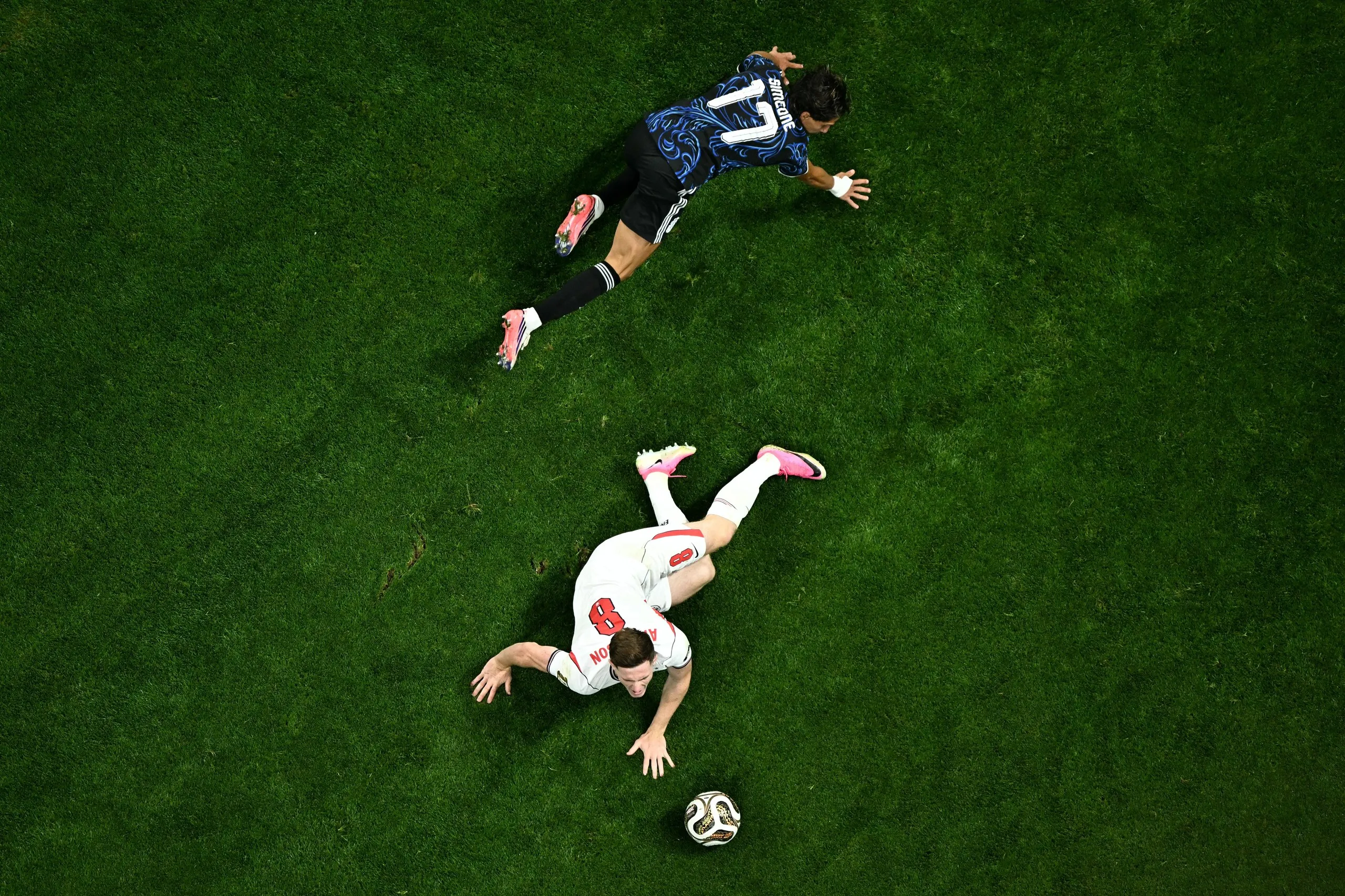
Elliot Anderson has established himself as a key player for England over the last year, and Manchester City’s £116 million summer acquisition is leading a new wave of midfield talent that could shine at the European Championship in two years at home.
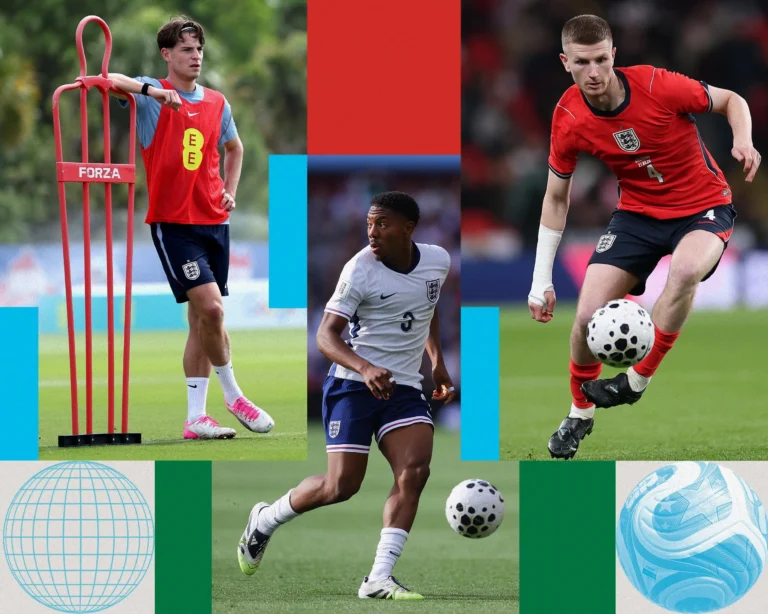
Manchester United fans continue to ponder the limited playing time of Kobbie Mainoo, whose skill set significantly contributed to their resurgence under Michael Carrick last season. Mainoo’s inclusion alongside Jordan Henderson as backups to Anderson and Declan Rice resulted in the exclusion of Bournemouth’s Alex Scott and Arsenal’s Myles Lewis-Skelly from the squad.
Both Scott and Lewis-Skelly could be seen as among the top midfield performers in the country during the last month of the Premier League season. Scott notably excelled in Bournemouth’s notable matches against Arsenal and Manchester City, pivotal for the title race, showcasing his synergy with Anderson from the previous summer’s European Under-21 Championship.
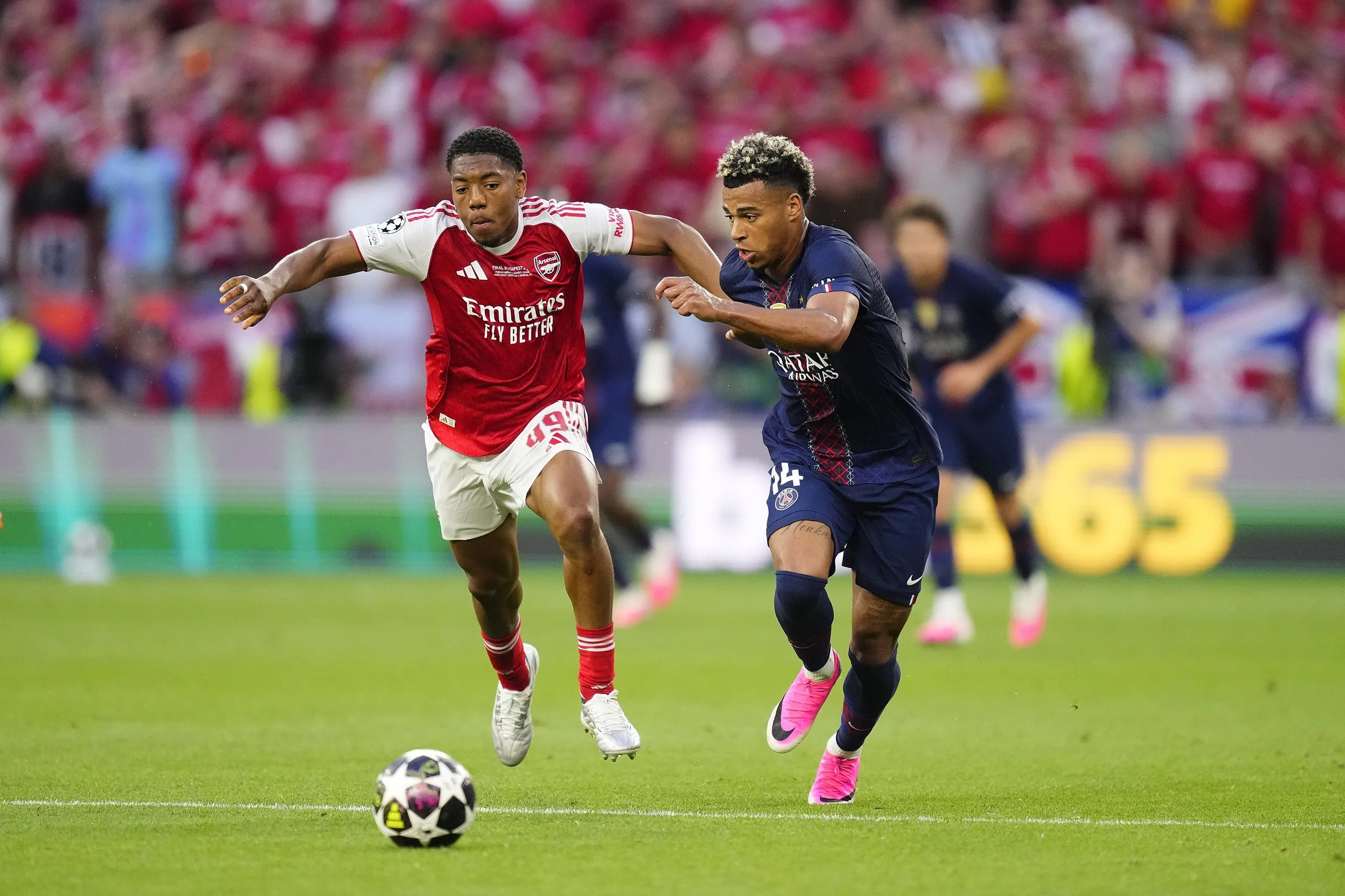
Lewis-Skelly faced challenges after losing his starting position as England’s left-back. Yet, after transitioning into a dynamic midfield role that secured him a spot over Spain’s Martín Zubimendi at Arsenal, he demonstrated the kind of confidence Tuchel described as essential for wanting the ball.
Both players are poised for significant roles in England’s future, alongside Mainoo and Adam Wharton, whose paths will be closely observed.
Like Anderson, Scott and Angel Gomes, the former United star who received an unexpected call-up from Lee Carsley in 2024, Wharton began his career as an attacking midfielder before adapting to a deeper position. Although Tuchel seems hesitant to trust the Crystal Palace midfielder, Wharton possesses the vision and skill to dismantle defenses, coupled with an inherent confidence that cannot be easily taught.
As Ashworth and his team undergo another phase of introspection, it appears that the solutions to England’s challenges may already be present.
- England
- World Cup 2026
- World Cup
- features