


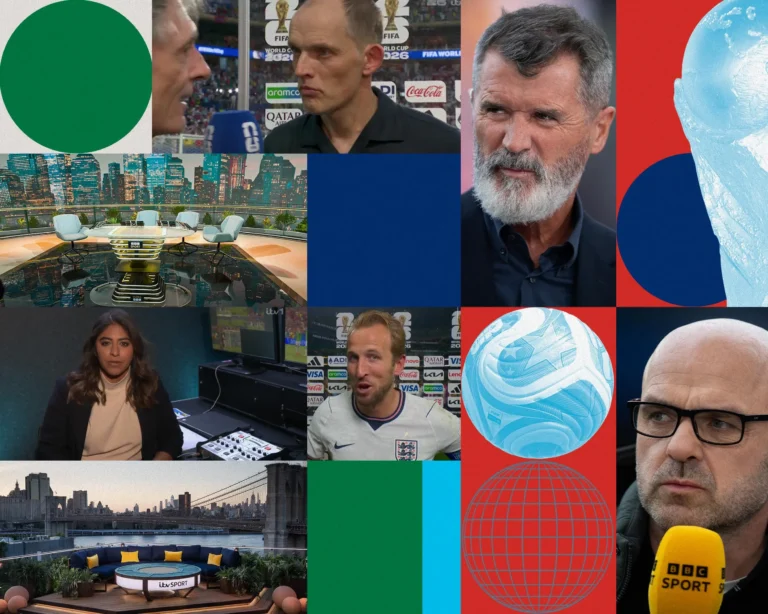

As Argentina prepares to face Spain in the final, media enthusiasts in the UK recognize that the real contest during the World Cup is between the BBC and ITV. The question remains: who triumphed in this significant broadcasting duel?
The Studios
Leading up to the event, the BBC made headlines by opting not to set up in the United States, instead choosing a digital studio to simulate the appearance of being in front of iconic landmarks from the host cities. This move was a clear signal of their financial constraints. In contrast, ITV established their presence in New York, which, although distant from the actual matches in Mexico, Canada, or the US West Coast, gave them a more authentic American feel. Ironically, as soon as the BBC ventured to the US, England’s journey came to an end. Winner: ITV
The Pundits
ITV showcased an impressive array of pundits, prominently featuring the candid Roy Keane alongside the engaging Ange Postecoglou, particularly when Australia was competing. Jobi McAnuff proved to be effective, albeit often relegated to late-night broadcasts. Ian Wright consistently brought his charm to the screen. They even moved past an early mishap where Emma Hayes was humorously placed in what was dubbed the “we don’t have the money we used to”
The BBC, however, seems to be struggling with their lineup following Gary Lineker’s departure, who previously served as both host and a veteran pundit. Micah Richards is a polarizing figure, eliciting either admiration or disdain. Among the BBC’s former England goalkeeper Joe Hart stood out, while Alan Shearer and Wayne Rooney often appeared lackluster, resembling an unyielding England defense against an Argentina offensive. Winner: ITV
The Commentators
For viewers at home, it remains a mystery how commentators and ex-players can be compensated to analyze some of the world’s most significant matches while sounding disinterested or even resentful—this is often referred to as the Mark Lawrenson effect. Jonathan Pearce from the BBC and ITV’s Lee Dixon frequently fell into this category, contrasting sharply with the energetic Ally McCoist. Ultimately, the BBC featured the stronger commentary lineup, with Guy Mowbray being far more pleasant to listen to than Sam Matterface. Winner: BBC
Post-Match Interviews
Post-match interviews on both channels garnered attention for vastly different reasons. Harry Kane’s struggle to speak after England’s victory over Mexico at the Azteca became one of the most hilariously memorable interviews for the BBC—an instant classic for remixes. On the other hand, Gabriel Clarke’s comments after England’s quarter-final against Norway on ITV were less well-received. His direct relay of Thomas Tuchel’s critique to Jude Bellingham seemed to reignite tensions between the manager and his star player. Winner: BBC
Refereeing Analysis
In terms of refereeing insights, Christina Unkel’s contributions on ITV were notably superior to those of Darren Cann for the BBC. Unkel delivered her observations clearly and succinctly, while Cann often couched his opinions in so many qualifiers that they became somewhat ineffective. Winner: ITV
The Music and Titles
Neither channel’s theme approached the iconic Nessun Dorma from 1990 or ITV’s unexpected hit from Mexico 1986. However, Rascal Flatts’ Life is a Highway quickly became tiresome, while the BBC’s animated titles, showcasing legendary moments and figures from World Cup history, appeared vastly more refined. Winner: BBC
Unexpected Viral Moments
Danny Murphy’s bizarre choice to reminisce about his late cat Bob, who allegedly escaped in a Royal Mail van due to Norway substituting a player named Oscar Bobb, will likely haunt him for years. In a dry response, the BBC’s Steve Bower quipped, “The game’s not that bad.” Winner: In a way, all of us. Except Bob.
- World Cup 2026
- Sport TV
- Television
- World Cup
- ITV
- BBC
- features