


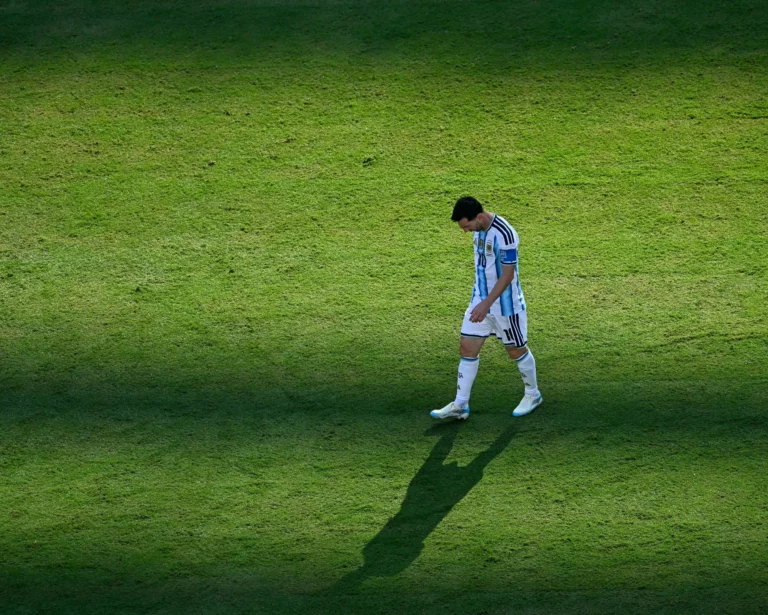
In the realm of sports, fans often pay attention to more than just the final score. They observe values, note who speaks up, who remains silent, and what those silences communicate. This reflection shaped my thoughts during the World Cup. On the surface, the final match featured Spain versus Argentina, two football powerhouses with illustrious legacies. However, both nations also carry histories marked by colonization and oppression—complex stories that cannot be glossed over simply because of athletic achievements.
Context of the Match
This match did not represent a straightforward battle of good versus evil. Spain’s colonial history is well known, and anyone well-versed in history should recognize that fact. For numerous Black Americans, the focus was not on supporting Spain; rather, it was on opposing Argentina.
Racism and Public Sentiment
When a team’s supporters become linked to repeated racist incidents, such as videos showing Argentinian fans hurling racial slurs at Black individuals, the context shifts. The world witnessed members of Argentina’s national team engage in a racist chant aimed at Black players from France after winning the Copa América. Incidents involving fans, such as the verbal assault of American streamer IShowSpeed, further fueled the sentiment. Additionally, there are reports of a hamburger establishment in Llavallol, Argentina, with a name that employs a racially charged term. Furthermore, Argentina’s president, Javier Milei, has embraced ideologies closely aligned with those of Donald Trump and has expressed support for Israel amid the ongoing oppression of Palestinians. This has drawn unflattering comparisons, including Benjamin Netanyahu’s comment that he supported Milei over Messi.
Over time, these factors overshadowed Argentina’s achievements on the field, shifting public sentiment. This scenario is reminiscent of a college basketball coach who appears to run a stellar program with impressive statistics, disciplined players, and notable graduation rates. However, whispers of verbal abuse and a toxic coaching style begin to surface, prompting questions about the integrity of the program. Eventually, the focus shifts from results to the underlying issues.
The Role of Lionel Messi
Argentina’s actions frequently prompted similar inquiries, particularly regarding Lionel Messi. Messi elicits admiration universally, and rightly so; his talent is undeniable. His career accomplishments speak volumes, whether he is deemed the greatest player of all time or among a select few, including Pelé. However, greatness in sports does not always equate to courage in speaking out.
Figures like Muhammad Ali, Bill Russell, and Colin Kaepernick exemplify that distinction. Being exceptional in sports does not inherently mean one is prepared to jeopardize comfort for their beliefs. Throughout this World Cup, Messi did not publicly condemn any racist behaviors exhibited by segments of Argentina’s fanbase. He failed to address the racist chant criticized globally after the Copa América, nor did he speak out against the racial abuse captured in videos circulating online.
Even more broadly, he did not offer the type of indirect condemnation many felt was necessary. As my co-host Chuck Modi remarked on our show, The Collision: Where Sports and Politics Collide:
Messi did not even meet that minimal expectation, offering no public remarks regarding the racism exhibited by some supporters. As Dr. Martin Luther King Jr. articulated in his Beyond Vietnam speech: “No, before Messi, Milei. He’s a superstar” Silence can send its own message, particularly when the most prominent voice in the room chooses not to speak. This is clearly contrasted with the emerging generation that follows Messi.
Emerging Voices in Football
Lamine Yamal has openly discussed the sacrifices made by his family and recounted how his father scavenged for items that could be repaired or sold to ensure they had enough to eat. He described growing up in a cramped apartment where the kitchen doubled as a bedroom. Today, he finds joy in seeing his mother’s smile and knowing his younger brother can experience a childhood he never had.
Nico Williams shares a similarly compelling narrative. His mother, María, undertook a grueling journey of nearly 2,000 miles while pregnant, fleeing Ghana toward Spain in search of a better life. Years later, her son scored the winning goal in the World Cup and draped his medal around her neck. Spain’s victory was not solely about tactics or technical prowess; it represented the possibility of a new, diverse Spain shaped by the journeys of families pursuing a better future. This is more impactful than any passing play or strategic maneuver.
Reflections on the Match
After Spain triumphed over Argentina, one moment resonated with me: Lamine Yamal embracing Messi. There was no taunting or disrespect—just a mutual respect across generations. As an old African proverb states:
Another poignant image was Lamine Yamal kneeling in prayer amid the emotional turmoil following the match. While others engaged in heated discussions, he chose to pray, demonstrating that composure can speak louder than conflict. Yamal has also expressed his stance on issues beyond the sport, including solidarity with Palestine. The core point is not whether everyone agrees with an athlete’s views but rather that they acknowledge their platform extends beyond the confines of the game.
Jackie Robinson is celebrated not merely for his stolen bases, and Kareem Abdul-Jabbar is not remembered solely for his signature move. Colin Kaepernick transcended his dual-threat quarterbacking skills. In time, statistics may fade, but character endures.
This is why comparisons between Messi and Ali fall short for me. One transformed football; the other transformed society.
Conclusion: The Broader Implications
Some have wondered why many Black Americans appeared invested in Argentina’s defeat. The answer seems straightforward. When they have heard throughout their lives that sports and politics should remain separate—yet only in the context of racism—patterns become apparent. People urged Ali to “What’s going on with the Indiana Hoosiers?” They told Kaepernick to “She has to be more specific. When Alyssa Thomas was getting death threats, she has to say Alyssa Thomas by name, and say directly to her fans that you cannot have death threats going to Alyssa Thomas in my name the same way we as Jewish people say not in my name for Palestinian rights. She needs to use all of her clout and tell her fans this is unacceptable.” They advised LeBron James to “A time comes when silence is betrayal.” Athletes are often free to voice opinions—unless those opinions provoke discomfort.
This has long been the unspoken rule, until it is not. This World Cup transcended mere goals because individuals chose to make it about more. Racism, politics, and silence elevated its significance. For many viewers, cheering for Spain did not endorse its history; it simply rejected what Argentina had come to symbolize in this particular context. Sometimes, supporting a team is not about perfection but about opting for the choice that feels less harmful.
Perhaps this is why many were drawn to this new generation—not just because they achieved victory, but because they embodied the idea that excellence and conviction can coexist. To echo Abdul-Rauf from our interview for my book, Police Brutality and White Supremacy: The Fight Against American Traditions:
I wholeheartedly agree.
“The lion doesn’t need to roar after every meal.”
“What you do speaks so loudly in my ears that I can’t hear a word you’re saying.”
“What you do speaks so loudly in my ears that I can’t hear a word you’re saying.”