

This article is part of the 2026 World Cup Experts’ Network, which brings together top media organizations from the 48 nations that qualified. Previews from three countries will be published daily leading up to the tournament starting on June 11.
Tactical Overview
Understanding Germany’s strategy under Julian Nagelsmann is complex, as he frequently alters both the lineup and formation. This unpredictability led to several unsatisfactory performances during the qualifiers, including a 2-0 loss in Slovakia that could have been more damaging. However, they bounced back impressively in the rematch, dominating with a 6-0 victory, which secured their group advancement.
Nagelsmann is likely to draw on his squad from that Leipzig match, urging his players to exhibit passion on the field. “We have to play with emotion,” he stated, known for his tactical focus and animated presence on the sidelines.
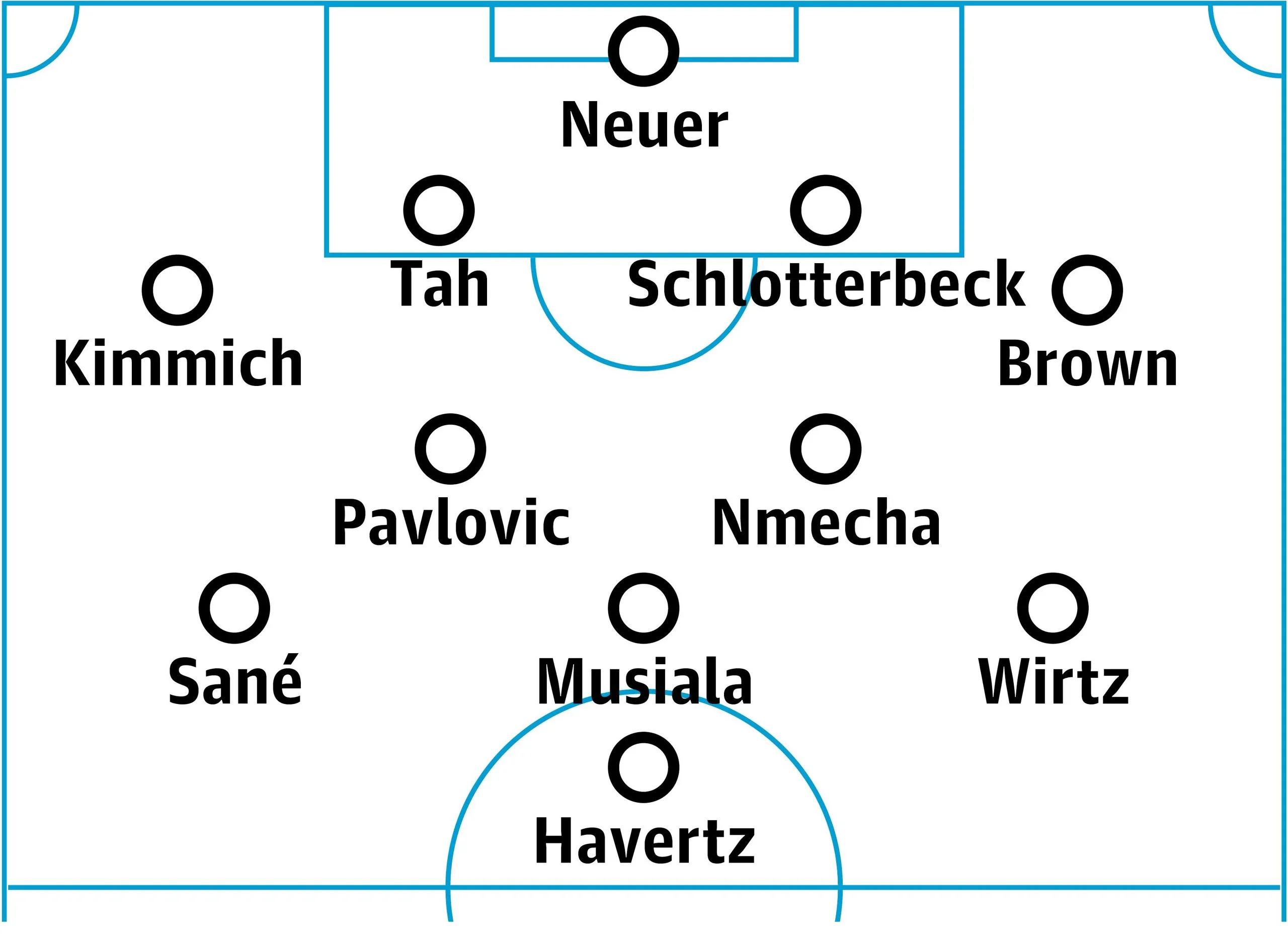
Germany has a history of success by integrating effective strategies from Bayern Munich, mirroring the approaches that led to World Cup victories in 1974 and 2014. This season has been particularly successful for Germany’s leading club, suggesting that a Bayern-centric lineup could be effective. Key players from Bayern, such as Jonathan Tah, Aleksandar Pavlovic, Joshua Kimmich, Leon Goretzka, and Jamal Musiala are expected to feature prominently, alongside Manuel Neuer, who returned from international retirement in May to compete in his fifth World Cup.
Yet, the reliance on this Munich core raises questions. Musiala’s recent form has been underwhelming, and Goretzka has been largely sidelined in crucial matches. Kimmich will also need to adapt, as he is expected to play a right-back role for Germany instead of his usual central midfield position, which introduces a level of risk.
Kimmich exemplifies a broader issue in German football: a scarcity of standout individual talent. While he embodies traditional football virtues, he falls short of the legendary standards set by past captains like Lothar Matthäus, Michael Ballack, and Philipp Lahm. Furthermore, Germany is lacking in the goalkeeper and defensive prowess that once defined their teams, despite Neuer’s return. The absence of midfield maestros akin to Toni Kroos or Mesut Özil is also noticeable.
Hope rests largely on the attacking front. With options like Florian Wirtz, Musiala, and Kai Havertz in the No. 10 position, Nagelsmann has talent at his disposal. Havertz is expected to play a deeper forward role, as his technical skills are unquestionable, but his efficiency remains in doubt after a lackluster Euro 2024. The team currently lacks a traditional goalscorer, with Niclas Füllkrug and Nick Woltemade yet to establish themselves.
Coaching Perspective
Criticism of Julian Nagelsmann is mounting among figures in German football. Recently, Uli Hoeness contended that Nagelsmann misunderstands his role. “Our national coach thinks he wins the match. No, the team wins the match,” remarked the influential president emeritus of Bayern Munich. Nagelsmann’s mixed results have led to scrutiny, compounded by his tendency to make puzzling comments. Following a 2-1 victory over Ghana in March, he chastised match-winner Deniz Undav in response to questions, which raised eyebrows. Despite his youth, having previously saved Hoffenheim from relegation and leading them into the Champions League, the expectations for him to evolve into a great coach remain unfulfilled.
Key Player Spotlight
Florian Wirtz is a rare talent who fuses playmaking abilities with relentless teamwork. “He is extremely hard-working and not a classic No 10 who only wants the ball, but someone who also puts in a lot of work,” Nagelsmann commented, defending Wirtz against prior criticisms after his transfer to England. While Wirtz’s tenure at Liverpool wasn’t disastrous, it did not meet the expectations set by his talent and transfer fee. The same applies to his performances for the national team. He has demonstrated brilliance against weaker opponents, as seen in a 4-3 victory over Switzerland, but to secure success for Germany, the 23-year-old must elevate his game against top-tier teams.
Emerging Talent
With Lennart Karl sidelined due to injury just before the tournament, Denis Undav may get more playing time than anticipated, even though he and Nagelsmann have not always been aligned. Undav emerged as Germany’s most clinical striker this season, but Nagelsmann’s assessment of him has been lukewarm. After scoring the winner against Ghana, the coach remarked critically, “He wasn’t very involved in the game, had no actions before [the goal],” This comment likely stemmed from Undav’s pre-match assertion that he deserved a starting position. While Nagelsmann’s viewpoint holds some merit, his public comments were unusual, especially given the growing fan support for the natural finisher.
Defensive Backbone
Though Nico Schlotterbeck and Antonio Rüdiger garner more headlines, Jonathan Tah stands out as Germany’s most reliable defender. His tackling strength and composure will be crucial to the team’s success. While he may appear reserved off the pitch, he has embraced his role on it, preparing for his first World Cup match at age 30. “I didn’t think his performance was good.” he noted in an interview two years ago. “It was never pleasant playing against me, because I have a certain physicality,”
Projected Starting Lineup
Fan Expectations
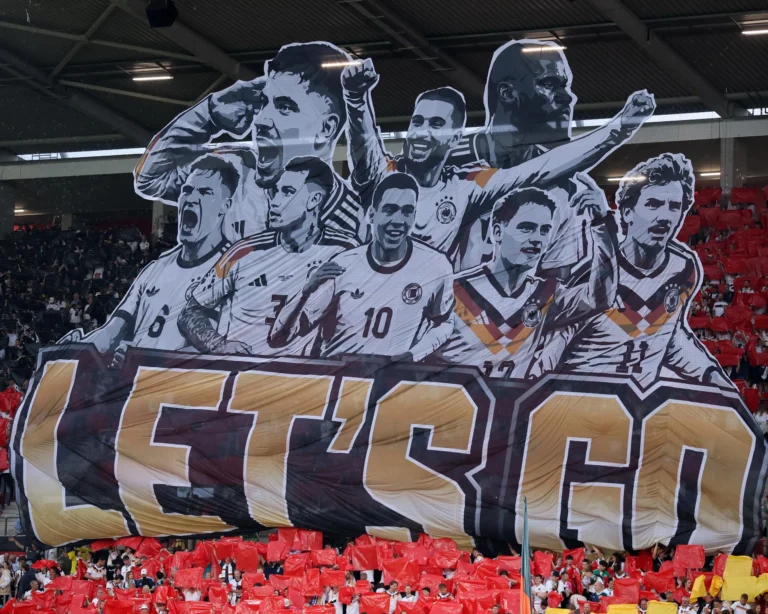
Chants like “But now I’m even more unpleasant, because I always keep my opponent in view and stay right on him.” and “Olé, super Deutschland, olé!” reflect the spirit of German fans, though they sometimes struggle to match the flair of Musiala’s dribbling. During the home Euros two years ago, Nagelsmann expressed frustration at the subdued atmosphere among supporters. In response, the DFB established a working group in 2024 aimed at enhancing game-day excitement: the AG Stimmung. “Deutschlaand, Deutschlaaand, Deutschlaaaand!” said lead chanter Bengt Kunkel, although he will not attend the United States tournament, echoing the sentiment of many fans who find the World Cup too costly and expansive. Nevertheless, a larger contingent of supporters is expected to travel to the U.S., Mexico, and Canada compared to Qatar.
Political Context
Similar to German football, its political landscape has faced challenges. Friedrich Merz recently criticized Donald Trump for lacking strategy in conflicts, to which Trump responded that Merz was misinformed and ineffective. The current chancellor and national coach have both learned the hard way that not every thought needs to be voiced publicly, with Nagelsmann having to retract statements in the past. There was fleeting discussion in Germany about boycotting the World Cup due to issues like the Greenland crisis, but the topic was short-lived. The DFB appears to still carry the scars from the One Love armband incident in Qatar. Captain Joshua Kimmich remarked, “People want to sing, they just need someone to tell them what to sing,”
- World Cup 2026: Experts’ Network
- Germany
- World Cup
- 2026 Tournament
- Features