


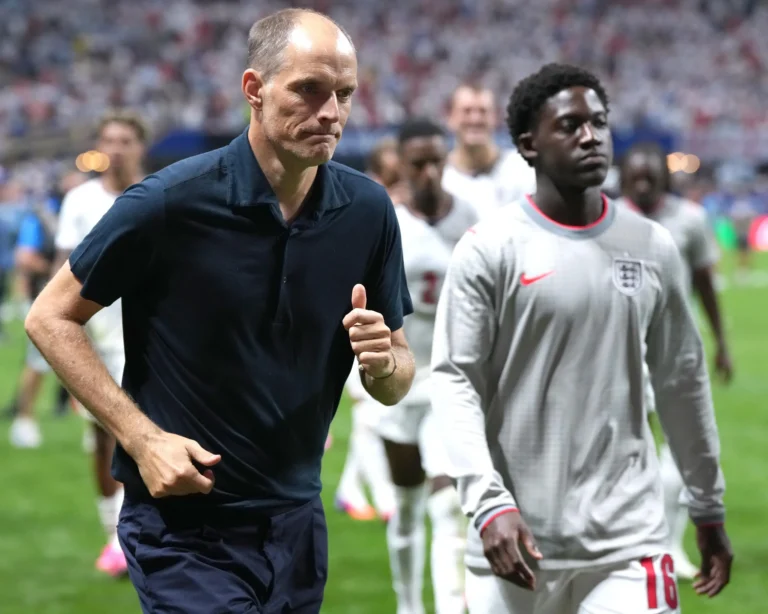
Upon taking the reins as England’s head coach, Thomas Tuchel expressed his desire for the team to embrace a Premier League style characterized by intensity, speed, and relentless play. He provided clear direction, showcasing a precise analysis as he assembled a World Cup squad aimed at overwhelming opponents through physicality and vigorous running.
His squad featured specialists and players who could inject energy into the game. Tuchel created like-for-like substitutions across various positions and enjoyed considerable freedom in his selections. He boldly justified the exclusion of creative talents like Phil Foden, Cole Palmer, Adam Wharton, Morgan Gibbs-White, and Trent Alexander-Arnold by asserting his vision and commitment to it.
England’s rapid style was momentarily visible during their impressive victory against Croatia in the tournament opener. However, this illusion was shattered during a disheartening semi-final collapse against Argentina, where Tuchel’s decisions appeared to hand the game to Lionel Messi and his team. Despite having an opportunity to capitalize on an early advantage, Tuchel opted for a more defensive strategy.
Many players reportedly found Tuchel’s tactical retreat puzzling, questioning why he chose to play so conservatively. There was considerable astonishment over his failure to deploy the pace of Noni Madueke, Bukayo Saka, or Marcus Rashford to counterattack against Argentina.
Criticism of Tuchel’s approach came from several former players. Thomas Müller, the ex-Germany forward, harshly criticized the invitation for Argentina to launch attacks on England. Meanwhile, former England striker Wayne Rooney, serving as a BBC pundit, remarked that Tuchel’s tactics were inherently risky.
How a team exits a tournament is significant. England’s loss to Argentina in the second round in 1998 was marked by a heroic performance with only ten players. This recent result, however, lacked any such redeeming qualities, and the Football Association remains deeply committed to Tuchel, hesitant to make any changes. Mark Bullingham, the FA’s chief executive, highlighted that England’s best performance under Sir Gareth Southgate was their quarter-final run at the 2022 World Cup, despite it being the earliest exit for Tuchel’s predecessor.
The analysis of the situation extends further than just the final score. What was the atmosphere like within the team? It was described as generally positive. England had demonstrated unity, notably during their match against Mexico in the Azteca, yet their playing style lacked any discernible flow or identity. To understand the issues, it’s essential to revisit how Tuchel structured and utilized his squad.
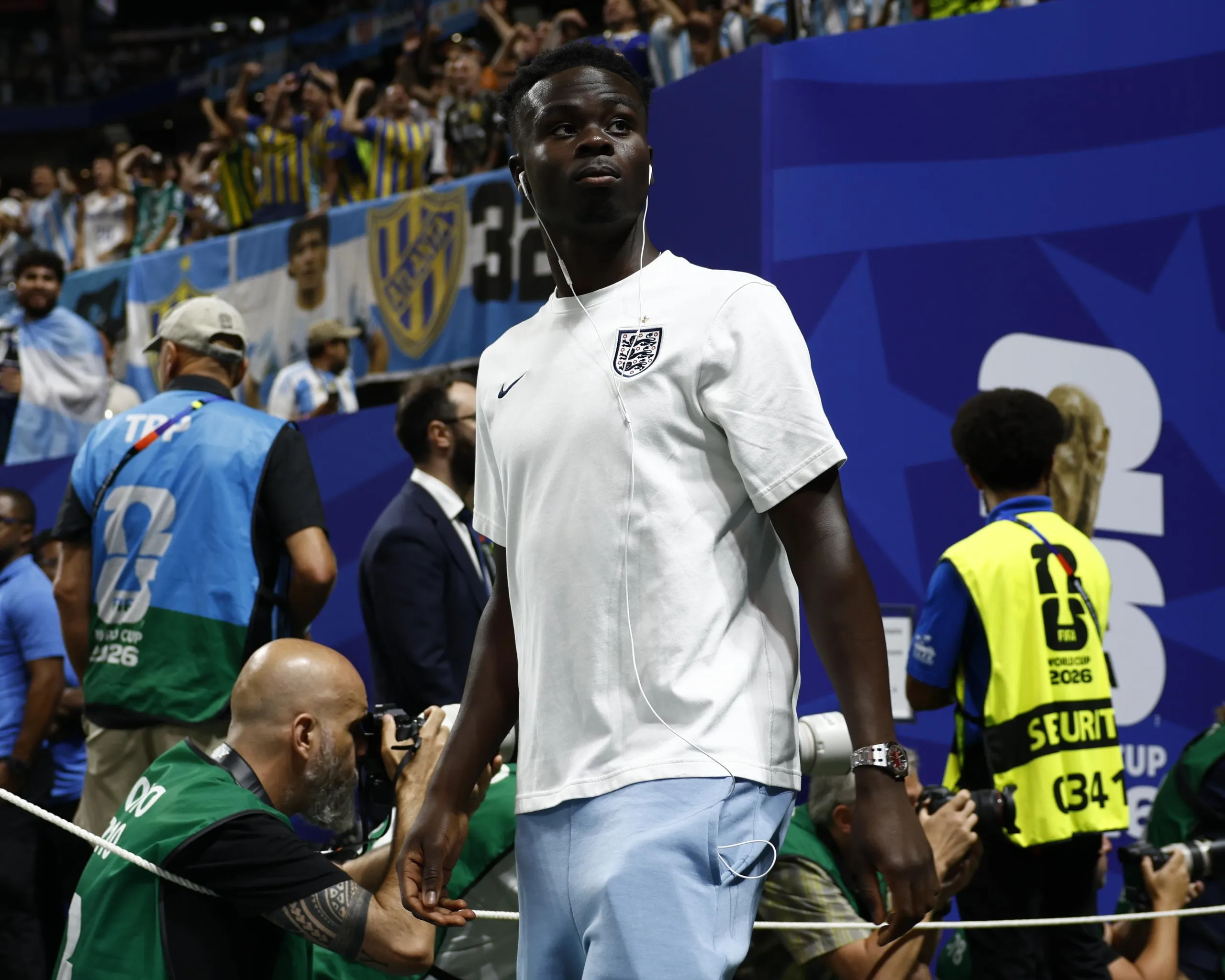
While it may seem futile to lament the absence of Palmer and Foden, partly due to their domestic struggles impacting their selection, there is little evidence to support the notion that Tuchel would have deployed them even if England had held a lead against Argentina. He opted not to utilize the fast attackers available on the bench, deviating from his original plan and showing a lack of faith in Saka’s fitness. The scenario appeared tailor-made for Saka to enter and exploit the weaknesses of the 32-year-old Nicolás Tagliafico on the right flank, but Tuchel hesitated. Although Saka had been battling an Achilles injury, he had previously shown glimpses of quality, yet Tuchel did not trust him in a crucial moment.
Ultimately, the manager fell into the familiar trap of depending on players who were either unfit or susceptible to injury. England required Saka, yet he remained sidelined. Tuchel’s decision-making curtailed his options. The strategy aimed to have wingers stretching the play wide, creating overloads. However, Madueke, who was supposed to step in for Saka, disappointed. Following a lackluster quarter-final performance against Norway, it raises questions about whether Tuchel overlooked other potential selections, like Jarrod Bowen or even Rio Ngumoha, given Saka’s fitness issues and Madueke’s declining confidence. It is telling that Tuchel chose to ignore some of his wide options after placing significant reliance on them. Similarly, Rashford, like Madueke, was benched after inconsistent early performances.
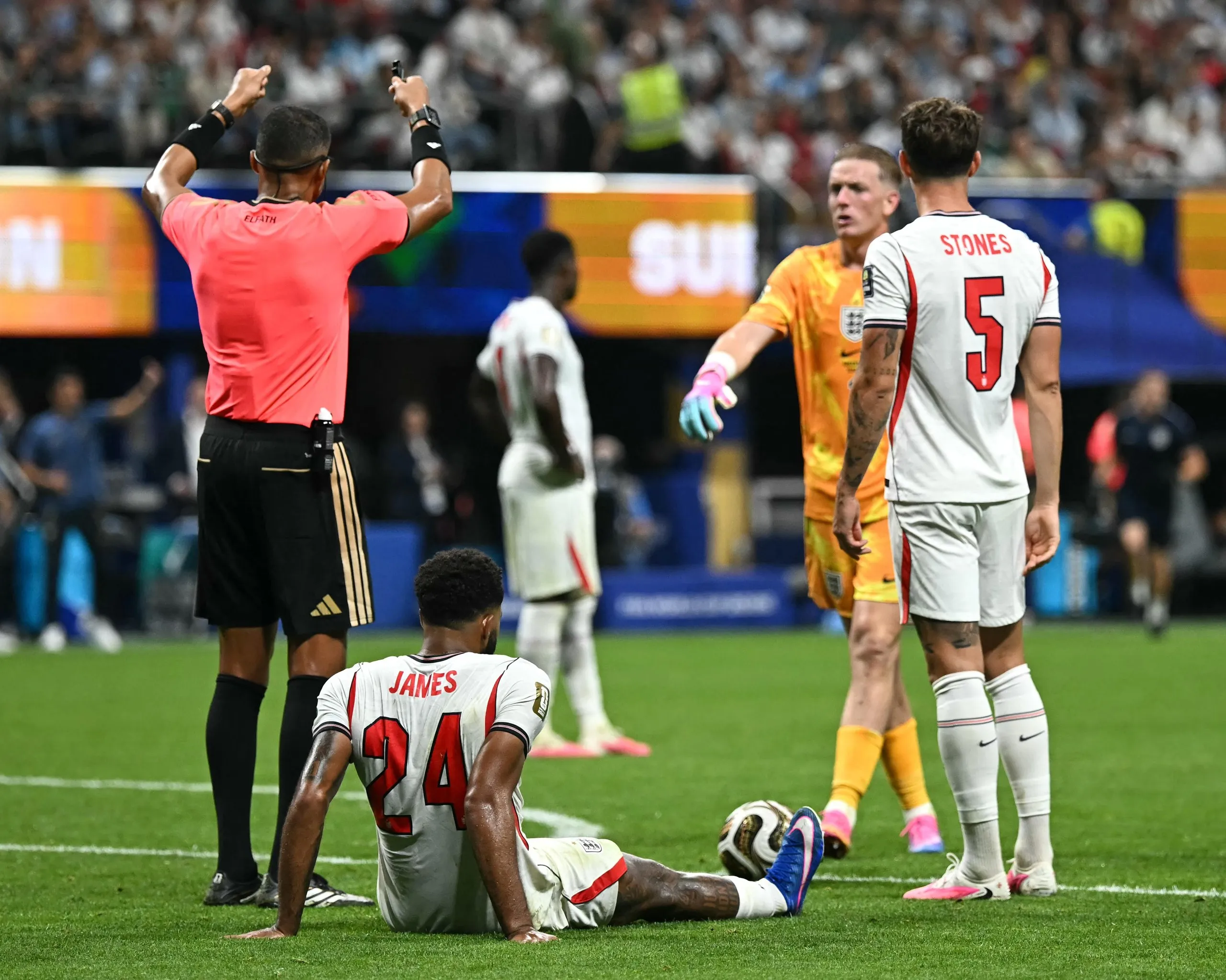
Gibbs-White, a direct runner who was not included in the squad, might feel he could have made a difference, given his capacity to play wide and his tally of 18 goals last season. However, the issues extend beyond just Saka. Several players faced injury concerns. Newcastle defender Tino Livramento returned home due to injury, while John Stones struggled to regain form in central defense. Reece James, another player affected by the troublesome right-back position, predictably suffered hamstring issues and experienced cramping just before Argentina’s equalizer.
These complications were foreseeable. Additionally, it’s fair to note that the defensive options were limited. Although Luke Shaw and Lewis Hall are competent left-backs, they have a history of injuries. Harry Maguire’s reaction to being overlooked reveals a deeper issue regarding Tuchel’s selections.
Nevertheless, Tuchel constructed a squad featuring six center-backs, but only one left-footed left-back (Nico O’Reilly) and four central midfielders. He constrained his own options, especially when it came to addressing Declan Rice’s hamstring and lower back issues.
Rice is essential to England’s game plan; without him, their structure collapses. Tuchel was aware that his vice-captain was struggling to complete matches and should have had a viable backup. The midfield cover for Rice and Elliot Anderson comprised Jordan Henderson and Kobbie Mainoo.
These choices are perplexing. Henderson, at 36, had only made one brief substitute appearance in five matches before fracturing a wrist during the celebrations against Mexico. Was he truly fit for a playing role? The evidence suggests otherwise. In fact, Tuchel’s preferred adjustment when Rice struggled was to position James in midfield. Mainoo, known for his skill, had not seen any game time. Wharton, a sharp passer, watched from home, as did Alex Scott, the dynamic Bournemouth midfielder, and Myles Lewis-Skelly, who started in midfield for Arsenal in the Champions League final.
Tuchel never seemed to grasp the reasoning behind selecting Mainoo. He could lament England’s lack of control while leading against Argentina but neglected to include players comfortable on the ball. This was a deliberate decision on Tuchel’s part, and what exacerbates the situation is his failure to adhere to his strategy.
Why did he not maximize his squad’s potential? Tuchel mentioned having 14 or 15 starters, with others meant for specific roles. Ivan Toney was designated as a physical presence for emergencies. However, not giving the striker a chance until England was on the brink of elimination seemed logical. Not utilizing Ollie Watkins, however, was an odd decision. Harry Kane had an off game against Argentina and should have been substituted. Watkins could have stretched the defense with his movement. Instead, he received just one brief substitute appearance against Panama and has reason to feel Tuchel was too attached to Kane.
Many England managers have faltered by favoring star players, but Tuchel was expected to break that mold. Now, he appears to be just like his predecessors. The scrutiny will be relentless. Some players will question the manager’s cautious approach, while others will wonder why they were not afforded an opportunity. The fans are ready to lose faith. While the FA may cling to their trust in Tuchel, the damage to his reputation is significant. He made critical errors, and the nature of the defeat makes it challenging to overlook them.
- Thomas Tuchel
- England
- World Cup 2026
- World Cup
- Argentina
- analysis