


“I wanted it to be you. I wanted it to be you so badly.”
As England’s aspirations in the World Cup fade into yet another round of disappointment, the team finds itself back in Atlanta, grappling with the latest loss, feeling a mix of sadness and confusion. In a moment reminiscent of classic New York romantic comedies, it seems fitting to channel that cinematic wisdom: Don’t be sad that it’s over. Instead, let your frustration spill over in a fervent radio rant about the unfairness of it all.
The World Cup will soon reconvene in New York for its final ceremonies, marking the end of a long journey. For England, however, it will take a considerable amount of time before there’s any eagerness to return to the pitch. There’s a need for shock, reflection, and a period of blame; it’s time to point fingers at Thomas Tuchel.
In the wake of England’s exit, the emotional fallout is palpable. While frustration runs high, it’s crucial to take a step back before laying all the blame solely on the manager. Once again, we find ourselves questioning team selections and witnessing a squad that falters under pressure. It’s a recurring theme, akin to a man lamenting that all his former partners share the same flaws, failing to understand him.
What is it with these mismatched expectations? Recall the previous manager, who penned letters about marmalade. Subpar choices led to a team that wilted under the spotlight. Thankfully, he’s gone now. Then there was the one before him, whose vision of Paris fell flat. Consistently, it’s been a case of poor selections leading to a team that shrank in crucial moments. The list goes on: a foreign coach who became frustrated, and others who simply couldn’t adapt. How unlucky can one team be?
Yet, two truths can coexist. The squad felt awkward and clumsy throughout the tournament. Tuchel, highly compensated for his role, undeniably mismanaged a significant opportunity to do better.
When Tuchel faced the media post-match in the chilling depths of Atlanta Stadium, he appeared more frail, almost skeletal. He presented a façade of calm as he discussed the necessity of maintaining tactical clarity, grappling with the storm of criticism heading his way. As he remarked, when a team loses, every decision made appears flawed, while those not taken seem perfect.
Now, it’s time for accountability. A collective disappointment has settled in. The critical moment occurred between the 72nd and 92nd minutes in Atlanta, where England transformed into a defensive shell, consumed by fear. At 72 minutes, in response to the team losing all attacking shape, Tuchel opted for a conservative five-man defense.
With just eight minutes remaining, England fielded six defenders. The earlier talk of bravery and resilience vanished, replaced by a desperate attempt to hang on. This miscalculation had worked previously against Norway and Mexico, but neither of those teams boasted a legendary figure like Messi, who can exploit any lapse in pressure.
This was akin to surrendering without a fight. It was a retreat, the same old story. And it was supposed to be different this time.
Consequently, Tuchel will face renewed scrutiny over his squad choices. While the critique is easy and invites speculation about alternate histories, the truth is that the squad performed admirably overall. England triumphed over the hosts and advanced to the semifinals, with fringe players displaying enthusiasm and energy. Tuchel’s earlier decisions had yielded positive results against Argentina, showcasing that even skilled managers can falter. While he was headed for an overall score of eight, that rating dropped to a seven after Atlanta, with only a four for the game itself.
At this juncture, it is crucial to broaden the perspective, to move beyond the notion of a singular savior. “Maybe a happy ending doesn’t include a guy. Maybe it’s you, on your own, picking up the pieces and starting over” This quote, from the film He’s Just Not That into You, serves as a poignant reminder that often the deeper issues lie within. Tuchel fell short against Argentina in critical moments, but more fundamentally, he struggled against the very essence of England, the formidable concept that haunts every match, laden with historical weight.
The pivotal moment wasn’t merely the late stretch of minutes; it was the complete disintegration of England’s resolve after taking a lead just 17 minutes before. In that instant, the team recoiled, withdrew, and avoided what could have been victory against Argentina.
Tuchel’s failure was not in his inability to predict this outcome. His analysis following the Norway match now seems astute. He recognized the looming crisis but was powerless to avert it. Thus, England succumbed yet again, repeating familiar patterns.
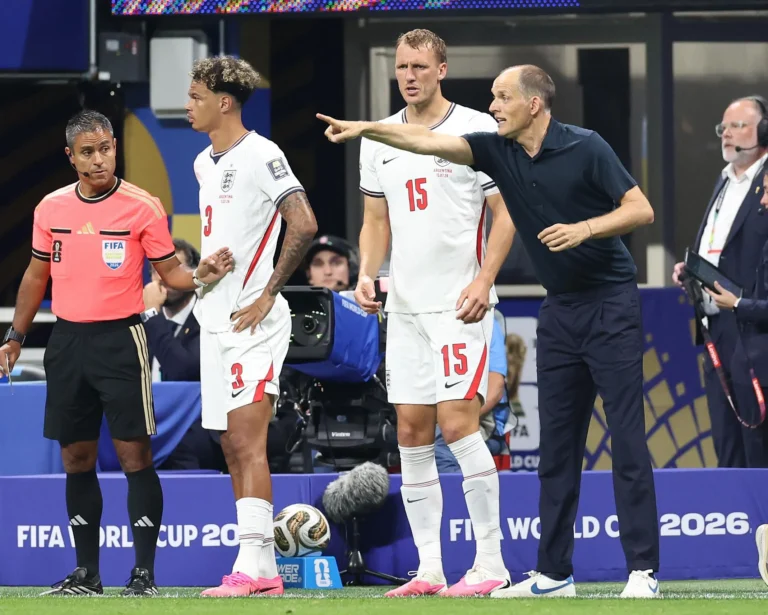
Suddenly, England found themselves on the back foot, overwhelmed by Messi’s influence, struggling to clear corners with ample time to play. Although Tuchel urged his players to push forward from the sidelines, Harry Kane’s presence faded. It wasn’t that he had a poor performance; rather, he simply was absent.
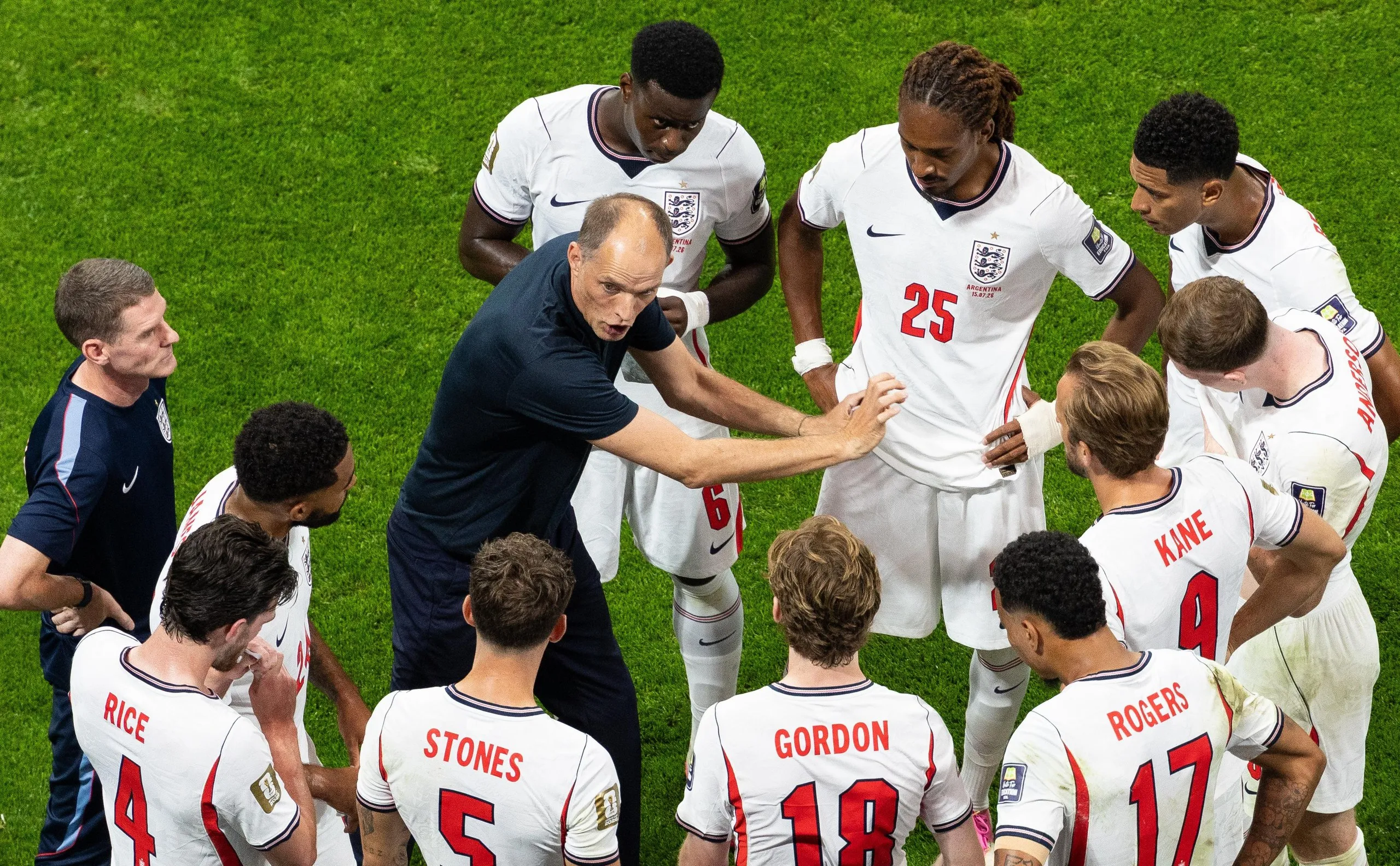
In an effort to rectify the situation, Tuchel became animated during the hydration break, consulting his iPad and gesturing vigorously, trying to instill urgency.
Knockout matches frequently hinge on those chaotic late-game moments when controlling the ball and tempo becomes paramount, highlighting the importance of elite midfielders with tactical awareness. Unfortunately, England’s midfield still lacks the sophisticated possession skills that are crucial in tight knockout scenarios. This was evident in their defeats to Croatia in 2018 and Italy in 2021, where opponents effectively dictated the game.
International football thrives on cohesive teamwork, strategic understanding, and spontaneous creativity. Sadly, England has yet to develop high-caliber controlling midfielders whose game is defined by intelligence and finesse.
This brings us to a significant point. While Tuchel may have faltered in addressing these challenges, he is part of a larger framework of decisions and transformations spanning decades. England has progressed and become more cohesive as a unit. Considerable efforts have gone into reducing the gaps, yet the essence of England remains unchanged, still navigating through familiar struggles.
- Thomas Tuchel
- England
- World Cup 2026
- features