

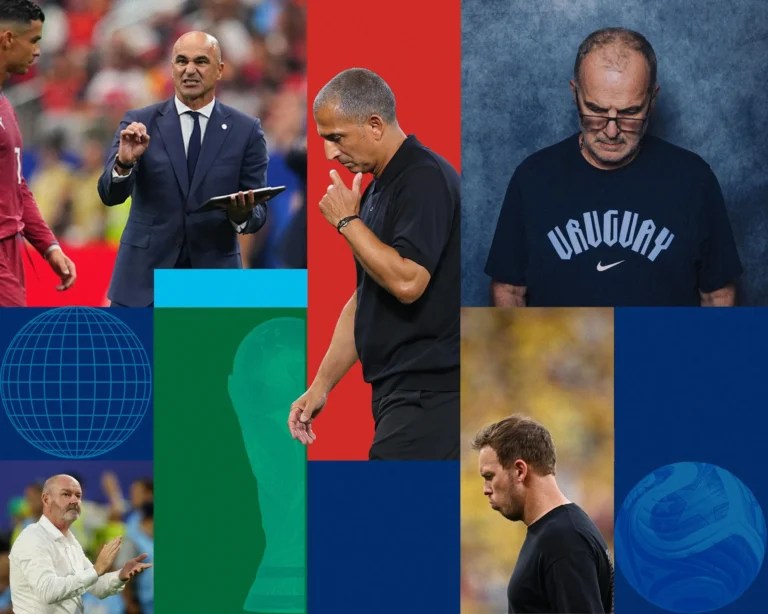
A notable shift has occurred in the world of international football, with one-quarter of World Cup coaches leaving their positions, highlighting the immense pressures and high expectations that come with managing at this level.
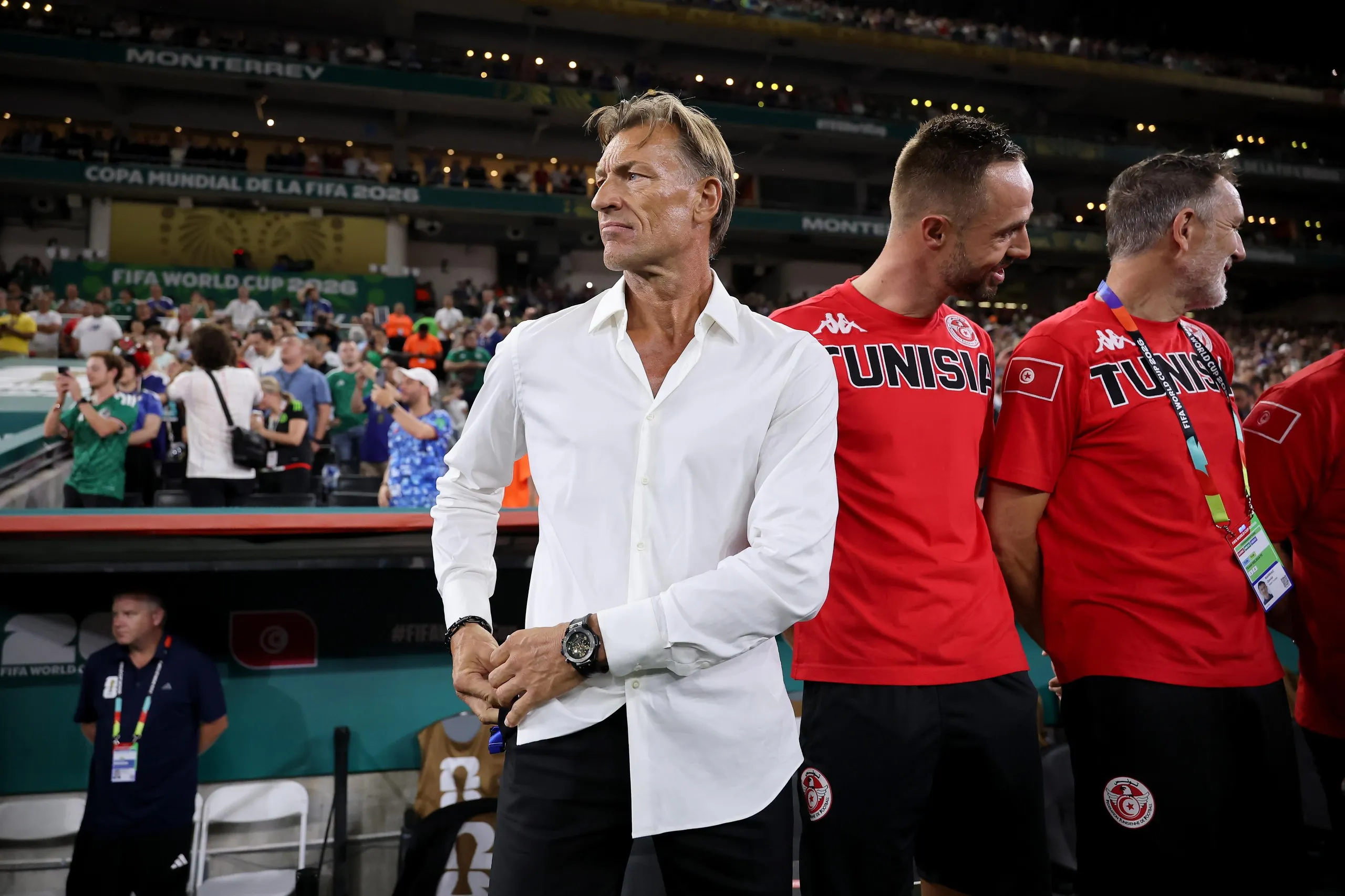
Tunisia
Sabri Lamouchi took the reins on January 14, succeeding Sami Trabelsi after Tunisia’s penalty shootout defeat to Mali in the Africa Cup of Nations Round of 16. His time as head coach came to an abrupt end following a disheartening 5-1 loss to Sweden in their opening group match. In the aftermath, he stated: “We have our pride. We need to react.” The Tunisian Football Federation later issued a statement, saying: “The Federation Tunisienne de Football announces the termination of its contractual relationship with head coach Sabri Lamouchi by mutual agreement and wishes him every success in his future professional endeavours.”
Just 18 days into his appointment, Hervé Renard stepped down, unable to improve Tunisia’s fortunes, which included a record-setting 12 goals conceded during the group stage. He expressed on Instagram.
“It was an honour to wear Tunisia’s colours and to live this unforgettable experience.”
Portugal
Roberto Martínez was named head coach on January 9, 2023, following Fernando Santos’s departure after Portugal’s 1-0 loss to Morocco in the 2022 World Cup quarter-finals. His resignation came after Portugal was eliminated by Spain in the Round of 16. Martínez remarked.
“I came with the objective of winning the World Cup and because I haven’t won, it wouldn’t make sense to continue.”
South Korea
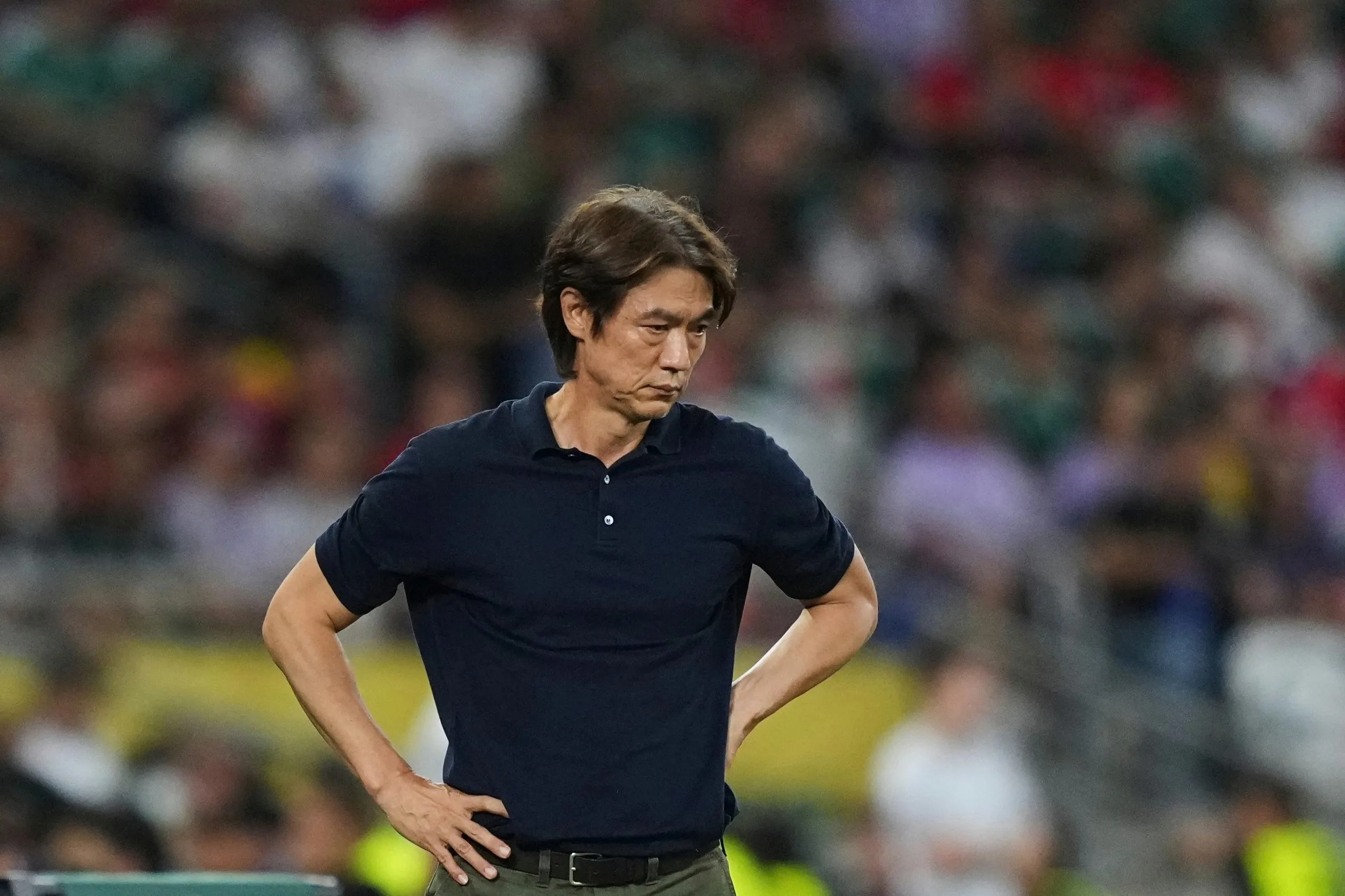
Hong Myung-bo returned to the post on July 8, 2024, after a previous unsuccessful year-long tenure where South Korea failed to secure a win at the 2014 World Cup. He resigned under intense scrutiny after losses to Mexico and South Africa, which postponed their exit confirmation. He stated in a formal statement: “The position of head coach is one in which responsibility is so great that no explanation is necessary when the results fall short.” South Korea’s president, Lee Jae-myung, added: “If an incapable person is appointed as a leader, the outcome is as predictable as fire.”
Czechia
Miroslav Koubek was appointed on December 19, 2025, after Ivan Hasek was unable to secure automatic qualification, leading Czechia to their first World Cup since 2006 through the playoffs. He resigned on June 29 by mutual agreement after the team finished last in their group. Koubek stated in an official statement: “A media campaign based on a series of half-truths and fabrications against me also contributed to my decision.” David Trunda, chair of the Czech FA, expressed gratitude for Koubek’s contributions: “He deserves my sincere respect and thanks.”
Scotland
Steve Clarke was appointed on May 20, 2019, becoming the first men’s head coach to guide Scotland to three major tournaments. He quit following their World Cup exit, confirmed by their inability to finish among the eight best third-placed teams. In an open letter to supporters, he stated: “One element that has given me the greatest satisfaction is witnessing the reconnection of our national team and our fans.” The SFA chief executive, Ian Maxwell, noted: “He made up his mind that he wanted to step down. There has been some fairly hysterical commentary back home, which hasn’t helped, but ultimately it is up to Steve.”
Uruguay
Marcelo Bielsa took charge on May 15, 2023, following Uruguay’s disappointing performance at the 2022 World Cup, making headlines by opting for 14 uncapped players instead of seasoned veterans. He resigned after Uruguay was eliminated from the group stage, coinciding with the end of his three-year contract. During a 100-minute press conference, he expressed regret: “I have not left anything to Uruguayan football.” In a farewell meeting with his players, defender Sebastián Cáceres commented: “I’m not going to say what was discussed. That has to stay between us, as it should have from the very beginning.”
Croatia
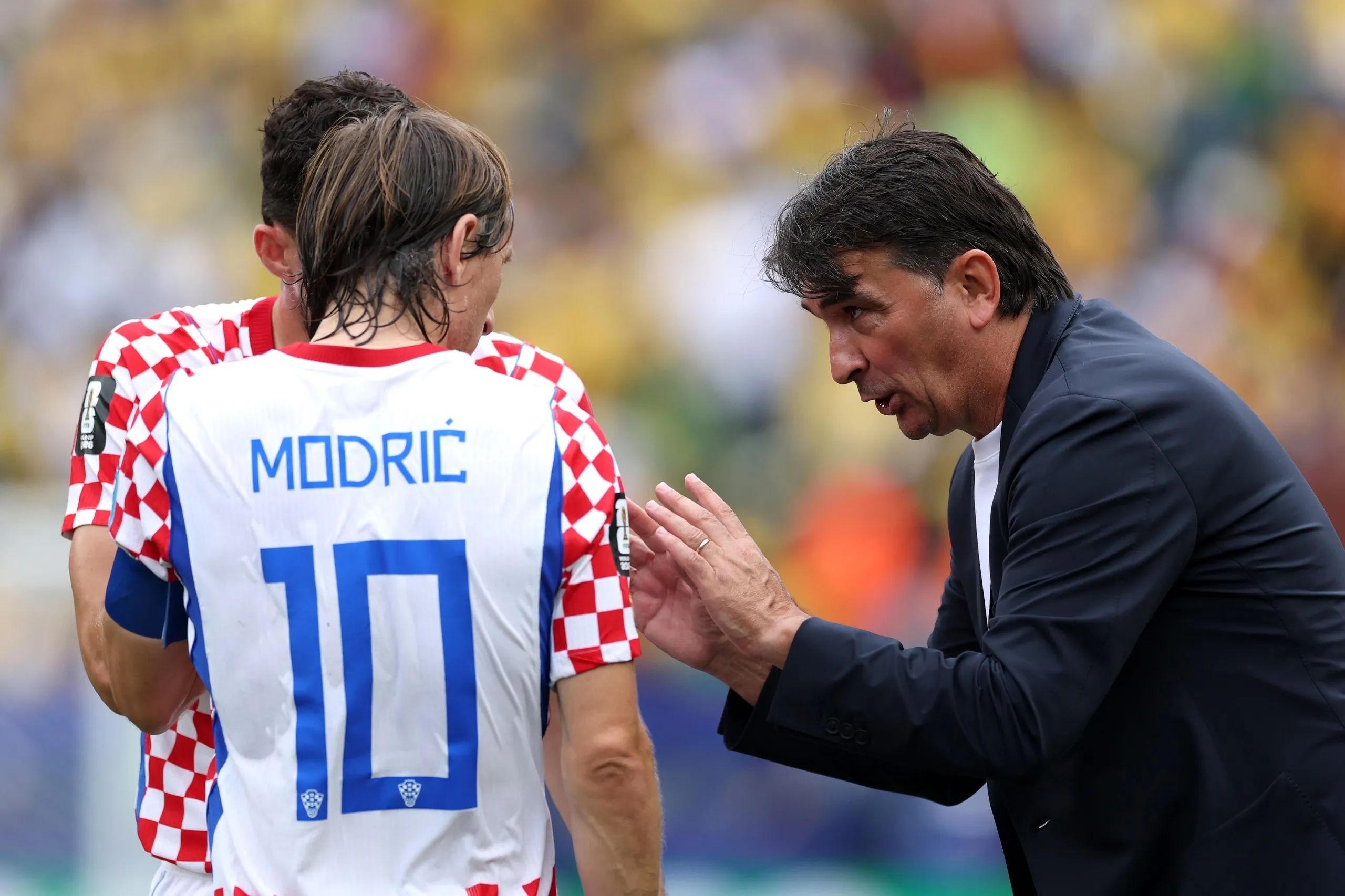
Zlatko Dalic was appointed on October 7, 2017, leading Croatia to the 2018 World Cup final and the semi-finals in 2022. As the longest-serving coach for Croatia and among the longest in this list, he stepped down upon the expiration of his contract after a controversial 2-1 defeat to Portugal in the last 32. He confirmed his exit by saying: “When I took over, I didn’t dare dream that we’d achieve everything we have.” The Croatian federation expressed their gratitude: “Thank you for everything – the victories, the achievements, the qualifying berths, the medals, the unity, the respect, and your unwavering commitment to fight for Croatia.”
Ghana
Carlos Queiroz was appointed on April 13, 2026, taking over from Otto Addo, who was dismissed after a string of poor results, including a 5-1 friendly loss to Austria. He stepped down following Ghana’s elimination by Colombia in the last 32. The 73-year-old shared on social media: “I leave this journey with pride in what we achieved.” However, Koffi Adams, the minister for sport and recreation, noted he “had not received any resignation letter from the FA … He wasn’t appointed on social media, so I don’t think that he resigned via social media.”
Germany
Julian Nagelsmann was appointed on September 22, 2023, to replace Hansi Flick after a 4-1 defeat to Japan led to Flick’s ousting. Nagelsmann’s departure followed a shocking exit against Paraguay in the last 32, during which he explained: “My top priority has always been the success of the team. After such a bitter disappointment, it deserves the chance of a new beginning.” Rudi Völler, the sporting director of the German football association, remarked that Nagelsmann “is and remains an excellent coach and I am convinced that he will continue to follow his path successfully” — albeit not with Germany. Jürgen Klopp is now a potential candidate for the role.
The Netherlands
Ronald Koeman returned for a second term on January 1, 2023, after Louis van Gaal’s retirement. He resigned following a shootout loss to Morocco in the last 32, facing backlash for his conservative strategies. He reflected: “Looking back on my career, I feel especially proud. The past few years have made me realise again that there are more important things than football.” Marianne van Leeuwen from the Royal Dutch football association praised him, stating he “gave everything for the Dutch national team”
Sebastián Beccacece was appointed on August 1, 2024, taking over from Félix Sánchez. Despite losing only three matches in nearly two years, he resigned after a 2-0 defeat to co-hosts Mexico in the last 32. He noted: “Our contract ended with the World Cup.” Concerns about his defensive tactics were raised, which Beccacece acknowledged: “For the fans who don’t know me, I think I didn’t quite click with them.” The Ecuadorian football federation expressed appreciation for his “commitment, dedication and professionalism throughout this cycle”
- World Cup 2026
- World Cup
- features