


Just moments after Argentina’s intense extra-time win over Switzerland in the quarter-finals, head coach Lionel Scaloni faced inquiries about the upcoming semifinal against England. This match represents more than a mere contest; it holds historical and emotional weight, particularly for the Argentine side.
A reporter posed a question in Spanish, highlighting the emotional significance of the game. “This won’t just be a special game from a footballing standpoint,” he began. “but also in an emotional sense. How do you imagine you and the players will come out for this game and what message would you give to all of us Argentines that are …”
Scaloni swiftly interrupted, asserting, “This is a football match, OK?”
Decades earlier, in the lead-up to a similar clash in the 1986 World Cup quarter-finals, Diego Armando Maradona had also addressed the media. The context of that match was steeped in the memories of the Falklands War, a 74-day conflict that had claimed the lives of many on both sides. For Argentinians, the war and its aftermath remain a raw wound.
“The message is that this is a football match. Let’s not look for anything else. This is a football match.” Maradona insisted, echoing Scaloni’s sentiment by repeating his assertion multiple times.
Maradona’s focus on football persisted, as his teammates later recounted, until they entered the Estadio Azteca tunnel. “This is just a match, OK?” recalled Argentine defender José Luis Brown, who passed away in 2019. “Diego was walking in line with us,”
Wednesday’s semifinal is poised to carry similar weight, particularly for the Argentinian players, who still feel the legacy of the Falklands conflict. For many English fans, the match has lost its historical context. Yet, for Argentinians, the memories are vivid and are often recounted through oral tradition, permeating the culture and social media. Maradona’s shadow looms large, even posthumously, as he remains a central figure in this narrative. Unlike English supporters, who do not flaunt images of their football legends like Bobby Charlton or Bobby Moore, Argentine fans continue to honor Maradona.
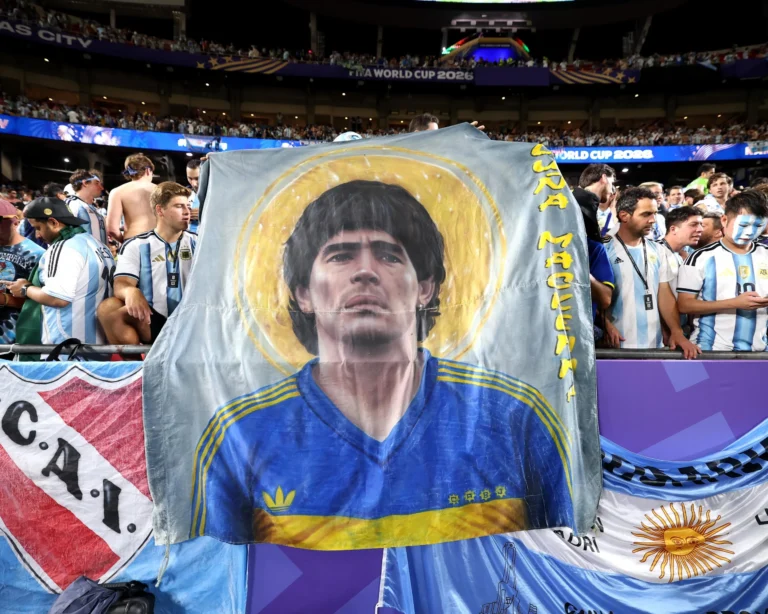
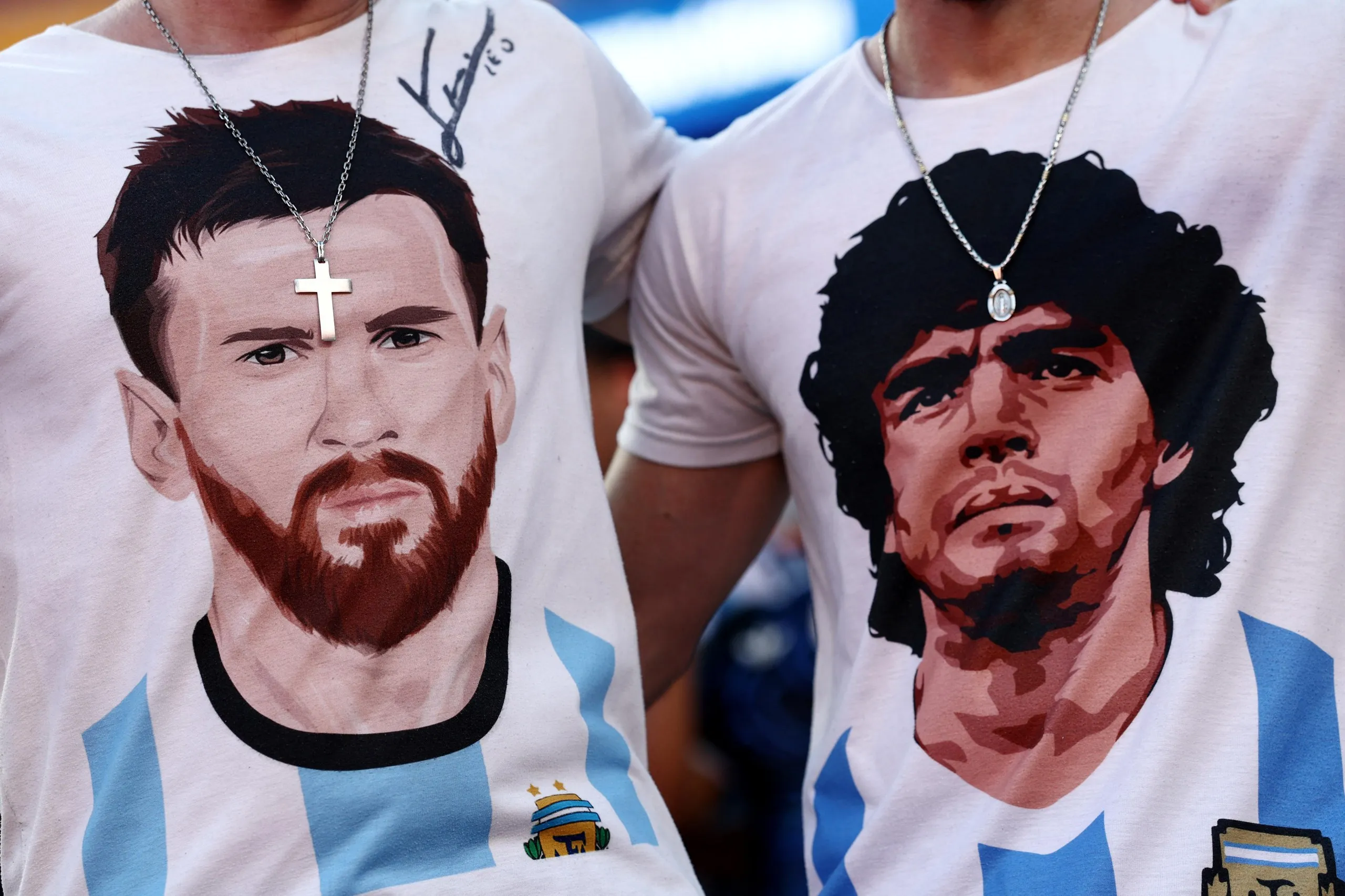
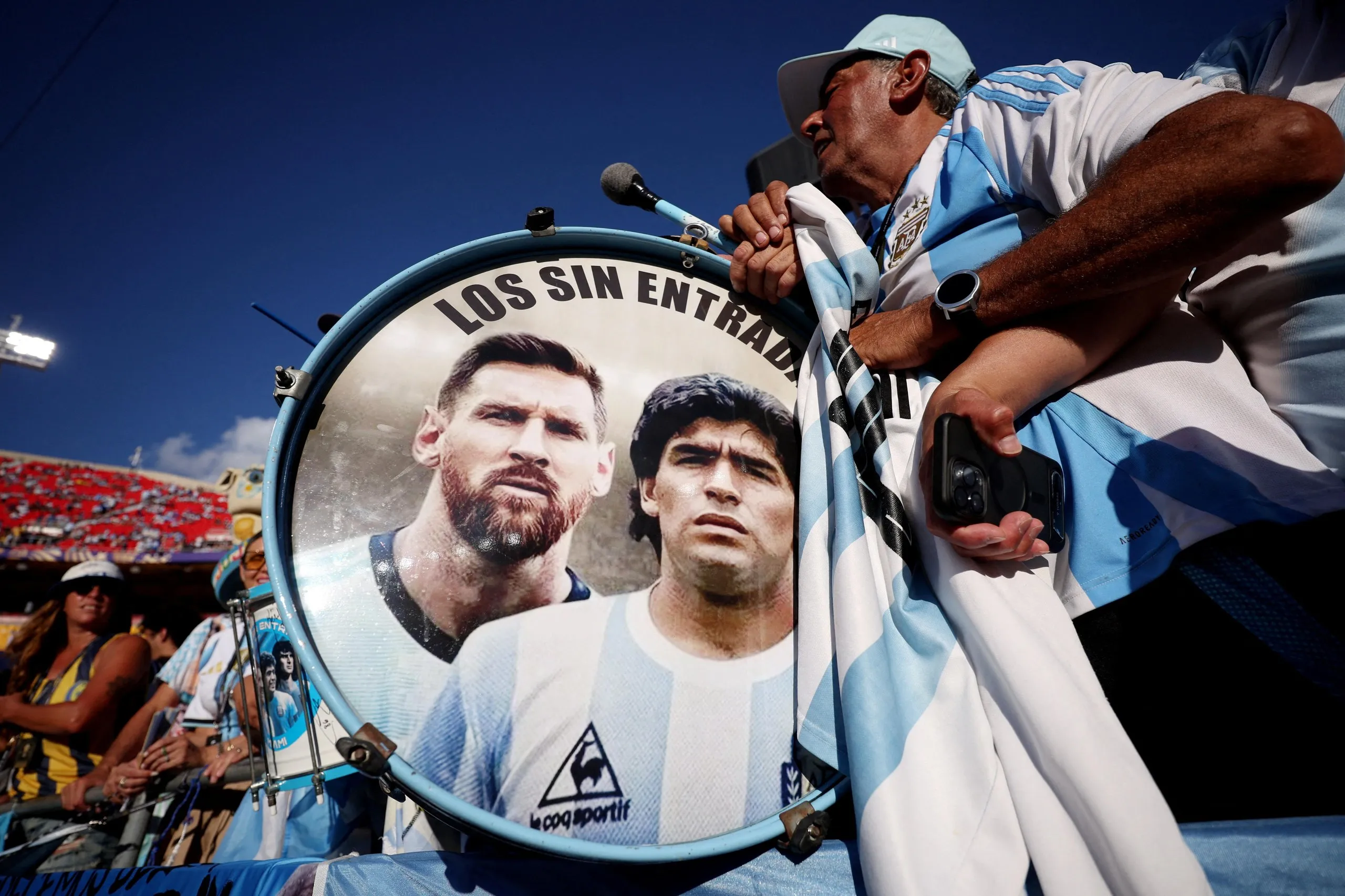
Throughout this World Cup, Maradona’s image has been ubiquitous, reminiscent of its prominence during the 2022 tournament in Qatar. His likeness has been proudly showcased by Argentine fans in stadiums across the United States, often alongside current star Lionel Messi, with songs celebrating Maradona reverberating in the stands. A viral post even depicted Messi visiting Maradona in heaven alongside Jesus Christ, underscoring the unique idolization of Maradona.
As the tournament progresses, the younger generation of Argentine fans has grown familiar with Maradona’s iconic moments and remarks, including the famous image of him celebrating his second goal against England in 1986 amidst angry English supporters.
Footage of him asserting he played that match not only with his boots but also with a rifle, seeking retribution, continues to circulate. More recent grievances include his claims that England unjustly secured victories over Argentina in the 1966 and 2018 World Cups.
Argentina’s current squad, however, does not require additional motivation. Following their thrilling win against Egypt in the Round of 16, the players celebrated in their locker room, joyfully singing the lyrics to