


As Spain ventured into the second half of extra time during Sunday’s World Cup final, it became evident that Argentina aimed to put them under considerable pressure. With relentless challenges, their defenders worked hard to restrict striker Mikel Oyarzabal from accessing his usual channels of support, prompting Spain to take eleven of their twenty attempts from outside the penalty area.
Although Lionel Scaloni’s squad displayed aggressiveness, their organization allowed them to endure the relentless Spanish assault. Following the introduction of his first two substitutes in the 62nd minute, Luis de la Fuente adapted Spain’s strategy, especially after Enzo Fernández’s dismissal late in regular time.
In the 106th minute, as right-back Pedro Porro observed Argentina’s defensive setup from the edge of the box, he noticed a developing scramble outside. Fresh from the restart, his teammates were largely moving parallel to him, constrained enough to create valuable space behind the defense. When Lamine Yamal passed back to Porro, many in the stadium anticipated yet another attempt to recycle the ball for a different approach.
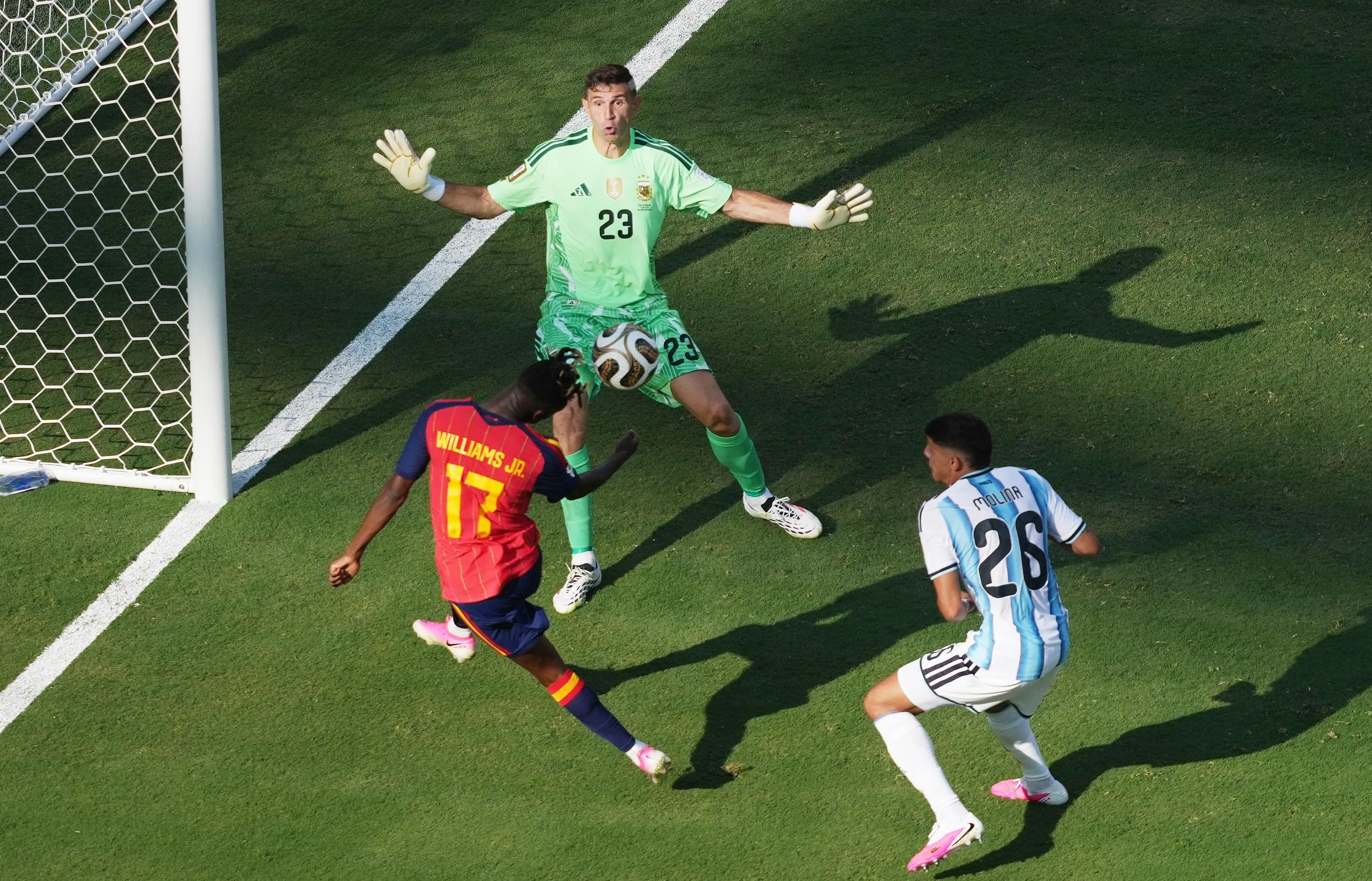
However, Porro opted for a cross instead. He delivered a perfectly weighted ball, strong enough to leave defenders uncertain but not so powerful that it risked going out of play. Nico Williams reacted swiftly, aware that his teammates were slightly behind the play.
Throughout the 2026 World Cup, Williams had spent more time on the bench than he would have preferred. After starting all six matches in Spain’s victorious Euro 2024 campaign, he arrived in the U.S. burdened by a groin strain and hamstring issues sustained late in the La Liga season. He exited the group stage match against Uruguay due to an adductor injury.
Williams did not start any games in this World Cup, with his 45-minute appearance against Argentina marking his longest stint. On Sunday, his introduction promised more energy and unpredictability than the winger he replaced, Alex Baena, who had struggled to contribute effectively.
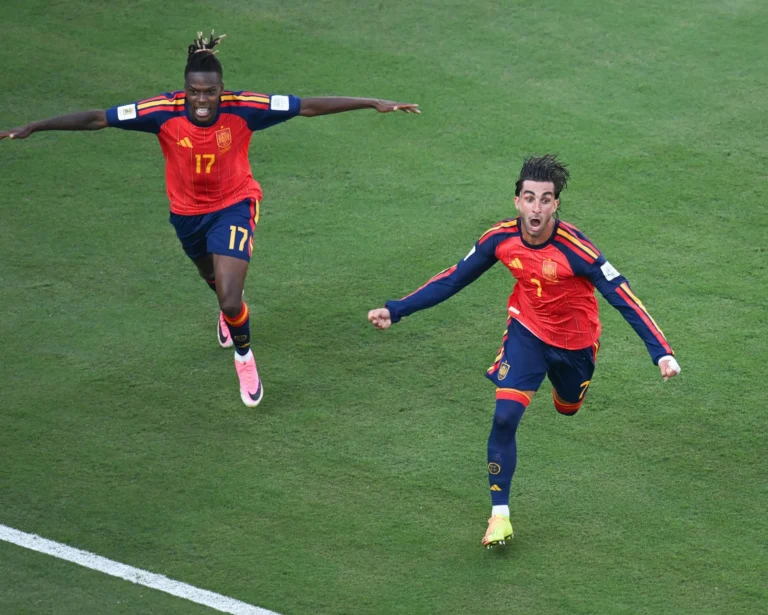
Once his chance finally came, Williams made the most of it. As Porro’s cross descended, the 24-year-old headed the ball not merely into the heart of the six-yard box but skillfully directed it beyond the nearby defenders into the path of fellow substitute Ferran Torres. This goal was a result of keen spatial awareness, essential for breaking down a determined Argentine team intent on pushing the match to penalties.
Like Williams, Torres entered the match aiming to exploit Argentina’s defensive strategy. Oyarzabal played a crucial role for a possession-focused Spain, contributing to the buildup while seeking openings along the backline. Argentina, however, had positioned themselves to allow this but thwarted Oyarzabal’s attempts to move closer to goal. Torres, with his finesse and off-ball movement, offered a fresh dynamic, coming onto the pitch with more energy to challenge a tiring group of Argentine veterans.
In a match filled with fierce challenges, Torres’s run went unmarked. Giuliano Simeone, the closest defender, comically took himself out of the play just as Torres sped past him. Moments before Williams kept the ball from going out, Simeone had misjudged the pass and was adjusting his sock as Williams’ header found Torres. With three Argentine defenders focused on Mikel Merino, who had scored decisive goals against Portugal and Belgium, Torres was afforded unusual time and space to set Spain on course for their second men’s World Cup title.
As the tournament progressed, Spain was frequently touted as the best team. Their collective style of play became so cohesive that, even without scoring, the team’s focus on buildup remained strong. Under de la Fuente, players gained confidence, eagerly embracing their roles even if it meant stepping back from the spotlight in a World Cup filled with star players.
This balance is rare in modern international football. While club football has become intricately structured, with rehearsed sequences and pressing triggers, national teams often consist of stars who enjoy the game built around their strengths and weaknesses. Thomas Tuchel attempted to cultivate a similar atmosphere with his squad selections but found himself lacking midfielders after Jordan Henderson’s clumsy celebration.
It’s easy to reduce teams to the star players they support. When successful, as it was for Messi’s Argentina, few question the strategy. Conversely, when it falters, as seen with Cristiano Ronaldo’s Portugal, the coach faces scrutiny for failing to address the issue.
Similar to elite clubs, de la Fuente effectively adjusted Spain’s tactics during matches by introducing players who could occupy the same spaces as their predecessors, each interpreting their role uniquely. Williams’s style on the wing allowed him to challenge defenders more aggressively than Baena, while Torres’s entry added depth to the attack against a shorthanded Argentina. Pedri, who came on just after the hour mark, also made things difficult for Argentina, offering a more dynamic midfield option alongside Rodri compared to Fabián Ruiz.
As Argentina struggled under the afternoon sun in New Jersey, Spain continually adapted, evolving their play to keep the defending champions on edge. With a masterful cross, an expertly placed header, and a well-timed run into open space, Spain is poised to enter the 2030 World Cup cycle at the top of their game.
- World Cup 2026
- World Cup
- Spain
- analysis