


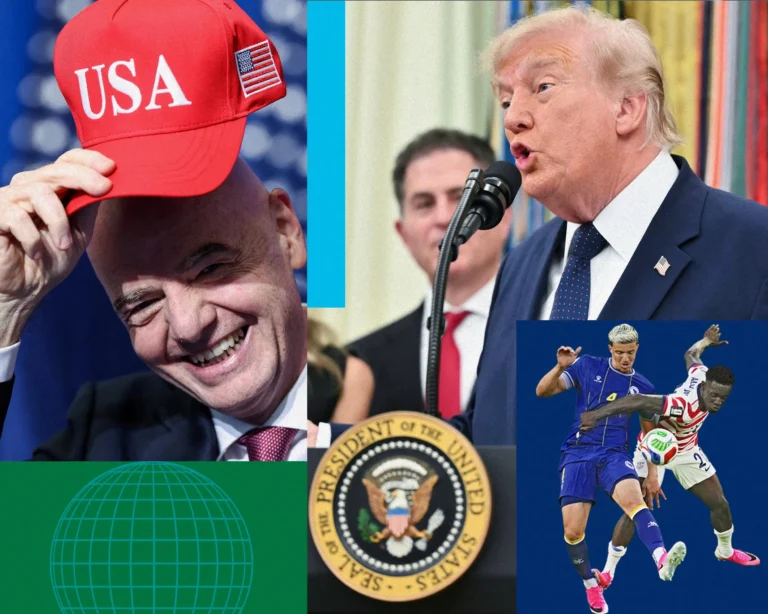
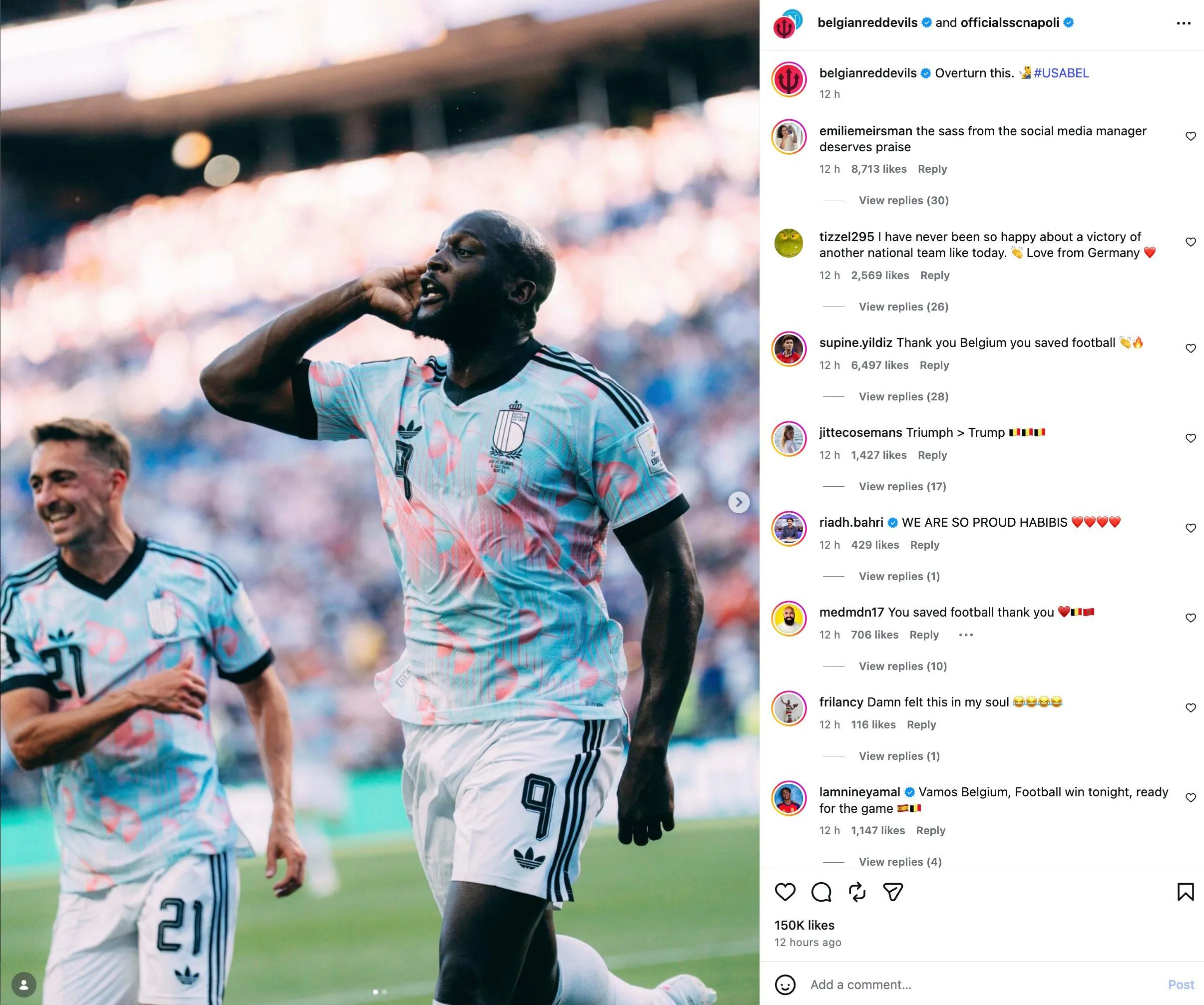
The result was shocking: Fifa 4, Cheats 1. The United States suffered a defeat at the hands of Belgium, leading to widespread international amusement about the team exiting the World Cup early, particularly following Donald Trump’s controversial involvement.
This sentiment dominated reactions to the USA’s lackluster performance in Seattle, where they were decisively outplayed by a determined Belgian side known for its culinary delights and sporting prowess. The scoreboard read Belgium 4, USA 1, and the contrasts were stark.
Much of the domestic response in the United States has fixated on an intriguing yet ultimately secondary aspect of the situation: Did Trump’s involvement, highlighted by his claim of orchestrating Folarin Balogun’s ban, undermine the team’s performance? His assertion, “I was the one who got them to do it” has been denied by FIFA.
Could this be a manifestation of what I term the Trump Exposed Reactor Core Phenomenon, where Trump’s touch seems to cause chaos while he remains unscathed, continuously emitting his controversial energy?
The explanation for the defeat, however, is straightforward. Ignoring the hype surrounding the host nation, it is evident that the USA squad is outmatched by Belgium in nearly every position. If Leandro Trossard were American, he would be prominently featured on billboards, promoting his legacy. Even a waning Romelu Lukaku, who now resembles a relic on roller skates, managed to outshine the USA’s defense.
Trump’s influence does not alter these sporting realities, yet his involvement is still significant. It is crucial to sift through the noise surrounding Trump and focus on the underlying narrative—Gianni Infantino and FIFA are at the heart of a shocking sporting controversy.
Dictators often appear untouchable during their reigns. However, this incident might mark the beginning of Infantino’s decline, as he risks flying too close to the sun while clad in his tailored blue suit.
While the Trump angle is notable, it warrants a quick discussion. Ultimately, he couldn’t resist meddling. Last week, I noted Trump’s unexpected absence during the initial three weeks of the World Cup, where he neither attended matches nor made significant statements.
This suggests a deliberate strategy. In the lead-up, Trump hovered around the World Cup like an overzealous real estate agent, eagerly engaging with the trophies and the FIFA president, who had spent 18 months pursuing him with the enthusiasm of a lovesick child.
For three weeks, Trump managed to restrain himself, taking cues from the 2018 Putin playbook by allowing the event to unfold while waiting for the right moment to pounce. And then, suddenly, he reappeared.
Fast forward five days, and it has transpired. Trump has approached the World Cup with the same casual disregard he displayed in his infamous Access Hollywood remarks. This will inevitably lead to repercussions.
The most immediate fallout is for the sport itself, particularly for the USA team, whose commendable achievement of reaching the Round of 16 has been overshadowed. Infantino, as the chief enabler, now finds his governance of FIFA under scrutiny, serving as a real-time example of the perils of unchecked authority.
Trump’s actions show a certain transparency, albeit rife with chaos. His failed attempt to manipulate the situation became evident when he inadvertently revealed himself on social media. His Truth Social account, which may appear comical at first glance, reflects a stark and tragic consistency, akin to the ramblings of a lost soul on the streets of Penn Station.
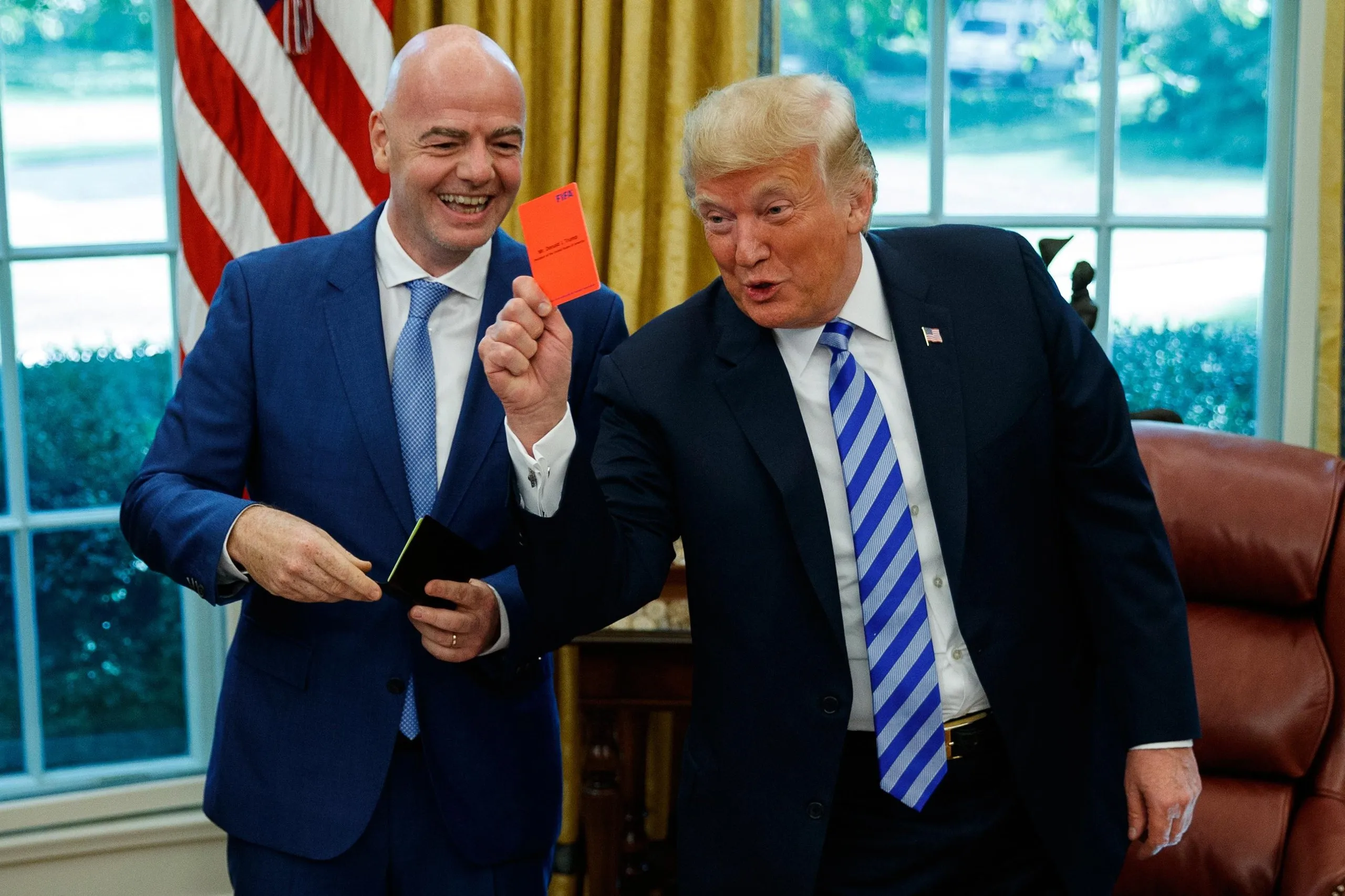
Even Trump’s first World Cup appearance on Monday afternoon was a spectacle of its own, with shaky camera angles and an incoherent delivery reminiscent of a local mayor denying the existence of a publicly funded office massage chair. Interestingly, he offered an opinion on Balogun’s red card, admitting he didn’t fully understand what a red card entailed—an aside: Trump appears to have a knack for this, even better than Peter Walton.
It is essential to recognize that this is merely a manifestation of disorganized chaos, highlighting Trump’s tendency to create distraction after his initial rise to power stirred fears about his global impact. Trump may disrupt the Gulf region, but all he has truly accomplished is to bolster Iran and the Arab alliance, while his trade wars have yielded minimal outcomes. The wider world observes his lack of strategy and trivial pursuits, leaving Belgian players to mock him on his own turf.
We must redirect our attention from the spectacle to the serious implications for Infantino, FIFA, and the sport. Infantino must answer for the glaring levels of arrogance and desire for control that have normalized such interference.
Details matter. Reports indicate that Trump called Infantino directly after the Bosnia and Herzegovina match in which Balogun received his red card. Subsequently, FIFA unilaterally altered its rules regarding red cards for the first time since the notorious Garrincha incident in 1962.
It has been alleged that the Trump administration threatened legal action, with Andrew Giuliani from the White House World Cup taskforce searching for loopholes to exploit. This is classic Trump behavior: if you disagree with the facts, undermine their validity.
The next tactic is to launch personal attacks on the referee’s credibility, albeit on dubious grounds. What is the endgame here? A mob of Trump supporters storming FIFA headquarters in Zurich and wreaking havoc on the conference table?
Infantino has since shifted to a defensive posture, assuring the public that FIFA’s disciplinary committees operate independently and that he has no influence over their decisions. His primary concern seems to be the preservation of due process and legal integrity.
Despite these assertions, the uncomfortable reality remains. Balogun’s red card stands, and in an unprecedented move, a tournament red card did not result in a suspension for the following match.
It is challenging to convey to those unfamiliar with football culture just how detrimental this is to the sport’s integrity. It appears akin to manipulating outcomes, which threatens to unravel the very fabric of the game.
Behind the scenes, lives, careers, aspirations, and substantial financial investments hinge on these results. Yet, as a product, what fans are witnessing resembles scripted entertainment. The game, once a source of collective joy and social mobility, now faces trust issues. This is how FIFA risks dismantling football while doing so openly.
The most alarming aspect remains the level of hubris and lack of accountability that has led to this juncture. The dynamic between Trump and Infantino raises critical questions: Who will emerge unscathed, who will bear the brunt of this turmoil, and who will ultimately be left holding the bag?
Trump, viewing football as a minor distraction, is unlikely to suffer any consequences. However, in a rational organization, Infantino would face immense scrutiny for guiding football into such uncertain territory. What did he anticipate would happen when he entrusted a volatile entity with our treasured traditions? Should we be surprised if Trump grows bored during the festivities and decides to upend everything?
The broader question is whether this scandal will impact Infantino’s grip on power as he approaches the election for another term next year. The straightforward answer is: likely not. FIFA votes resemble negotiations, with 211 members ready to support whoever promises the most. Infantino has been diligent in securing his position.
However, limits do exist. The Norwegian federation has already voiced support for an ethics complaint regarding Trump’s ludicrous peace prize. Within FIFA, some members are becoming increasingly uneasy about Infantino’s self-aggrandizing behavior. His excessive admiration for authority, his use of his personal Instagram as FIFA’s primary communication channel, and the tripling of his annual salary over the past ten years from £1.3 million to £4.65 million last year raise eyebrows.
We have yet to address his micromanagement of the 2034 vote process or his aggressive moves regarding the Club World Cup. Sepp Blatter, with his own motives, has characterized Infantino as an isolated figure, reluctant to associate with lower-ranking staff. There may even be a challenge next year from Victor Montagliani, the Canadian leader of Concacaf, who recently remarked that “leadership is not about power”
The FIFA under Infantino is now fully unveiled, characterized by the clash between regulatory responsibilities and its function as an entertainment platform, a conflict Infantino navigates with fantastical rhetoric about football’s magic and the sanctity of the game, portraying himself as a benevolent guardian.
The most frustrating aspect of this situation is the sense of opportunities squandered. One can’t help but imagine the difference that could have been made with such power and influence in more capable hands. Yet, there also exists a sense of defiance. On a minor note, the past week has been a significant victory for referees, who have exhibited a commendable level of impartiality, adhering strictly to the rules, even in the case of controversial red cards.
Moreover, there is something truly remarkable about a World Cup that, despite Trump’s attempts to dominate it, has managed to transcend his control, showcasing shared joy, collective spirit, and a nuanced understanding of national identity.
No matter the eventual consequences, the current outrage reveals a critical truth: the World Cup still holds significance for the United States, reminding it of its global relevance beyond mere spectacle. The same holds for FIFA, which still has the potential to embody something greater. A small spark of hope has been ignited, one that may fizzle out, as many such sparks do, but it still deserves space to breathe.