


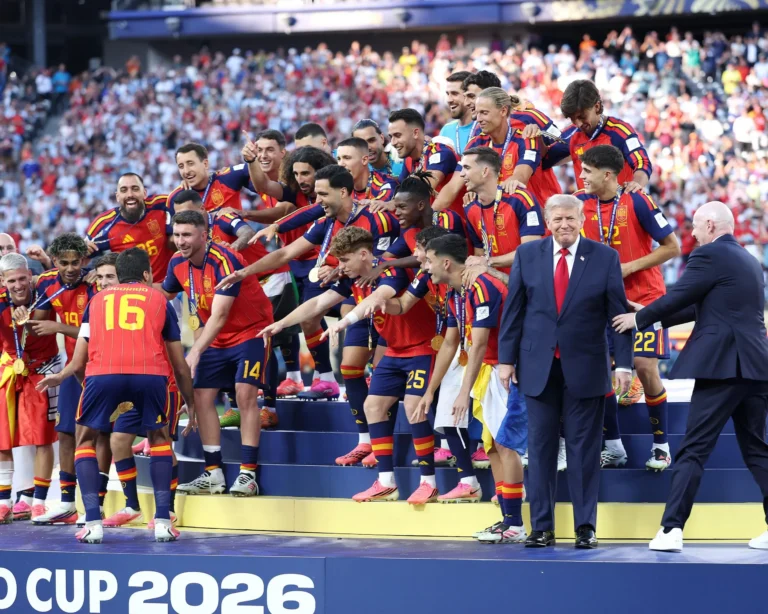
The World Cup concluded as Gianni Infantino and Donald Trump envisioned, showcasing a finale steeped in extravagance. On a day marked by opulence, the trophy was dramatically unveiled from a Louis Vuitton trunk. Together, they approached the podium to present it to a jubilant Rodri, slightly fumbling as Trump lingered for a team photo with Spain. After a brief moment of awkwardness, they exited, leaving behind a pitch glimmering with golden confetti, while the effects of an unprecedented football event echoed beyond this New Jersey venue.
How does one interpret a tournament that felt both inviting and strangely detached? The event culminated in a surreal spectacle under a brilliant American sky, where football seemed secondary for much of the day, even if the game itself offered little to bolster its case. Those seeking a narrative might find solace in Spain’s victory, representing a collective spirit in a World Cup designed to celebrate individualism.
Throughout the event, Infantino and Trump observed from behind reinforced glass, raising questions about football’s current state. The controversies of the past month reveal a leadership that has never seemed more insulated, with Trump now a significant figure in this landscape. As Argentina and Spain battled it out, often in a lackluster final, one couldn’t help but wonder how much that truly mattered.
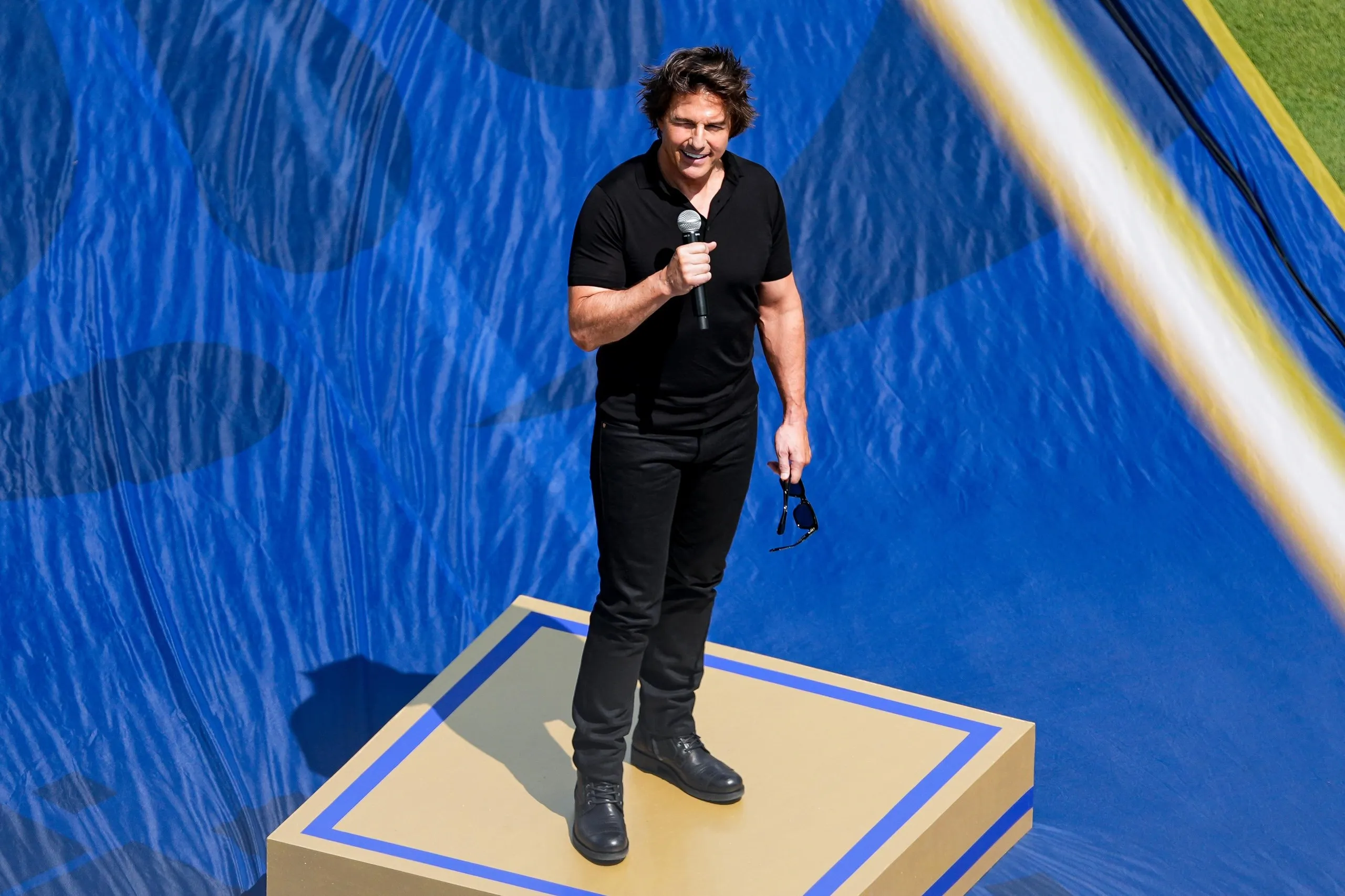
Fans who splurged $1 million (£740,000) for premium pitchside seats, complete with sun hats, may have discovered that the sport does not always deliver immediate excitement. The occasion was more about the spectacle than the actual viewing experience. A document shared by FIFA before the match named 235 of the celebrities and VIPs in attendance, including Tom Cruise, who attempted to deliver remarks during the rather bland pre-match segment, only to be overshadowed by the fervor of Argentina’s supporters, marking one of the few moments when the atmosphere truly felt alive.
This tournament has significantly altered the landscape of football. Infantino’s circle may believe that all publicity can be refined and amplified to project the sport’s flashy modern image to skeptics. FIFA has undoubtedly made its mark on the American public, many of whom seemed to mistakenly refer to the tournament as some variation of ‘the FIFA’ throughout the summer.
However, the Folarin Balogun situation has severely undermined trust in FIFA’s credibility and its claims of political impartiality. It has tested the loyalty of insiders who once unquestioningly supported the organization, though it is unlikely to prevent Infantino from securing re-election in March. More concerning is the message to newcomers that results can be manipulated if the right connections exist. Trump has openly expressed interest in the US gaining sole hosting rights in the future. The collaboration between him and Infantino is expected to deepen rather than revert to casual camaraderie. By the next available opportunity in 2038, the US might host a football event that raises ethical eyebrows.
Despite the challenges, the game has its mechanisms for survival, even if much of the final felt like a slog until Ferran Torres solidified Spain’s dominance. The remarkable journey of Cape Verde, especially that of their goalkeeper Vozinha, was a highlight. Stars like Lionel Messi, Erling Haaland, Kylian Mbappé, and Jude Bellingham delivered performances befitting their statuses. Belgium’s triumph over a previously likable US team in the knockout stage ensured Balogun’s situation had no real impact.
Amidst the controversies, there were genuine reminders of what a World Cup can achieve. Cities like Kansas City and Houston warmly welcomed fans, teams, and visitors. The hospitality was heartfelt and often disarming. Although it was easy for outsiders to paint the US with the same brush as its governmental issues, it became apparent that individuals are fundamentally good, kind, and curious. Extensive travel across the US provided an opportunity to remember this.
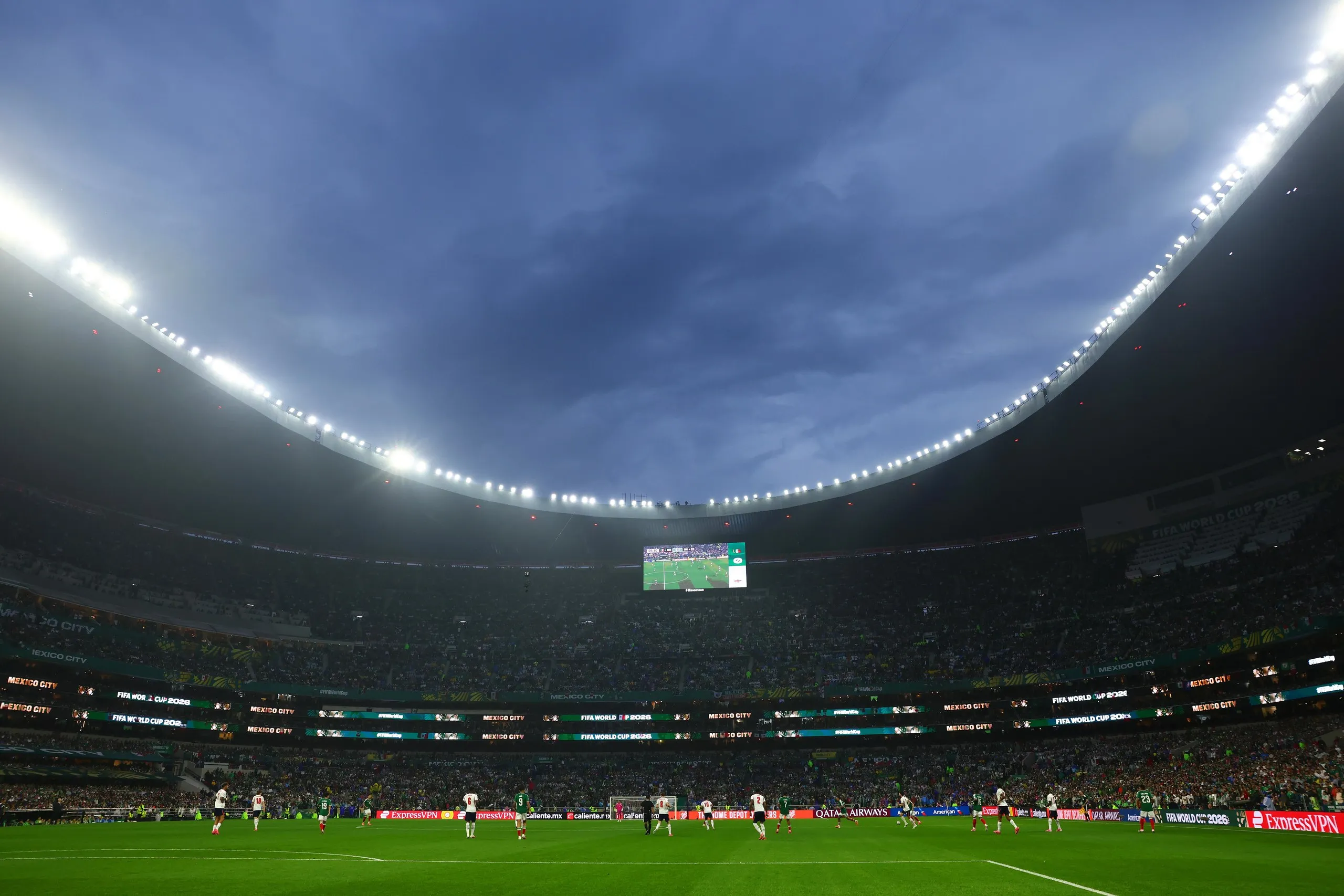
The vastness of the US, coupled with engaged immigrant communities and remote locales, meant signs of this tournament were observable yet elusive. Canada mirrored this sentiment to varying degrees. Mexico, however, infused the tournament with raw, unfiltered football passion, offering the incomparable Estadio Azteca as a venue that deserved more than just matches in the round of 16. There are concerns that it may not get another chance.
FIFA and Infantino are likely to feel emboldened by the $15 billion revenue, which far surpassed their forecasts. In reality, there was little risk of them presenting anything but a resounding success. Infantino’s insatiable desire for larger and more extravagant events suggests there will be no scaling back. Discussions about a 64-team tournament have gained legitimacy. By the time this is realized, perhaps international football outside Europe will have found a way to thrive, as Argentina and Morocco stood as the only representatives for other continents past the round of 16.
As the curtains close on this World Cup, which has consumed resources, funds, airtime, and attention like never before, Infantino and Trump made their exit. Meanwhile, a tearful Messi stood before Argentina’s supporters, delivering the kind of profoundly human moment that had been missing throughout the event. This marks the end of an era for football’s greatest player, as well as for fans who have transformed his every appearance into a vibrant tribute. The past month has seen the sport embark on a new dimension of its own.
- World Cup 2026
- FIFA
- Football Politics
- World Cup
- Gianni Infantino
- Features