


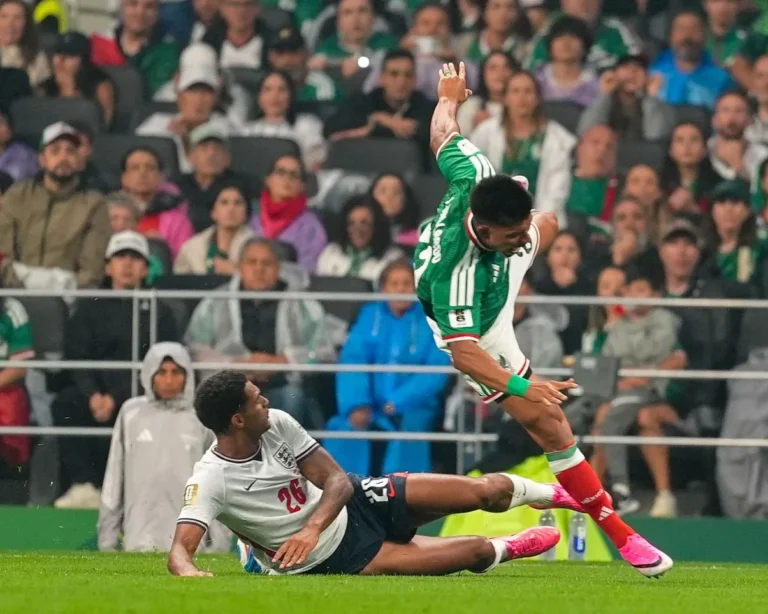
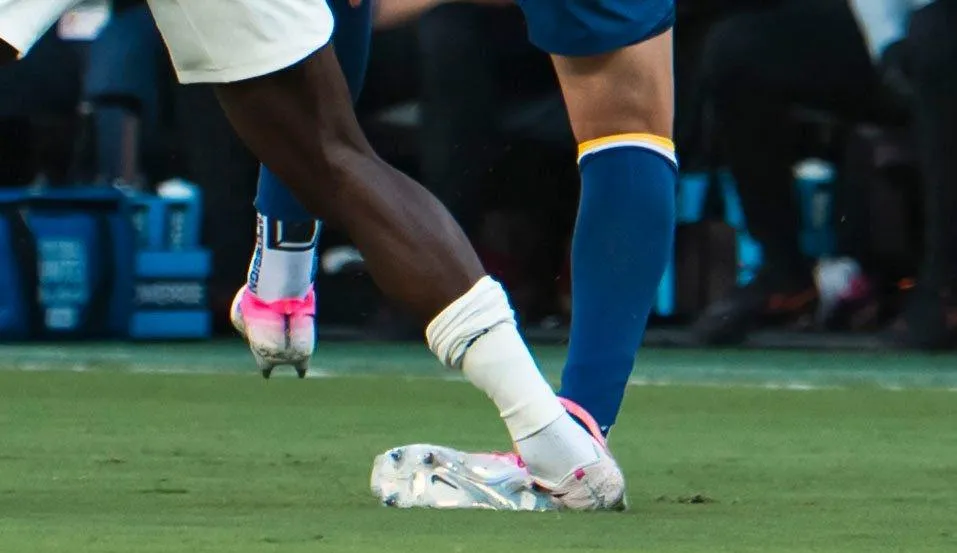
Following England’s recent victory over Mexico, Thomas Tuchel expressed strong discontent regarding the officiating at the World Cup, labeling it as inconsistent and inadequate. His remarks seemed to reflect an attempt at reverse psychology, as overall, the referees have performed reasonably well, making some sound decisions alongside a few errors. Like any professionals, referees are bound to make mistakes.
After Egypt’s match against Argentina, the team claimed they were wronged by the officials, particularly regarding a disallowed goal and the validation of Argentina’s winning goal. In the first instance, a foul committed by Marwan Attia against Lisandro Martínez during an attacking phase was evident due to a shirt pull and contact on Martínez’s foot, justifying the decision made.
An essential aspect to note is that the ball progressed forward without any lateral or backward movements until it reached the net, which could have been a standout goal of the tournament. However, the choice to disallow the goal was indeed the correct one.
Regarding Argentina’s third goal, Egypt believed there was a foul by Julián Alvarez on Mohamed Salah. Although some are drawing parallels between this incident and the earlier one due to boot-on-boot contact, the circumstances differ. Alvarez played the ball before the slight contact occurred, which did not rise to the level of a foul or warrant a VAR review.
In the Mexico-England match, the VAR made a crucial call when Jarell Quansah’s tackle on Jesús Gallardo was deemed a red-card offense, a decision I found surprising that the on-field referee, Alireza Faghani, missed. The subsequent VAR review led to the right judgment being made.
Tuchel’s frustration with several decisions during that game was evident. The referee faced a challenging task, compounded by the atmosphere, weather conditions, and the venue at the Azteca Stadium. Unfortunately, some players exacerbated the situation by feigning injuries, displaying dissent, and questioning nearly every call. The scene became chaotic when the Mexico bench erupted in anger following the Quansah challenge.
It was unexpected to learn that England is contemplating an appeal regarding Quansah’s red card. The situation surrounding Folarin Balogun has shifted perspectives significantly. Traditionally, there has been no possibility for appealing a red card in tournament settings, with an automatic one-match suspension invariably imposed. I was previously unaware of Article 27 of the Fifa disciplinary code, which Fifa cited to lift the sanction imposed on the USA striker.
Balogun’s red card was justifiable, particularly with the assistance of VAR. Initially, I was uncertain if his challenge on Tarik Muharemovic of Bosnia and Herzegovina warranted a red card, but upon review, I concluded it did, despite the absence of malice. The crucial factor was the position of the ball, which was not within a playable range.
When assessing a potential red-card incident, two critical elements must be considered: excessive force and the risk posed to an opponent’s safety. In Balogun’s case, the point of contact was on the calf, extending down to the Achilles, resulting in an ankle roll that could have led to serious injury.
The interference from figures like Donald Trump and Tuchel’s remarks has amplified discussions surrounding officiating. As a referee, maintaining focus is essential, disregarding external noise. In elite officiating, sports psychologists assist referees in managing their thoughts. Personally, I struggled to shake off a poor decision for three to four days, but that should not influence your performance. It is crucial to remain focused on the present moment.
This World Cup has seen 13 red cards issued, compared to four in each of the last two tournaments, but I believe there are minimal grounds for complaints. Player safety must remain a priority, and both Quansah and Balogun exemplify the threshold that must be upheld. VAR has correctly addressed instances where red cards were missed by the on-field officials.
However, it’s important to note that VAR interventions have not been flawless. For instance, Vinícius Júnior’s disallowed goal for Brazil against Scotland was a situation where I felt the initial on-field decision to award the goal was correct. There was minimal contact, and not all contact constitutes a foul—contact is simply part of the game. The referee did not make a clear and obvious mistake in that instance.
In such cases, a “check complete” ruling would have sufficed, and there would be no need for a re-refereeing process. I also believed Harry Kane should have received a penalty against the Democratic Republic of the Congo, as the goalkeeper, Lionel Mpasi, made contact with the England captain. Nevertheless, since it wasn’t identified as a clear and obvious error, I agreed with the video assistant’s decision to uphold the original call.
Conversely, VAR was justified in awarding a penalty to France when Désiré Doué was fouled by Paraguay’s Diego Gómez. I was surprised that the referee, Ilgiz Tantashev, did not call it during the match.
This game also posed significant challenges, yet the referee needed to exercise greater authority. I was astonished that no players from Paraguay received caution. Referees aim to manage the flow of the game, but at times, it’s necessary to assert control and distribute cards. Several incidents warranted yellow cards, and the referee’s inaction resulted in Paraguay gaining confidence, jeopardizing his control over the match.
Fifa has evidently adjusted its approach to VAR, setting a high threshold for intervention, similar to practices in the Premier League. Observing varying refereeing styles from different nations and confederations has been intriguing. Nevertheless, certain fouls are universally recognized as fouls, and I was taken aback when Leroy Sané’s goal for Germany against Ecuador was permitted, even after Aleksandar Pavlovic struck Pedro Vite in the head. When a goal is scored, the attacking phase is automatically reviewed by VAR, and in my view, that was an infraction.
Pavlovic’s boot was positioned higher than Declan Rice’s when the England midfielder was cautioned early in the Mexico game. All I can surmise is that both the video assistant and the referee deemed it a matter of interpretation; Vite had lowered his head while Pavlovic raised his boot, ultimately concluding it did not meet the necessary threshold.
Chris Foy is a former Premier League referee.
- World Cup 2026
- Referees
- Laws of football
- World Cup
- analysis