


he added.
In the 37 minutes following England’s initial goal against Argentina, they maintained a mere 12% possession. This statistic suggests that Spain will pose a fundamentally different challenge in the World Cup final. Unlike England, Spain does not exhibit a tendency to revert to defensive tactics when taking the lead; rather, they focus on maintaining control. Throughout the tournament, Spain has averaged an impressive 64% possession.
Spain’s playstyle has been clearly defined since Vicente del Bosque took over from Luis Aragonés in 2008, and arguably even before that. This historical context provides a glimmer of hope for England, as Spain was once known for underperforming despite their talent. Aragonés sparked a transformation in the team’s approach, leading to three European Championships and a World Cup title in the last two decades, with another possible victory on the horizon this Sunday.
However, Spain’s methodical approach can sometimes border on predictability, as no system is without its flaws. Fortunately, Luis de la Fuente has breathed new life into the juego de posición model. The contrast with a team in Atlanta Wednesday, which struggled to retain possession, underscores the value of maintaining ball control.
De la Fuente’s deep-rooted connection to the national team, having been involved with many players since their youth days, certainly aids his coaching. This tournament has been challenging for several high-profile coaches from wealthy nations, including Thomas Tuchel, Carlo Ancelotti, Julian Nagelsmann, and Mauricio Pochettino. Argentina’s Lionel Scaloni, like De la Fuente, stepped up from managing the under-21 team, allowing him to intimately understand his players, their style, and their mentality.
Joachim Löw similarly guided Germany to a World Cup victory in 2014 after rising through the ranks of the federation. England’s recent international success, reaching four semi-finals in five tournaments since 2018, reflects a significant transformation under Sir Gareth Southgate, who played a pivotal role in the overhaul of the academy system and the England DNA project before becoming the under-21 coach.
It seems increasingly evident that international football at the highest level revolves around established systems, which may bolster the argument for promoting Lee Carsley, who has led England’s Under-21s to two European Championship titles, to the senior position.
Under Scaloni’s leadership, Argentina has made a conscious effort to revive a more traditional style of play, one that emphasizes short passing over the physicality associated with longer passes and larger forwards. This shift is exemplified by analyst Matías Manna, who identifies Boca Juniors midfielder Leandro Paredes as a crucial player for the team. “He wins the ball a lot from the front and knows how to defend behind him,” Manna remarked.
“If a team is built around passing, it’s important to have a holder like Paredes who interacts well with the inside players and the No 10. He’s the Argentinian who best finds Messi between the lines. You can’t analyse the game individually. The game is in the relationships between players.”
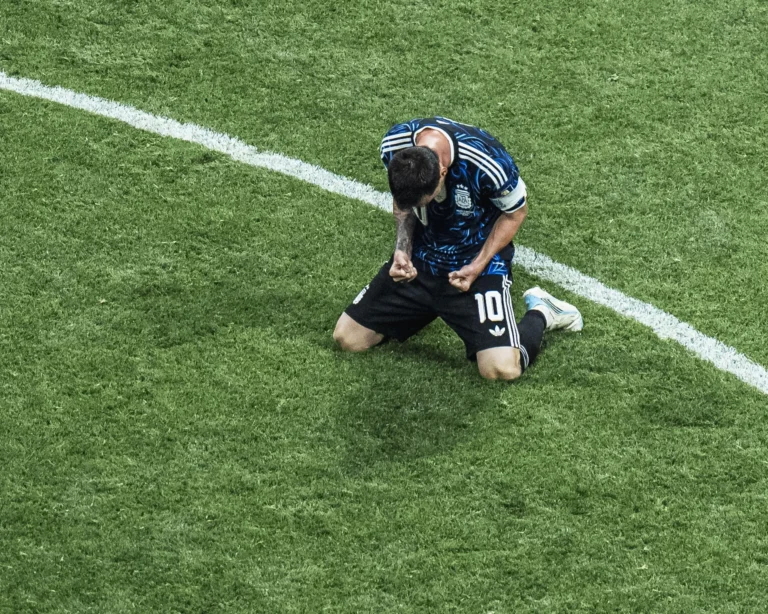
Manna emphasizes that integration is vital; the formation is less important than the tactical and emotional connections among players. Argentina’s greatest strength under Scaloni lies in their unity and shared objective: to help Lionel Messi secure a second World Cup title, thereby surpassing Diego Maradona’s legacy.
While Spain has moved away from the concept of la furia, Argentina has embraced it. It’s not merely a matter of staying competitive until Messi can deliver a moment of brilliance; his ability to influence matches through talent and determination is invaluable. Argentina’s momentum in the knockout stages has been significantly driven by Messi’s performances.
Argentina is expected to adopt a 4-5-1 formation, differing from their earlier 4-4-2 setup against England, featuring Messi in a flexible center-forward role with Julián Álvarez positioned on the left. The decision regarding whether to deploy Simeone as an irritant on the right or to use Rodrigo De Paul, Messi’s trusted protector, represents one of the most critical choices Argentina faces.
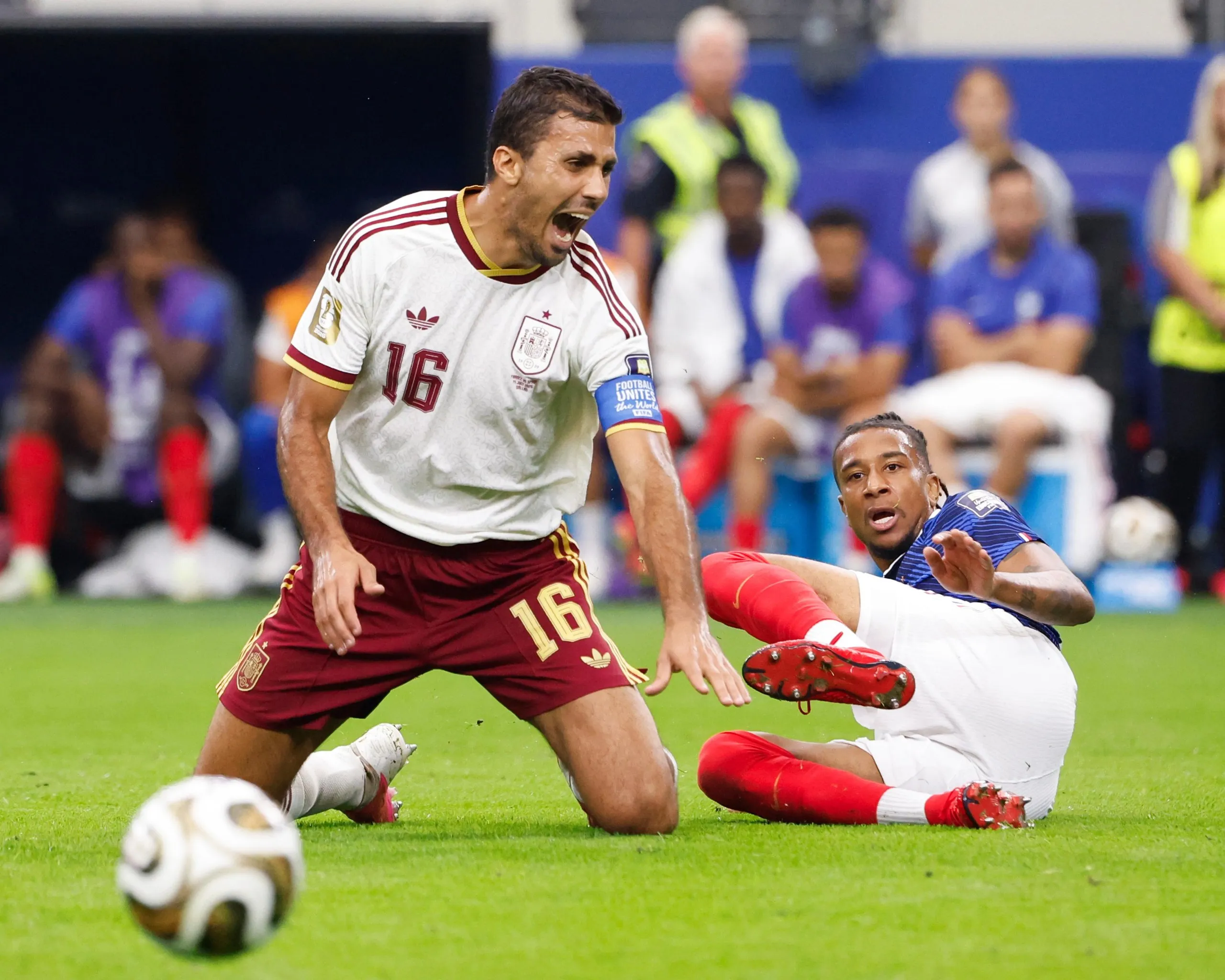
The primary objective will be to disrupt Spain’s midfield, preventing them from finding their rhythm. This approach may require Alexis Mac Allister or Enzo Fernández to closely mark Rodri, who serves as the metronome for Spain’s midfield.
Argentina’s previous matches against Cape Verde and Egypt highlighted their vulnerability to fast-paced attacks, a weakness that England surprisingly failed to exploit. Spain, however, may not have the same capacity to capitalize on this. Their strength during the last Euros stemmed from a combination of tight possession and direct attacking play, but injuries have limited their effectiveness in this tournament.
On the left, Nico Williams, a standout during the Euros, has been relegated to substitute appearances, while Álex Baena, a central creator lacking pace, fills in on the wing. On the right, Lamine Yamal, who entered the tournament nursing a hamstring injury, has shown improvement but has yet to reach his peak performance.
The final presents a classic showdown between a methodical team and one fueled by emotion. Passion comes with its risks; if it overflows, it could grant the composed Spaniards a straightforward victory. Should Spain take an early lead, they might frustrate Argentina by controlling possession and striking on the counterattack.
Nonetheless, Argentina appears more self-aware than Brazil was in 2014, showing greater capacity to channel their drive. As the game progresses without a goal, the likelihood of Argentina fulfilling Messi’s destiny increases.
- World Cup 2026
- Inside football
- World Cup
- Spain
- Argentina
- Lionel Messi
- comment