


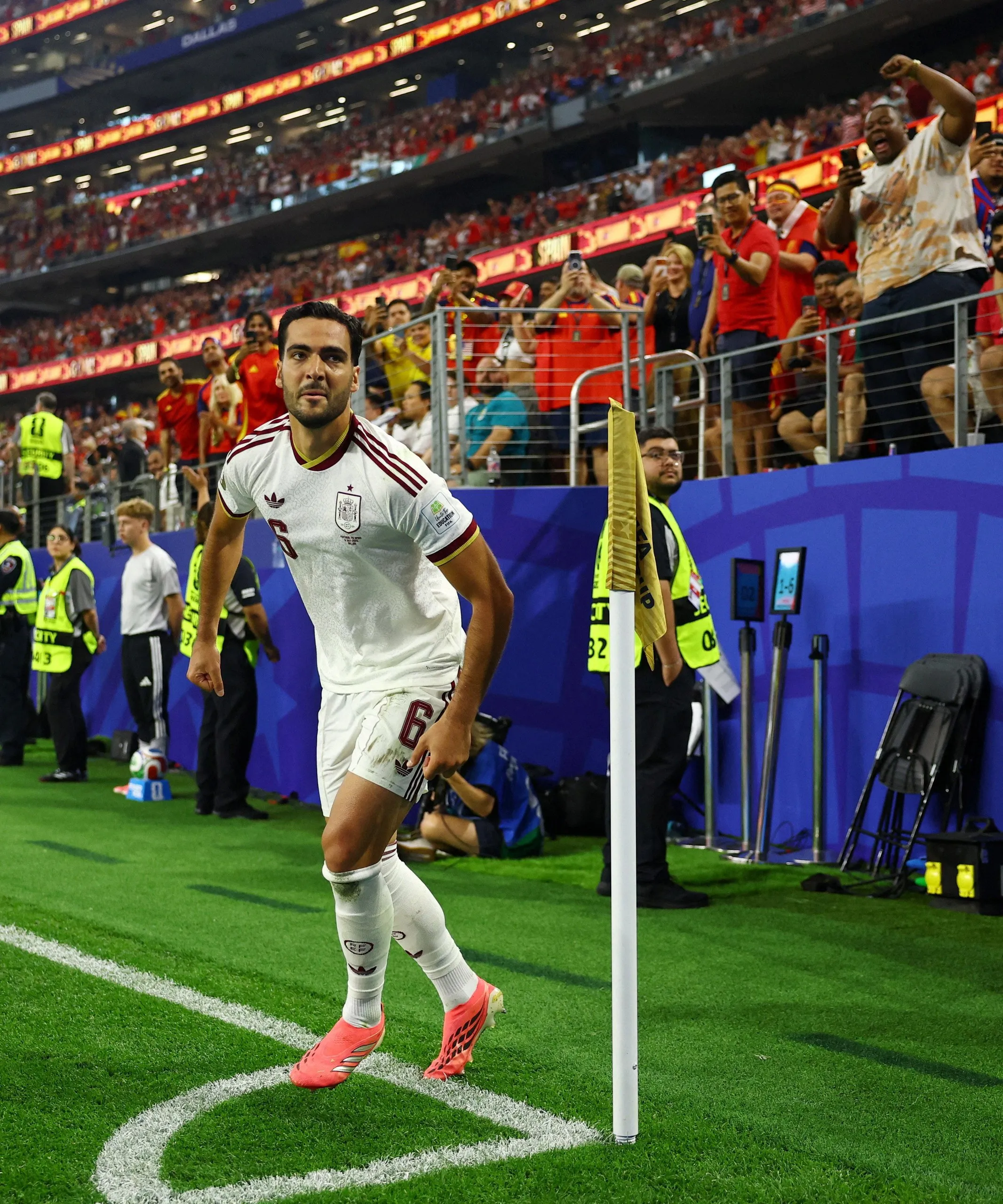
In a poignant moment of celebration, Mikel Merino found himself once again circling the corner flag, a tribute to his father Ángel Miguel and a heartfelt embrace of his infant son Marco. Surrounded by the exuberance of Spain, particularly in Pamplona, where the San Fermín festival was in full swing, the city rejoiced not just for the event but for their own who was competing in the United States.
Born in Pamplona on the day Spain faced defeat to England in Euro 96, Merino now donned his homeland’s colors as he played a crucial role in securing Spain’s progression to the World Cup quarter-finals. His late goal echoed through the country, uniting fans in a jubilant fiesta.
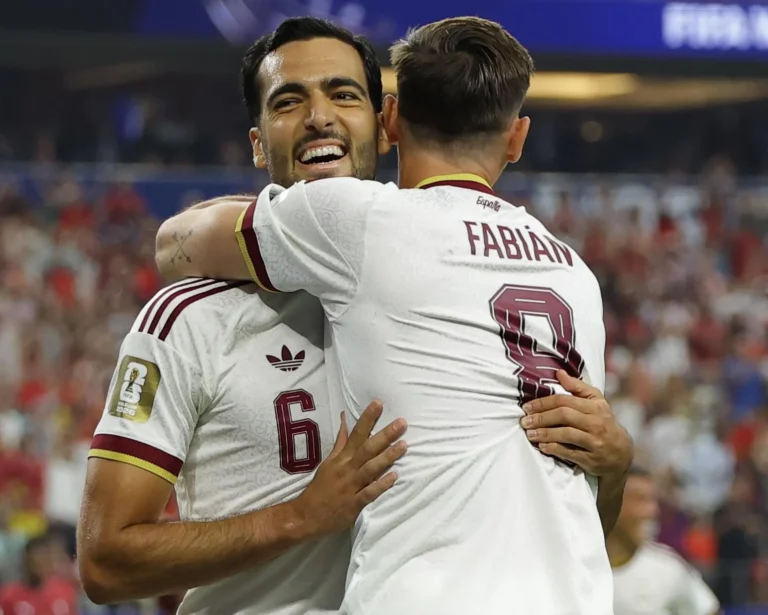
As the clock wound down in this knockout match, which had the intensity of a final, the atmosphere was electric. A Mexican wave traversed the Arlington arena when Merino was fouled just outside the box. While fatigue gripped many players, Merino, fresh from a brief six-minute stint on the pitch, quickly took the free kick. The ball transitioned to Fabián Ruiz, then to Ferran Torres, and finally back to Merino, who deftly maneuvered past Diogo Costa to score.
His goal was the result of a seamless collaboration between three substitutes, igniting a euphoric eruption among the Spanish team. It mirrored a familiar scene from Euro 2024, where Merino’s last-minute header had similarly propelled Spain forward. This time, he celebrated once more in honor of his father and the two-month-old son he has barely seen.
In the future, Merino will share stories with Marco about the legacies of his father and grandfather. Currently, however, he is too far away and too young for such conversations. During five of his son’s eight weeks of life, Merino has been in the United States, pursuing his mission in the tournament. “When they told me about my injury, I thought I would not be at the World Cup, but here I am,” he remarked. Spain’s coach, Luis de la Fuente, had expressed confidence in his recovery, despite the initial uncertainty surrounding the stress fracture in his foot that sidelined him for months.
Having traveled to the Champions League final without playing, he arrived in Chattanooga still nursing his injury. Though isolated and alone, he remained resolute. When called upon against Uruguay, it felt premature, yet he rose to the challenge. Credit for his journey also goes to his wife, Lola, who supported him despite being pregnant with their first child. “It was incredible to see her, seven or eight months pregnant, helping me get up the stairs,” he shared. “It was hard for her but she was so strong.”
During his time of recovery, Merino immersed himself in reading, including books like Fever Pitch, but mostly focused on his rehabilitation, determined to emerge stronger. He learned much about himself during this period, recognizing his own resilience. His coach maintained faith in his abilities, believing he could contribute meaningfully to the team.
With just six minutes remaining, Merino seized his moment. He was alert and ready, unwilling to let the opportunity slip away. Just over three months earlier, he had struggled to take a single step. Now, he had helped Spain take a significant stride closer to their World Cup aspirations. Teammates rushed towards him, filled with joy and excitement, as they celebrated his achievement together.
“When that happens you remember everything – the good things and the bad things, all the things you have at home,” Merino reflected. “The injury, not seeing my little one grow: I used that as strength to get the best out of me. This is the product of the hard work my family always inculcated in me. I did my part. For it to happen in the last minute again, I am so happy.”
Wearing the red scarf of San Fermín around his neck, he emphasized, “celebrating with your loved ones is the most beautiful thing in life.” adding, “celebrating with your loved ones is the most beautiful thing in life.”
- World Cup 2026
- World Cup
- Spain
- Portugal
- analysis