


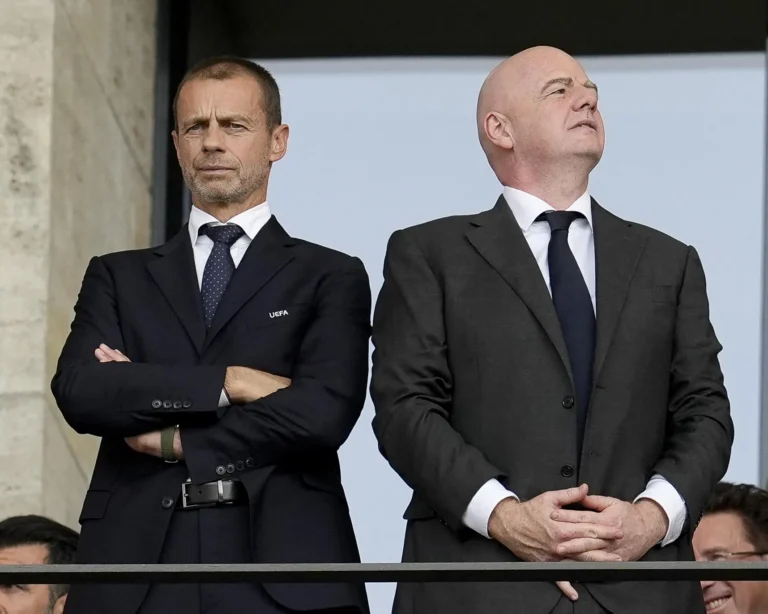
Among the prominent figures noticeably absent from this World Cup, Uefa president Aleksander Ceferin stands out, much like Donald Trump. However, both have made their voices heard in recent hours.
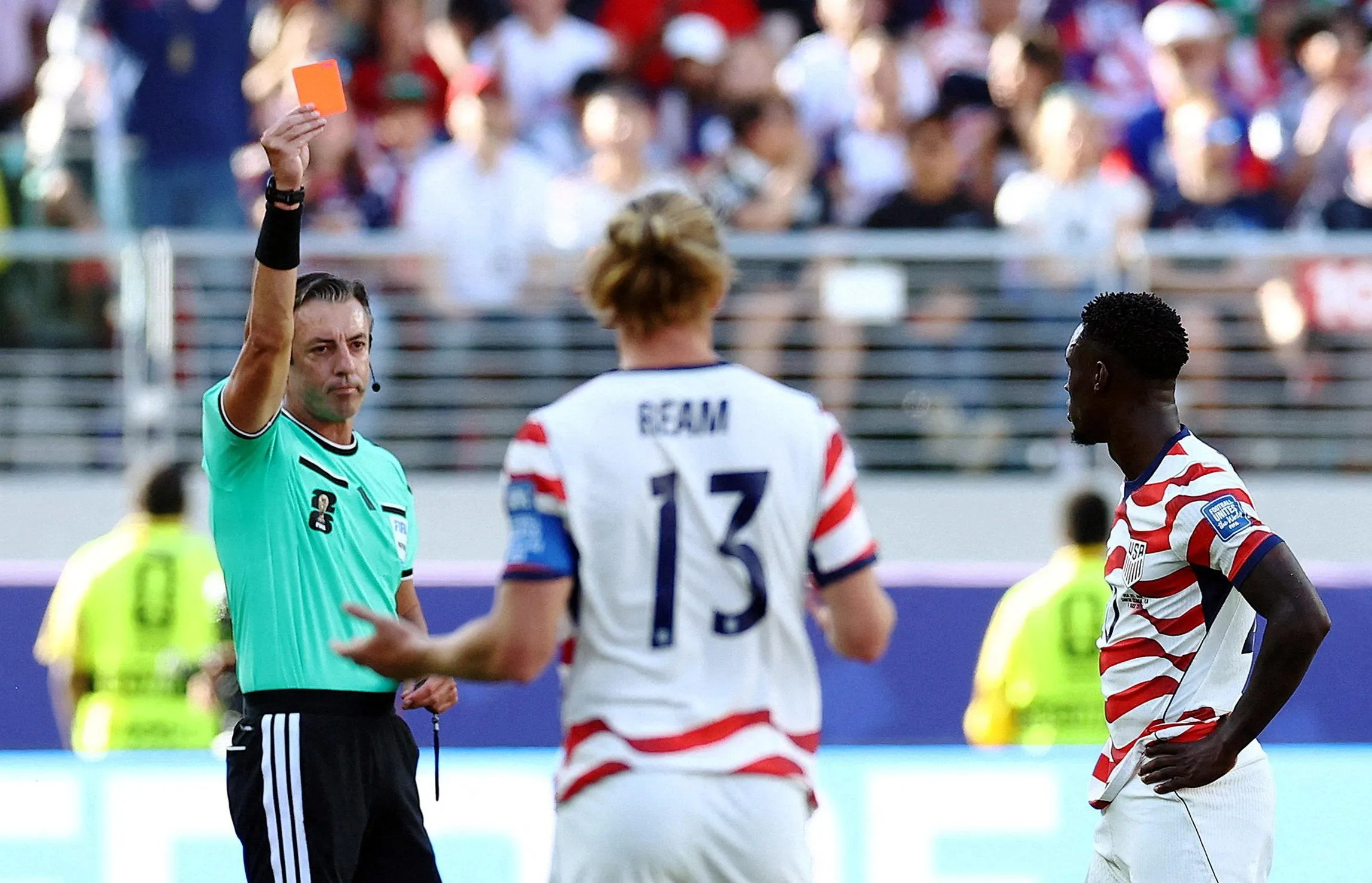
By supporting a statement where Uefa condemned Fifa for crossing “incomprehensible and unjustifiable” with their “the integrity of the game” choice to lift the suspension of USA striker Folarin Balogun for the last-16 match against Belgium, Ceferin has effectively placed European football on a collision course with the global governing body. This significant shift could have serious repercussions for the sport’s future.
Similar to Trump and Fifa president Gianni Infantino, Ceferin is an active leader and closely follows football media, indicating he was fully aware of his organization’s actions. Tensions have been escalating since Infantino proposed an expanded Club World Cup in 2018, which was realized last year in the US. Much of the current friction stems from Fifa’s intent to increase the Club World Cup’s teams from 32 to 48 for the 2029 tournament.
Uefa currently generates nearly €5 billion (£4.27 billion) annually from the Champions League, a figure projected to grow by approximately 20% next year due to new media rights and commercial agreements. Fifa is eager to secure a share of this revenue, as the majority of its $14 billion (£10.5 billion) earnings over four years are derived from the World Cup.
The most recent public indicator of discord between Uefa and Fifa occurred in Paraguay in May 2025, when European representatives, including Ceferin and Football Association chair Debbie Hewitt, left the Fifa Congress in protest against Infantino’s tardy arrival. He had been attending a summit in the Middle East with notable figures, including Trump and Saudi Crown Prince Mohammed bin Salman. Following this act of defiance, a temporary truce ensued, likely due to both Infantino and Ceferin preparing for re-election next year and agreeing to minimize disputes.
Uefa has also sought to leverage Fifa’s unpopular management of the World Cup, announcing affordable ticket prices for Euro 2028 and clarifying their decision not to implement hydration breaks. They appointed Somali referee Omar Artan to officiate the Uefa Super Cup after he was barred from officiating at the World Cup by the US Department of Homeland Security. Despite this, the fragile peace was disrupted by Fifa’s unexpected decision to revoke Balogun’s ban during the tournament, which Uefa argued undermined “the credibility of the competition” and “the credibility of the competition.”
While much of this conflict appears to be steeped in personal and political dynamics, there is also significant astonishment at Uefa’s headquarters in Nyon regarding Fifa’s operational methods. Despite various criticisms directed at Uefa, it operates as a process-oriented and bureaucratic organization. In contrast, Fifa’s reliance on article 27 of its disciplinary code for clearing Balogun and Cristiano Ronaldo last year suggests a more spontaneous approach to policy-making.
After issuing their critical statement on Monday morning, Uefa officials engaged in crisis discussions throughout the day. The level of resentment toward Fifa is reflected in the minimal attendance at the World Cup. Despite their shared tendency to travel extensively and mutual interests, Ceferin and Infantino seldom appear in the same venue. Following the controversy in Paraguay last year, Ceferin did not participate in this year’s Fifa Congress in Vancouver, while Infantino briefly appeared at the European Football Clubs (EFC) annual general meeting in Rome last year, during Ceferin’s absence.
Uefa’s forthcoming actions regarding the Balogun situation remain uncertain and will partly hinge on the outcome of Belgium’s appeal against Fifa’s decision. Sources from the Royal Belgian Football Association (RBFA) indicated they do not anticipate another reversal, leading them to consider other legal avenues, including potentially taking Fifa to the Court of Arbitration for Sport (CAS) in Lausanne post-tournament.
Uefa could provide backing for Belgium’s legal efforts, leveraging its expertise in Swiss law which would likely be advantageous, while also finding ways to complicate matters for Fifa.
Though many of Europe’s largest clubs, and consequently much of the EFC, support the expansion of the Club World Cup for financial gain, Ceferin remains opposed due to concerns that a 48-team format would further entrench the elite’s dominance and threaten the Champions League’s supremacy. As Fifa prepares to negotiate with the six continental confederations, domestic leagues, and player unions next year regarding the global calendar after 2030, numerous critical issues could arise where Uefa might obstruct Fifa’s plans.
One pressing matter is the scheduling of the 2034 World Cup in Saudi Arabia. A Uefa-led protest involving European national associations, domestic leagues, and player unions could provide leverage in negotiations with Fifa. However, with Trump and Prince Mohammed seemingly aligned with Fifa, the battle may not be equitable.
- World Cup 2026
- World Cup
- Fifa
- Uefa
- Football politics
- US sports
- USA
- analysis