


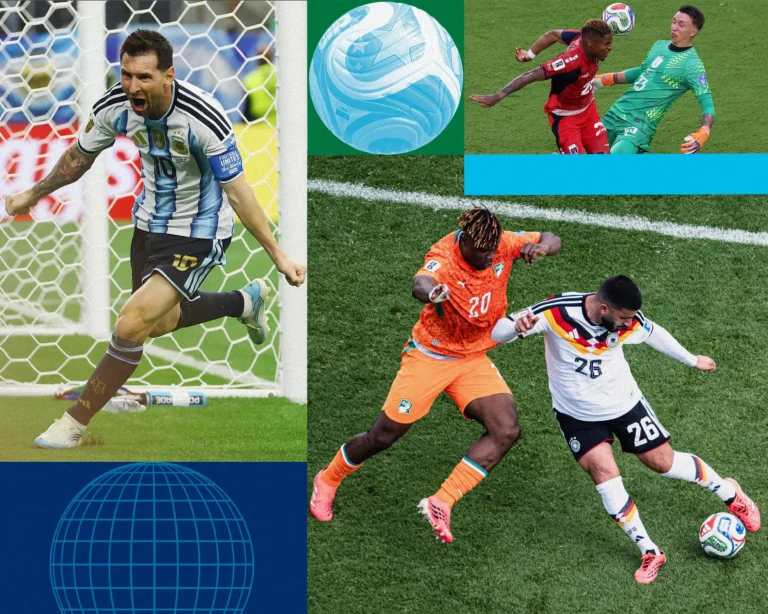
The 2026 World Cup has kicked off with remarkable excitement. As of Wednesday, every participating nation has played two matches, and only four of those contests ended without a goal.
Interestingly, three of the goalless draws provided surprising points for Cape Verde, Curaçao, and Iran against Spain, Ecuador, and Belgium, respectively. Despite the lack of scoring, each match maintained a gripping tension. In contrast, England’s 0-0 draw with Ghana felt more tedious, but not every game can be thrilling.
This tournament has seen an impressive average of 2.94 goals per match, marking 2026 as the most thrilling World Cup since 1970 based on this metric alone.
While one might expect the goal rate to decrease as the tournament progresses and stakes get higher, recent history suggests otherwise. In both Qatar 2022 and Russia 2018, the number of goals actually increased after the group stages, partly due to matches extending into extra time. If this trend continues, we could be on track for an unforgettable international tournament.
What factors are contributing to this surge in goals?
Several elements are driving the increase in goals scored. The competitive race for the Golden Boot is likely a significant influence. In just 25 hours during the opening round, stars like Kylian Mbappé, Lionel Messi, Erling Haaland, and Harry Kane each netted at least two goals. The first three have repeated this performance recently, with Cristiano Ronaldo also joining the scoring against Uzbekistan. The elite strikers seem to be motivating each other.
Many other players are stepping up as well. Already, 21 instances of players scoring at least twice in a match have been recorded, surpassing the total of 20 from the previous World Cup. The identity of the goal scorers matters less than the fact that multiple players are having standout performances, which undoubtedly contributes to the scoring frenzy.
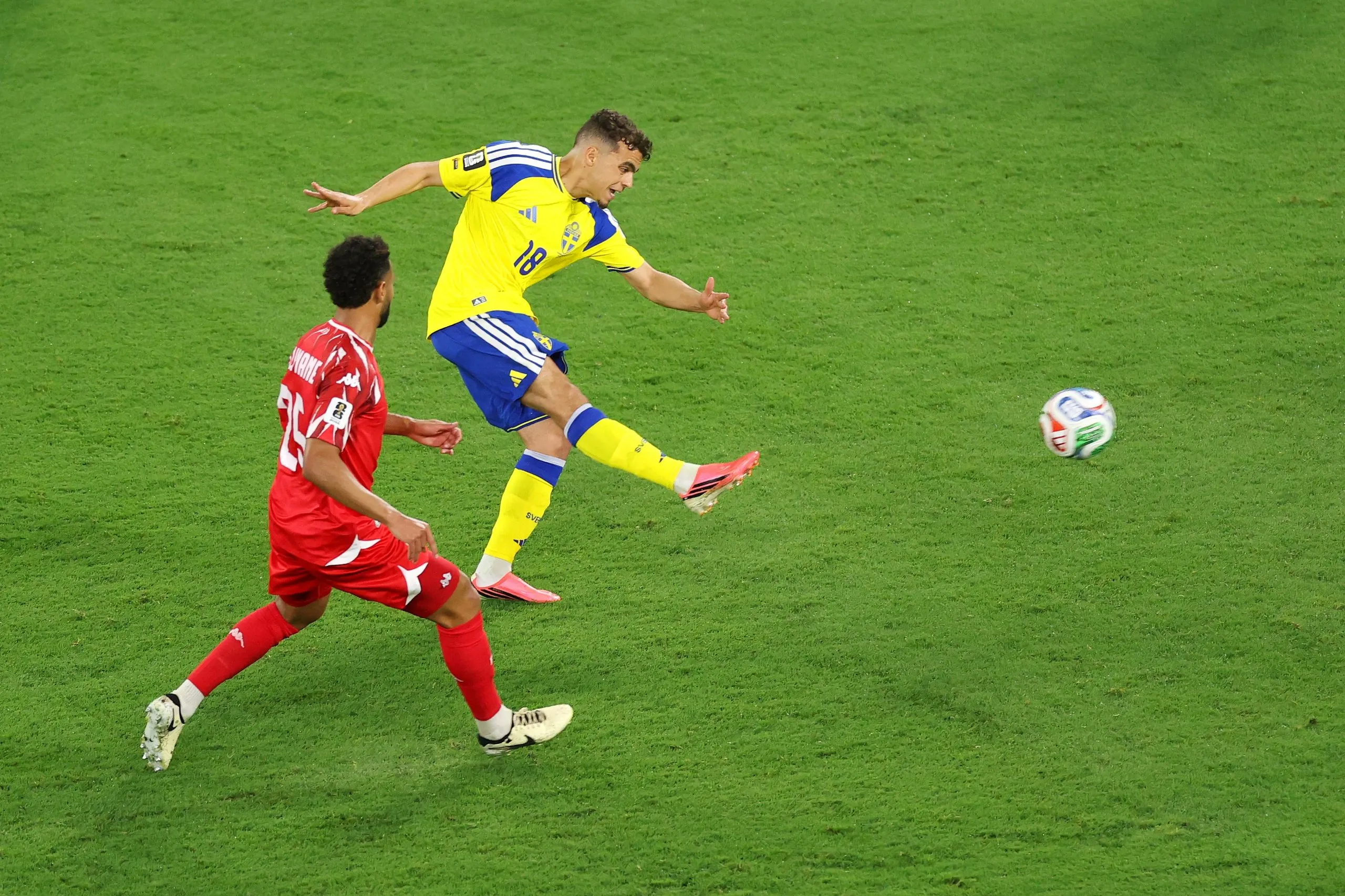
Yasin Ayari of Brighton has exemplified this phenomenon, demonstrating another contributing factor to the high goal count at this World Cup. Despite never scoring twice in a match in English league football, he achieved this during Sweden’s 5-1 victory over Tunisia, with both goals coming from outside the penalty area.
Long-range shots have also bolstered Mbappé’s bid for the Golden Boot. He scored from outside the 18-yard box against both Senegal and Iraq, an improvement from just one long-range goal in his first two World Cup appearances. This tournament has already seen six more goals from outside the box compared to the last edition.
This trend contradicts the prevailing belief that data analytics in football has led to a decline in low-probability shots. While this may hold true in club football, international teams lack the extensive training time necessary to master complex attacking strategies.
The expanded format of the World Cup likely plays a significant role as well. With 48 teams—50% more than the previous 32—less prominent nations have qualified who may have struggled in a smaller tournament. Consequently, top forwards occasionally face defenders and goalkeepers less accustomed to high-caliber finishers, prompting them to seize shooting opportunities whenever they arise.
Goalkeeping errors have also contributed to the rising goal tally. Not every goalkeeper can replicate the 15 saves made by Curaçao’s Eloy Room to maintain a clean sheet against Ecuador.
Opta’s metric for defensive errors tracks mistakes leading to shots, and these can manifest in various ways, as demonstrated by Uruguay’s Fernando Muslera. He mishandled a shot that led to a rebound goal against Saudi Arabia and then rushed out of his box, allowing Hélio Varela to score a famous equalizer for Cape Verde.
We have witnessed two Iraq goalkeepers also providing opportunities for Haaland and Mbappé, who certainly do not need additional help in finding the net. So far, there have been 25 Opta-defined errors that resulted in goals at this World Cup, surpassing the total of 37 from the previous two tournaments combined.
Own goals, which are recorded separately from errors, have also increased since 2022. The last World Cup in Qatar had two own goals, while the USA alone has already benefited from that total this time around.
The pressure on defensive units is causing more costly mistakes than ever, regardless of the category they fall into. The record for own goals in a World Cup, set at 12 in 2018, is now at risk.
Substitutes are making significant impacts as well. Since the 2022 Qatar World Cup, teams have been permitted to make up to five substitutions. This is a notable change from earlier eras when only two outfield players were allowed, and none at all before 1970. Deniz Undav has already been involved in five goals after coming off the bench, matching the highest total for a substitute at a World Cup since records began in 1966. Substitutes have contributed 28 goals so far, just two less than their counterparts achieved in the entire 2022 tournament. Additionally, there have been eight goals scored and assisted by substitutes, the most in the history of this competition.
England’s head coach Thomas Tuchel acknowledged the evolving role of substitutes, which is now viewed as more impactful than simply being backup players. “We needed this quality to bring it over the line,” he said, referring to the contributions of the substitutes after England’s victory over Croatia. “I know they are all starters. So it is new for them. But they also know it is a period of time that is so special and they buy into this idea that we do it as a team. This is the only way.”
Tuchel was particularly referencing Marcus Rashford, who scored in England’s opening match after coming on for Anthony Gordon. His goal came from a standard position in the center of the penalty area during open play, without any defensive errors influencing the outcome. The extreme variances in other matches are contributing to the 2026 World Cup being the highest-scoring tournament since England held the title.
- World Cup 2026
- World Cup
- analysis