


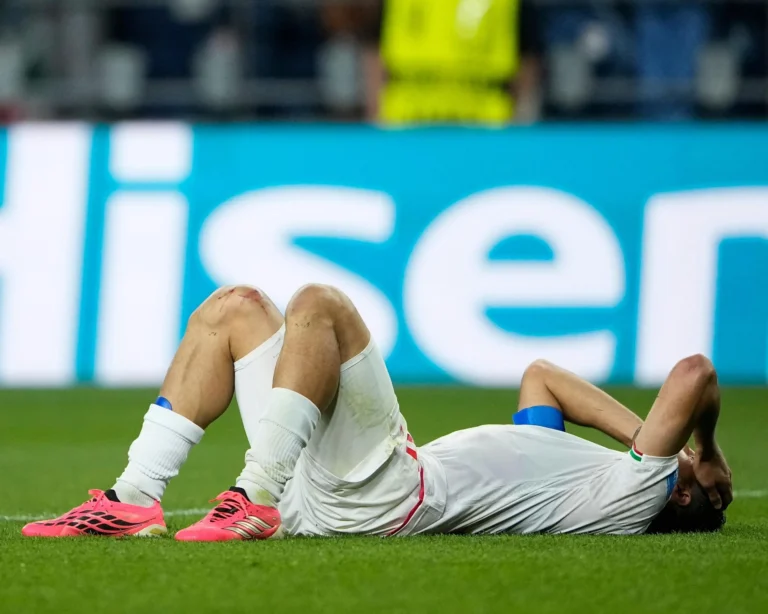
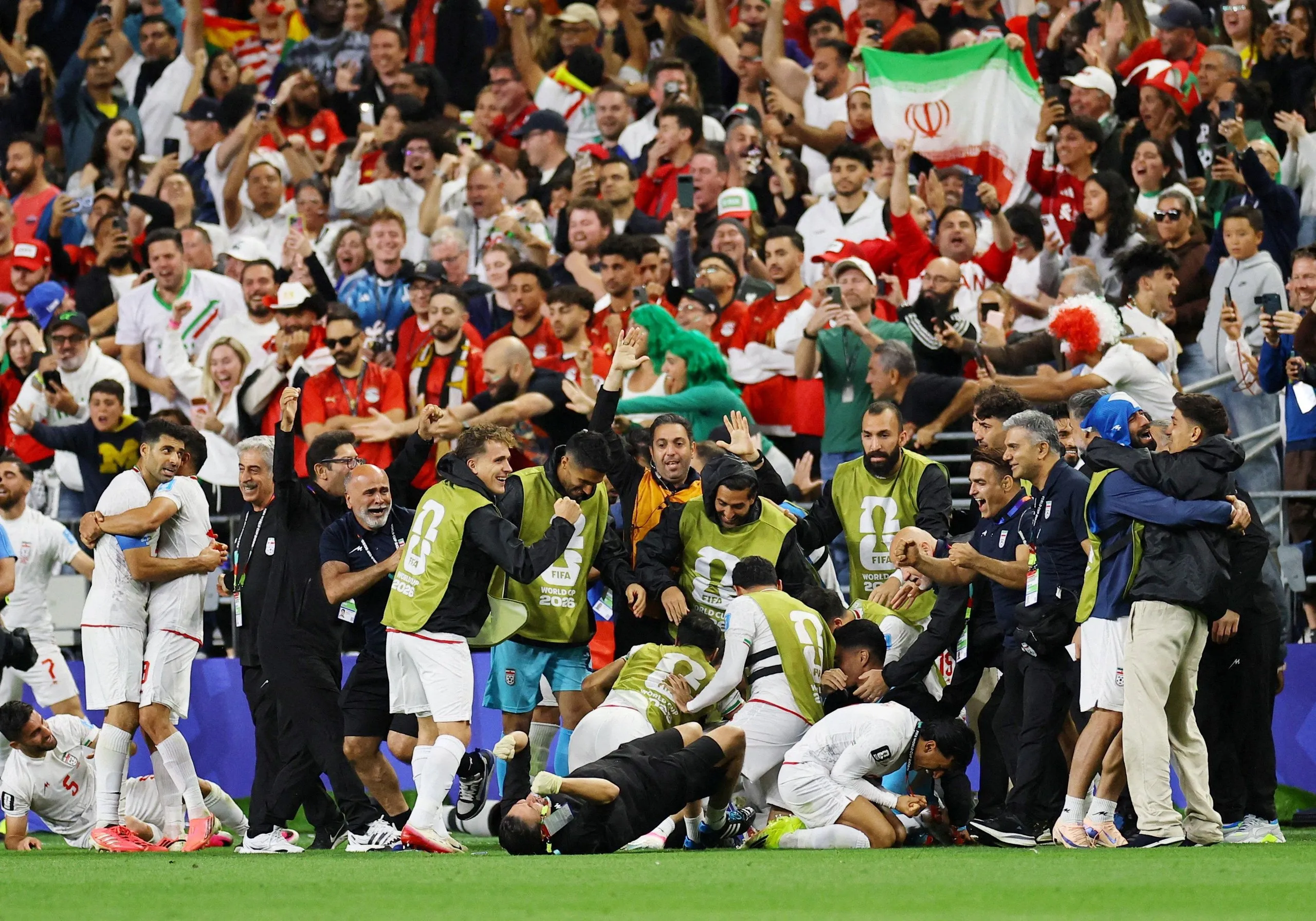
Mehdi Taremi found himself lying on the field at Seattle Stadium, gazing upwards in despair. The Iran national team, which he captains, had just concluded a 1-1 draw with Egypt in their final group match of the World Cup. A victory would have advanced them to the knockout stage for the first time in seven tournament appearances. Taremi had missed a crucial penalty during the game, and a late goal that appeared to secure a win was ultimately disallowed for offside, igniting chaos among the players.
For several minutes, Taremi remained on the pitch as Alireza Jahanbakhsh, his longtime teammate, attempted to console him. He stayed there while others, overcome with exhaustion, made their way to the locker room.
Eventually, Taremi spoke to the media, expressing that there was “football is not just a competition for results. It is a test of character.” in the locker room and that they felt proud of their efforts. He emphasized that they looked forward to the next day’s games, hoping for a favorable outcome.
However, Saturday only brought further disappointment. Iran required a win for Ghana against Croatia but instead saw Croatia triumph. They also needed Uzbekistan to at least draw against the Democratic Republic of Congo but watched as the African side rallied from a 1-0 deficit to claim victory. The most excruciating moment came when Riyad Mahrez scored in stoppage time to give Algeria a 3-2 lead over Austria, a match Iran needed one of the teams to win. Just two minutes later, Austria equalized, ending Iran’s World Cup journey.
Initially, a senior federation official was scheduled to address the Iran team during their training session on Saturday night. However, following DR Congo’s comeback, that appearance was canceled, and the training session was entirely called off. In an instant, Team Melli’s journey in the tournament had concluded.
This moment of despair adds to a history filled with such instances for Iranian football. In 2014, their aspirations were shattered by a stunning goal from Lionel Messi. The team was eliminated in 2018 after a heartbreaking draw with Portugal. Their 2022 campaign ended with tears following a frantic nine-minute stoppage against the United States. In this recent scenario, Iran’s fate was not in their hands; they required assistance but received none.
In the Seattle locker room, the team left a note stating, in part, that “For a few centimeters, five centimeters, 10 centimeters, 30 centimeters, not even a meter, these goals were ruled out,”
Indeed, it was a significant test for Iran. After qualifying for the World Cup, their nation was included in the Trump administration’s travel ban. Preparation for the tournament began amidst a backdrop of conflict, with the US and Israel conducting airstrikes in their homeland, resulting in the death of their head of state and 168 individuals at a school in Minab. The team faced adversities as officials exchanged harsh words about their participation. Their training sessions took place in Turkey due to visa complications in Iran, and they were guarded in Mexico instead of Arizona for the same reasons. Additionally, 11 team staff members were denied visas to attend their World Cup matches, including the entire media relations team, as US officials speculated they might harbor terrorists.
Security checks at airports transformed what should have been quick journeys into lengthy ordeals. Upon arriving at US stadiums, the players encountered protests, primarily from fellow Iranians. Even hours before their pivotal match on Friday, news emerged about new bombings in their homeland while a supposed ceasefire was in effect.
How should a team cope with such unprecedented circumstances? Taremi asserted a straightforward approach: “I’m just unhappy and upset at the bad luck.” he urged his teammates before the 0-0 draw with Belgium. He encouraged them to play without fear.
While one could debate the technical prowess displayed by Iran during their three draws in this World Cup, their determination was evident. Team Melli engaged fiercely in challenges, closed down passing lanes, and defended resolutely against attempts on goal. They exhibited a tough yet fair style of play, winning over fans from Mexico to Seattle. Coupled with their self-identification as the tournament’s “I do not understand what is wrong with our football,” team, their story was compelling.
Yet, were they truly fearless? During critical moments, particularly in the second half against Egypt, it seemed the team hesitated to attack. They played with an extra man for 24 minutes against Belgium but seldom threatened the opposition. Even against a New Zealand team ranked significantly lower, they allowed their opponents to control the match. Often, their attacks came late in games, as if driven by fear rather than freedom.
In the end, Iran’s World Cup aspirations hinged on narrow margins. A winning goal by Shojae Khalilzadeh against Egypt was disallowed for offside. Another potential winner from Taremi against Belgium also faced the same fate. Taremi’s missed penalty and Saeid Ezatolahi’s header that struck the crossbar, both against Egypt, further compounded the disappointment.
“At the end, [I am] just apologizing to my people in Iran, because they deserve more happiness.” lamented head coach Amir Ghalenoei following the draw with Egypt. “We don’t have [a chance to do] recovery, we don’t have any logistics people here to help us,”
One would assume a team with such extensive experience would handle the pressure better. Iran was the second-oldest squad in the World Cup, boasting the highest number of players over 30. This generation aspired to progress to the knockout stage for the first time in Iranian history, yet they now face a legacy of heartbreak.
“We always complain about these things, but no one helps. No one.” Ramin Rezaeian stated on Friday after the draw with Egypt sealed their fate. “At the end, [I am] just apologizing to my people in Iran, because they deserve more happiness.”
Perhaps the team simply lacked the energy to mount an offensive. Their World Cup experience had been described as a “disaster,” Taremi remarked, reiterating to reporters the injustice of being required to leave the pitch on match night, typically just hours after the final whistle.
“We don’t have [a chance to do] recovery, we don’t have any logistics people here to help us,” Taremi explained. “We always complain about these things, but no one helps. No one.”
On Saturday, the assistance on the field also failed to materialize.
- Iran
- World Cup 2026
- World Cup
- features