


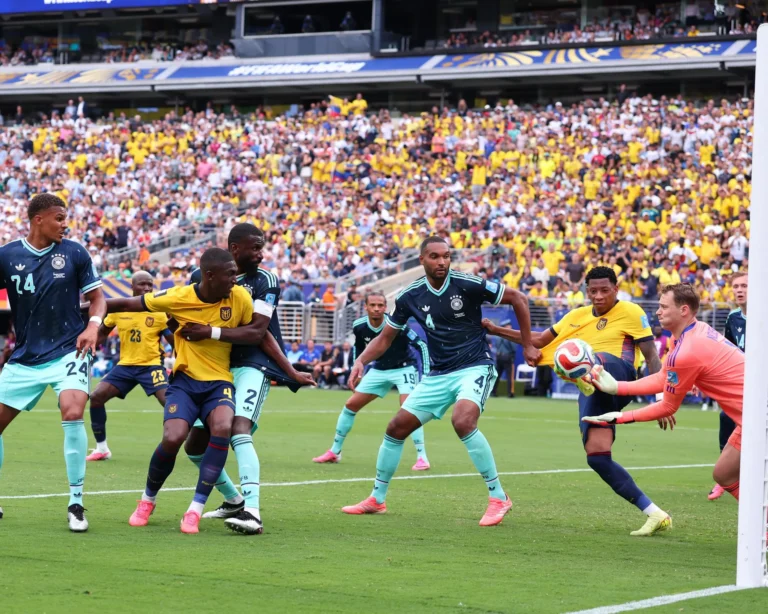
“N o, please, stop with this nonsense,” Julian Nagelsmann responded emphatically. After Germany’s 2-1 loss to Ecuador in their final group stage match, a television interviewer proposed that the Ecuadoreans may have simply wanted the victory more than the Germans, who had already secured their place in the next round. “They didn’t want it more,” Nagelsmann asserted. “I cannot tell any of my players that they didn’t give it their all. That’s far too simplistic.”
This brief exchange underscores a deeper discord within the German squad, both on the field and beyond. The team seems to be functioning in disparate ways, struggling to present a cohesive message. If they can align their individual talents, they might become a formidable force; until then, their credibility remains in question.
After winning their first two matches, this marks the first instance since 2014 that Germany has progressed beyond the group stage of a World Cup, where they ultimately triumphed. Their 7-1 victory against Curaçao is notable as the largest win in the tournament thus far. Yet, an unsettling feeling lingers—what is behind this dissatisfaction?
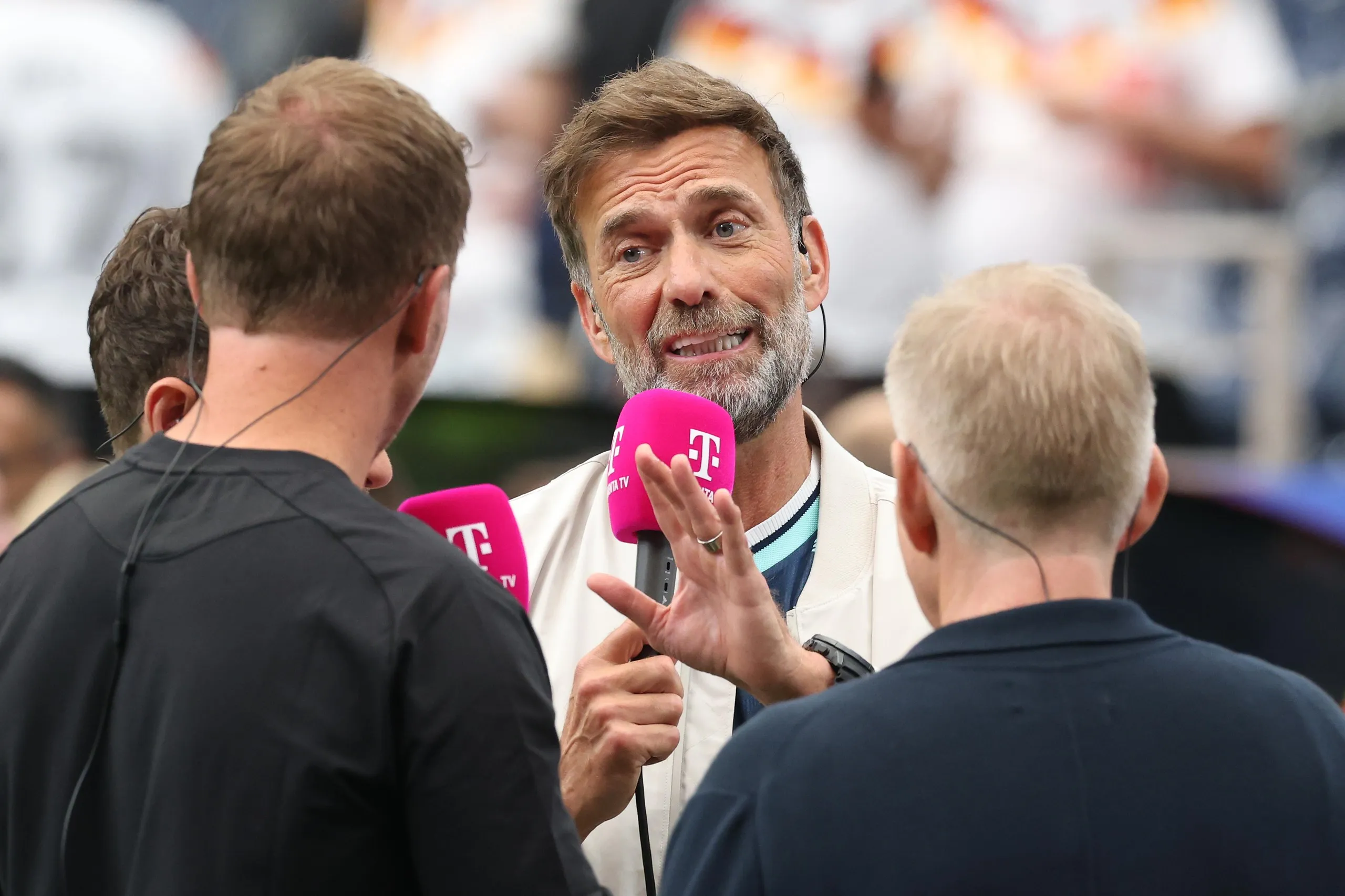
The roots of this discontent can largely be traced back to two key figures: one present within the team and another distanced from it. The latter is Jürgen Klopp, who has emerged as a prominent commentator on German television, often seen in the stands and endorsing various beverage brands. At the start of the World Cup, he made headlines by apologizing to Nagelsmann for suggesting that the coach’s position was merely provisional. The prevalent rumor in German football suggests that Nagelsmann’s role is one of the few that could lure the 59-year-old Klopp back into coaching.
Klopp’s reach extends beyond football analysis; he is also promoting hotel packages and fizzy drinks during commercial breaks. However, the situation is more intricate than simply having a beloved coach with an undeniable charisma. Alongside Klopp, players such as Thomas Müller and Mats Hummels are providing their insights on Magenta, while Per Mertesacker and Christoph Kramer appear on ZDF, Bastian Schweinsteiger on ARD, and Toni Kroos is making bold statements on TikTok. Philipp Lahm is also offering sharp commentary in Die Zeit.
Half of the squad that won the 2014 World Cup is now scrutinizing the current team setup, contributing to an ongoing dialogue that generates headlines, stirs controversy, and shapes the atmosphere surrounding Nagelsmann’s group.
For English fans, a comparison can be drawn with how Manchester United’s legendary class of 1992 took charge of media narratives post-retirement; their influence not only destabilized but also served as a nostalgic reminder of a bygone era. In Germany, nostalgia isn’t merely about the 2014 team, but the entire era it represented—a time when Bayern Munich and Borussia Dortmund were at the zenith of world football, when Klopp’s Gegenpressing style drew global acclaim, and when Bundesliga fan culture captivated international audiences.
German football has understandably struggled to transition from its golden era. Müller and Hummels were both omitted by Joachim Löw in 2019, only to be brought back (with Hummels making two comebacks) after disappointing outcomes. Löw remained in charge for an extended period, even after a humiliating exit from the 2018 World Cup, leading to a lackluster Euro 2021.
Kroos was coaxed out of retirement for what is anticipated to be his final appearance at Euro 2024. For the past decade, the 2014 generation has lingered as a fallback option, a potential solution to restore the team’s former glory.
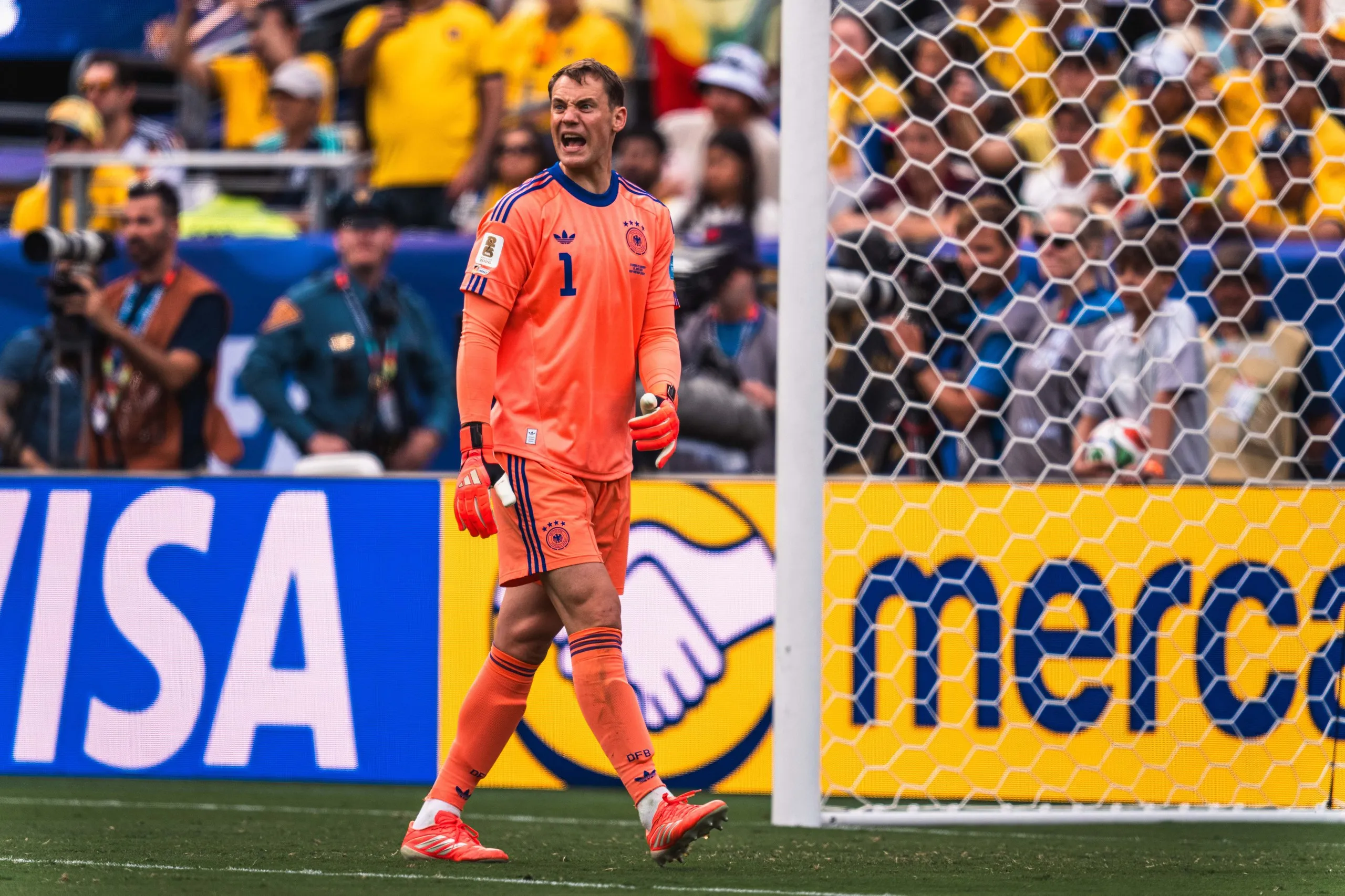
Now, let’s focus on the first figure. Like Klopp, Manuel Neuer embodies the ideal Germany that fans long for: flawless, confident, innovative, and a symbol of excellence. However, at 40 years old, and as the last surviving member of the 2014 squad, Neuer is no longer the embodiment of goalkeeping excellence. While still capable of remarkable saves, his performance has been marred by errors, injury struggles, and inconsistencies.
Neuer’s mistake against Real Madrid in the Champions League quarter-finals illustrated his current struggles, but his failure to act during Ecuador’s decisive goal on Thursday felt more significant: a once-dominant keeper now finding it difficult to command his area. Both Neuer and Nagelsmann took a considerable risk by ending Neuer’s two-year international retirement to replace Oliver Baumann of Hoffenheim, a dependable 36-year-old who may never again see World Cup action. The success of this gamble remains to be seen.
Nagelsmann has already dismissed suggestions of dropping Neuer following the Ecuador match. He has shown no inclination to move Kimmich from right-back to the central midfield role he occupies at Bayern, nor to replace the willing yet declining Leroy Sané. The synergy between Jamal Musiala and Florian Wirtz, which thrived during Euro 2024’s group stages, has failed to produce results in Germany’s last two outings.
For years, following a string of disappointing tournaments, German football has been wrestling with a profound identity crisis. Despite the influx of fresh talent and the optimism that accompanies it, doubts remain about the team’s ability to articulate a coherent vision. They possess considerable skill but lack rhythm and mutual understanding, leaving them untrusted at home and not feared abroad.
The echoes of 2014 continue to resonate, influencing discussions; Klopp is a constant reminder to Nagelsmann of the joyful times of the past. Amid a divided fanbase, a sense of loss and decline persists, with a once-great legacy overshadowed by uncertainty regarding what can realistically be expected from this team.
Looking forward, Paraguay awaits in Boston on Monday, with formidable opponents like France, the Netherlands, and Spain looming on the horizon. Nagelsmann faces a cacophony of external pressures and must make pivotal decisions. Will this squad be able to shed its historical baggage, or will it ultimately be remembered as another version of a team caught between its glorious past and uncertain future, resembling a museum exhibit?
- World Cup 2026
- Germany
- World Cup
- Jürgen Klopp
- comment