


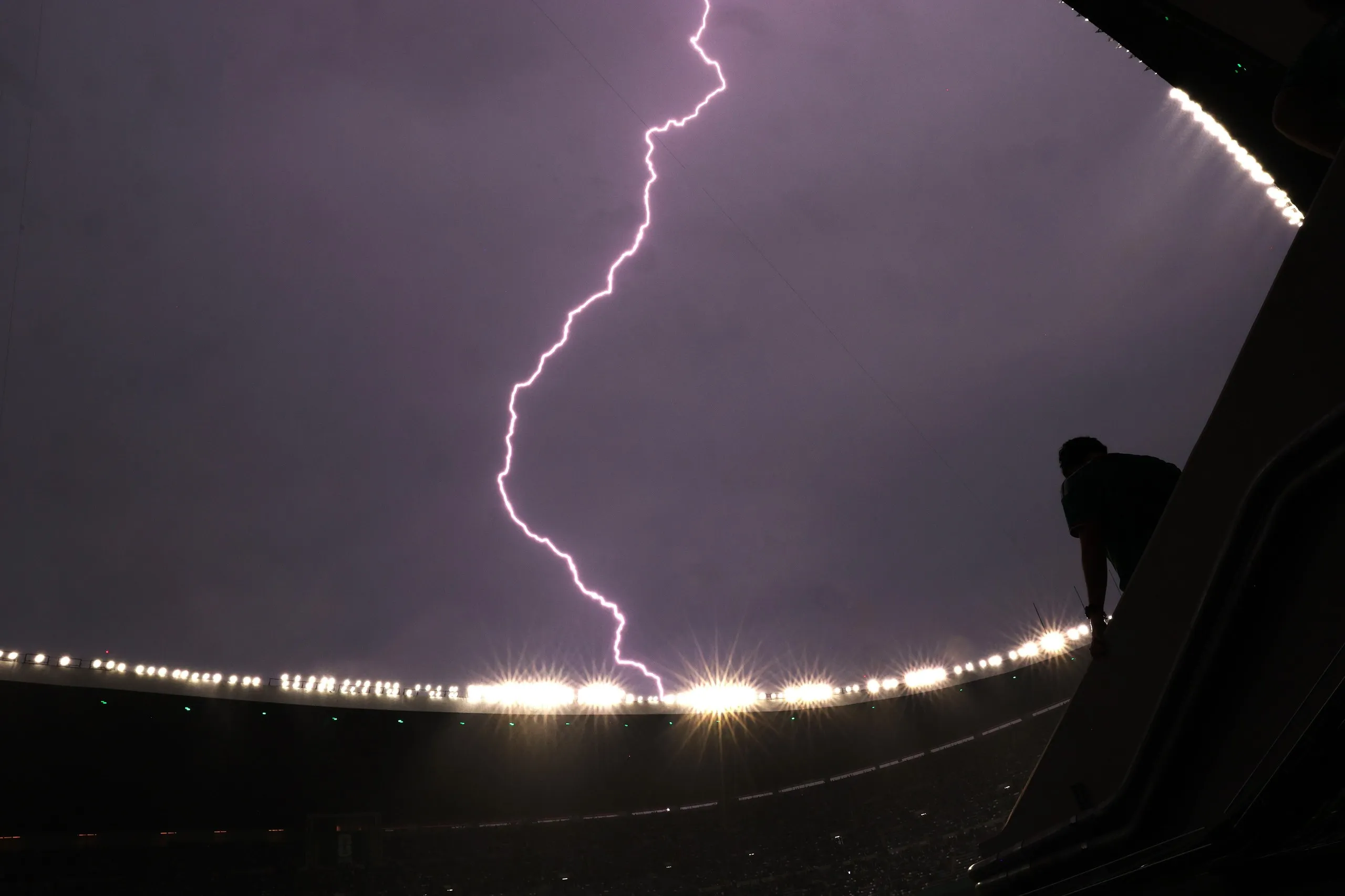
The chaos enveloping Mexico since their victory over Ecuador on Tuesday night has set the stage for a monumental World Cup last-16 clash against England this Sunday. The atmosphere is charged, with forecasts predicting a storm that could lead to flooding and disrupt what many consider to be a pivotal match in Mexico’s football history.
On Friday, FIFA was notified that the match’s kick-off would need to be adjusted from 6 PM local time (1 AM Monday BST) to midday, but after extensive discussions involving numerous stakeholders, it was ultimately decided to keep the original time. A considerable amount of energy was expended, yet the schedule remained unchanged.
The jubilant celebration that erupted in Mexico City following the Ecuador match is still vivid in the minds of many, as streets surrounding El Ángel de la Independencia overflowed with fans, leading to a near-mile-long traffic jam. Approximately a million supporters filled the area, creating an electrifying atmosphere that is expected to repeat itself as the nation gears up for the upcoming match.
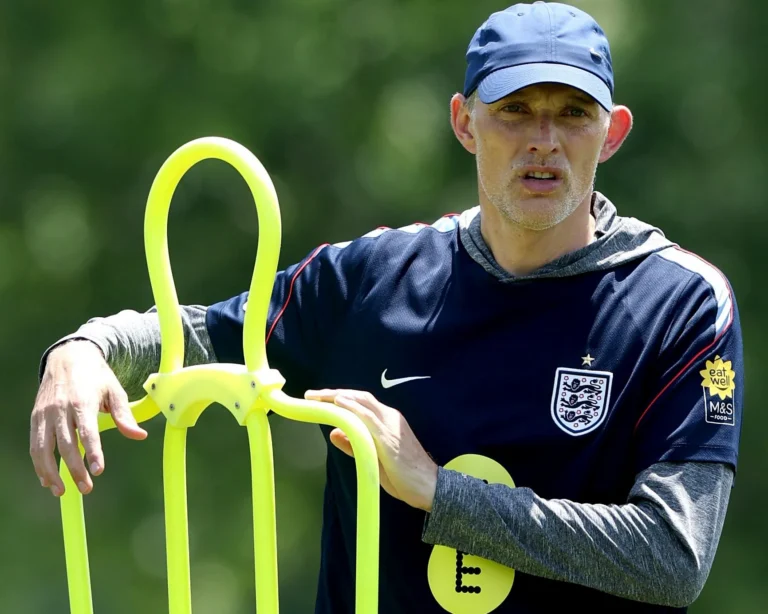
Yet, England is no stranger to chaos either, as evidenced by their tumultuous victory over the Democratic Republic of the Congo (DRC) in the last-32. Manager Thomas Tuchel could sense the turmoil during the initial stages of the game, which he referred to as the first quarter. He had previously emphasized the importance of patience, stating, “It can be a game of patience and we must not freak out,”
However, England did struggle to maintain their composure, experiencing a frantic period where their eagerness to succeed led to mistakes. At one point, the DRC was ahead 1-0 when the hydration break was called, prompting England substitute Reece James to urge teammate Jude Bellingham to stay calm amidst the turmoil.
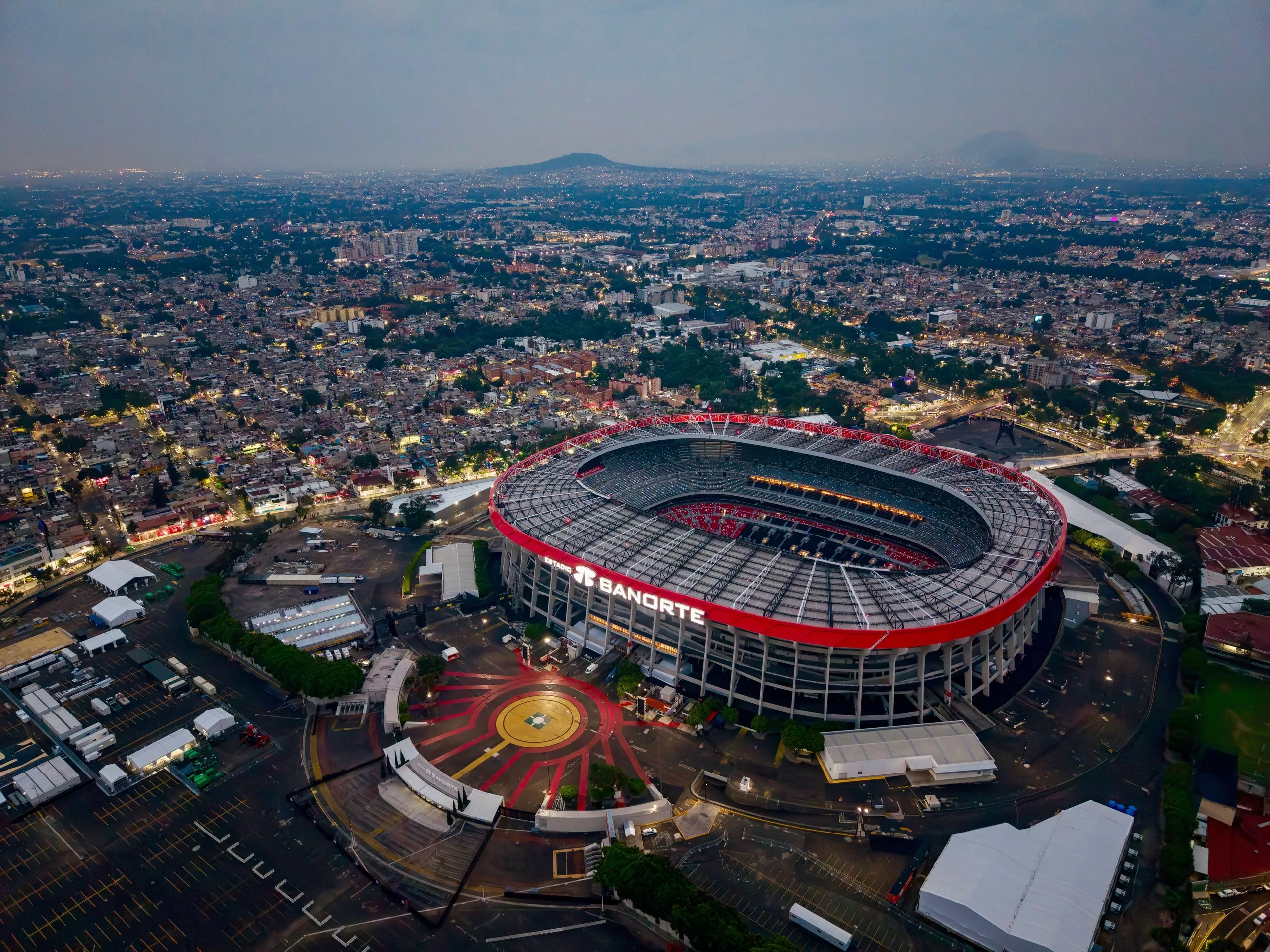
Fueled by adrenaline, England managed to create multiple scoring opportunities, ultimately securing a 2-1 victory thanks to two late goals from Harry Kane. Despite the win, concerns linger about England’s ability to control their performance under pressure, particularly in the intimidating environment of the Azteca Stadium, renowned for Diego Maradona’s infamous Hand of God goal in 1986.
As Mexico prepares to unleash their intensity in the opening 20 minutes, Tuchel acknowledges the challenges posed by the high altitude of 2,240 meters. “The first 20 minutes … the other players will be needing some breath, some air,” Mexican striker Raúl Jiménez recently remarked. “That’s when we can make the difference.”
“We are fully committed to the effort that we put in but it’s not economical. We don’t choose the moments great. And we go too early, when we’re not set. “We are impatient. And it has knock-on effects: the first one goes too early, the second one joins, no one says: ‘No, no, we don’t go.’ The third one just goes and wants to repair it and this leaves us disjointed, with too big distances. So we know, and we worked on it, that we need to pick our moments better; where to press, when to press. Then we need to be more in sync, we need to be more compact.”
Tuchel’s observations extend to England’s attacking play, where they have been less than clinical. By the end of the last 32, England had squandered more opportunities classified as significant chances than any other team, totaling 15, with six of those coming against the DRC. France followed with 12 missed chances.
“We’re too fast in our attacks,” Tuchel noted. “It’s almost like every attack plays out like a fast attack. We need to understand that sometimes the door is closed, it doesn’t help if you rush into it. Try the other door. Find another way. And worship the ball possession. Also to recharge. Otherwise we just run our batteries down with a huge effort and not so much reward. Talking about the first 15-20 minutes, we also expect that it feels very, very hard. What other teams tell us who went in there late, without acclimatisation, is that the first 15-20 minutes are where you basically hit a wall. But when you go through it, it gets better. That’s exactly why Mexico starts their games like this. They just want to suffocate you.”
When he assumed the role as England’s manager, Tuchel made it clear he aimed to instill a playing style reminiscent of the Premier League, characterized by aggression and bravery, with a focus on overloads and sharp combinations. He previously criticized Sir Gareth Southgate’s squad for lacking a distinct identity during Euro 2024, stating they exhibited more fear of failure than a desire to win.
For extended stretches during the World Cup, Tuchel’s England has appeared to lack a clear identity, often appearing disorganized and overly frantic. “more afraid to drop out than have the excitement and hunger to win” he admitted. “It’s because we’re a bit rushed in everything we do,”
England arrived in Mexico after a grueling schedule, having taken their seventh flight in just 12 days and gearing up for their fourth match in 13 days. Tuchel acknowledges the challenges presented by such a demanding timeline but remains committed to his vision for the team. He is determined not to over-rely on Kane’s contributions.
“We lack a bit of patience. I still think we create a lot of chances against teams who don’t concede. I know what you mean [about the lack of identity]. I think physicality-input is the identity of the Premier League and we will try to stay brave, play up front and put players into the last lines, play with wingers.” he reassured. “We are working on it. We looked with a clear identity in our last warmup match against Costa Rica, but we lost a little bit the lightness and the rhythm. Maybe from tension and from the opponent. But we found it in glimpses.
“We haven’t abandoned at all,”
- England
- Mexico
- World Cup 2026
- World Cup
- Thomas Tuchel
- features