

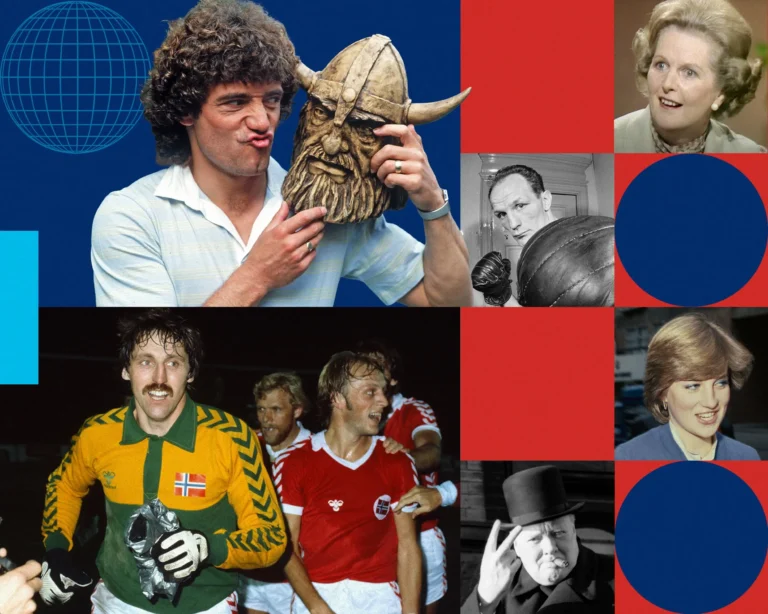
What do historical figures like Lord Nelson, Winston Churchill, and Lady Diana share in common? On September 9, 1981, they all encountered defeat at the hands of Norway.
This proclamation originates from the iconic Norwegian radio commentator Bjørge Lillelien, whose spirited and somewhat unpredictable commentary after Norway’s 2-1 victory against England in a World Cup qualifier has become a treasured moment in Norwegian sports history. The broadcast has earned global recognition, with the Observer labeling it in 2002 as potentially the greatest commentary ever delivered.
“We have beaten England! England, the birthplace of giants!” Lillelien joyfully declared, enthusiastically listing several of those giants. While Henry Cooper might seem an unusual addition among esteemed statesmen and Lady Di, Lillelien’s fondness for boxing was well-known. “Maggie Thatcher, can you hear me? I have a message for you, in the middle of your election campaign. I have a message for you … As they say in the boxing bars around Madison Square Garden in New York: your boys took a hell of a beating! Your boys took a hell of a beating!”
In those last two statements, Lillelien switched to English, perhaps hoping that Margaret Thatcher was indeed listening.
To some English viewers, Lillelien’s enthusiasm might have appeared excessive. After all, Norway was not the sole team that triumphed over England in 1981; earlier in the year, England had suffered defeats at the hands of Switzerland, Scotland, Spain, and Brazil, alongside draws against Wales and Romania. The preceding year had also seen them lose to Romania, Italy, and Wales, painting them as far from an invincible squad. Nonetheless, in 1981, England held a special place in the hearts of Norwegian football fans that no lackluster performance could overshadow.
Since November 1969, the Norwegian public broadcaster NRK had been showcasing live matches from the English first division during the winter months, when domestic football was halted due to weather conditions. With only one television channel available at that time, anyone wishing to watch TV on a Saturday afternoon inevitably tuned into English football. These matches captivated the entire nation.
“We would learn on Wednesday what game was going to be shown on NRK at the weekend, and there was a lot of excitement around that,” recalls Øyvind Alsaker, who will be commentating for Saturday’s World Cup quarter-final against England on the Norwegian network TV2. “Would your team be shown?”
Born in 1969, Alsaker belongs to the first generation raised on these televised matches. “You would run outside and pretend to be Keegan and Toshack and all of these heroes,” he reminisces. However, it wasn’t always the premier teams that were highlighted. For instance, on January 14, 1978, NRK unexpectedly aired a match between Mansfield and Southampton in the second division, which must have been quite puzzling for Norwegian audiences.
This peculiar situation led many Norwegians to forge emotional ties with unexpected clubs. Gabriel Høyland, Erling Haaland’s great uncle who earned 23 caps for Norway, is a dedicated Burnley supporter. Likewise, commentator Kasper Wikestad, who reported on Norway’s victory over Brazil for NRK this week, supports Norwich City. He represents the many Norwegians who grew up idolizing English football. “It was the sound, the smell, the stars; it was the atmosphere, it was the chants from the stands,” he reflects. “It was our promised land. It felt so close, but at the same time so far away.”
While England faced challenges in 1981, Norway was grappling with its own struggles. “It was a Norwegian national team that hadn’t been to a tournament in any kind of way since the 1938 Olympics,” Wikestad notes. “England were our idols and our reference point. For Norwegians at that time, England and English football was like a dream. How good England were, how big the stars were, everything to do with England was huge. The idea that we could beat England at football in a qualifying match, it was a totally unrealistic dream.”
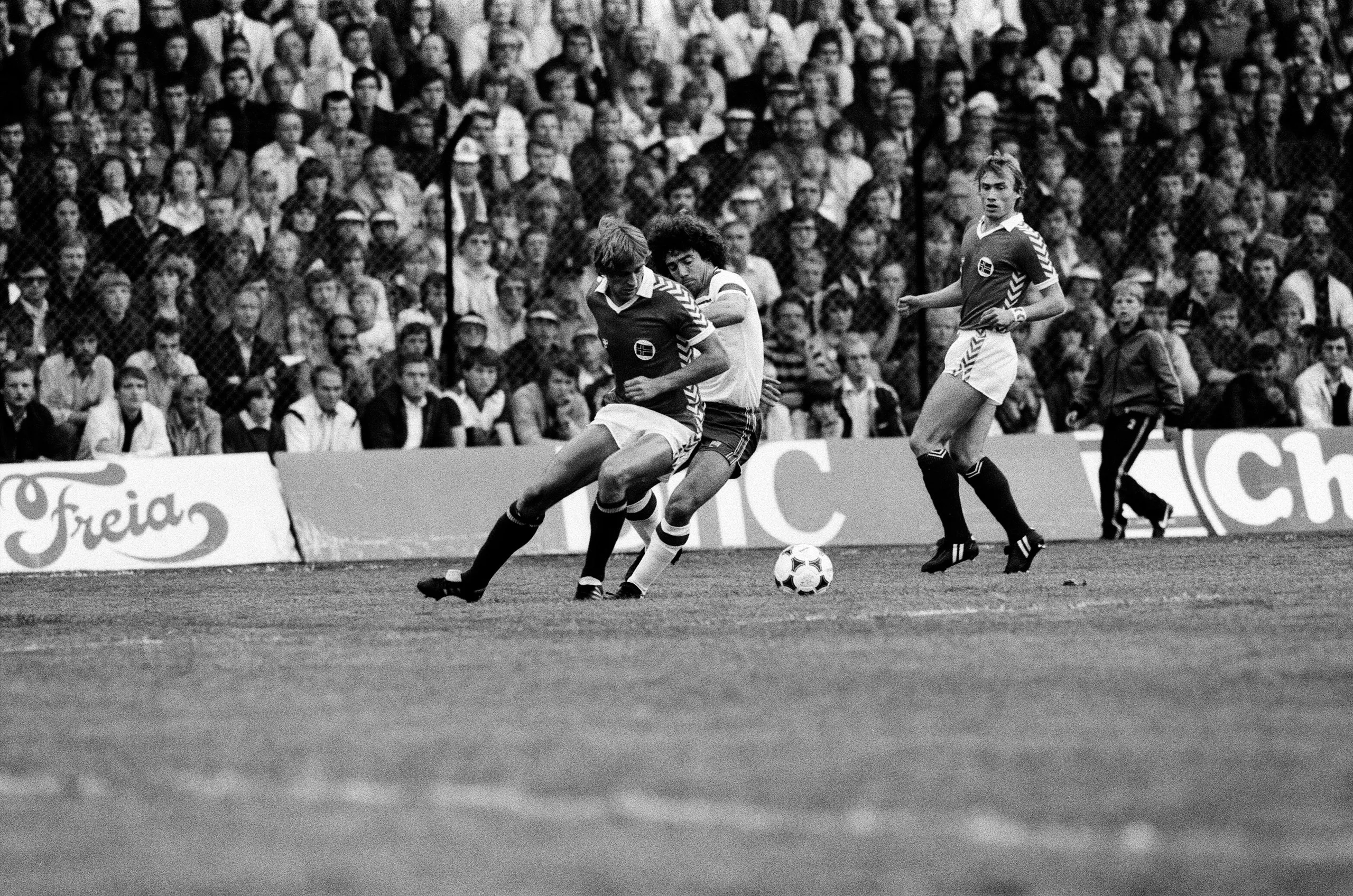
Lillelien had always possessed a talent for entertainment. “He was a man who made boring games fun,” Alsaker explains. “We would turn on the sound from the radio, and watch the game on with the TV on mute.” As Norway took a 2-1 lead and maintained it for a historic victory against England, Lillelien was already on the verge of exhilaration. When Phil Neal fouled local hero Tom Lund, Lillelien lost his composure, labeling Neal “The thug Phil Neal kicks Tommy from behind! Phil ‘pig’ Neal! Start retaliating! The English have thugs both in the stands and on the pitch!” “The referee keeps adding and adding and adding, he is on track for an English citizenship!”
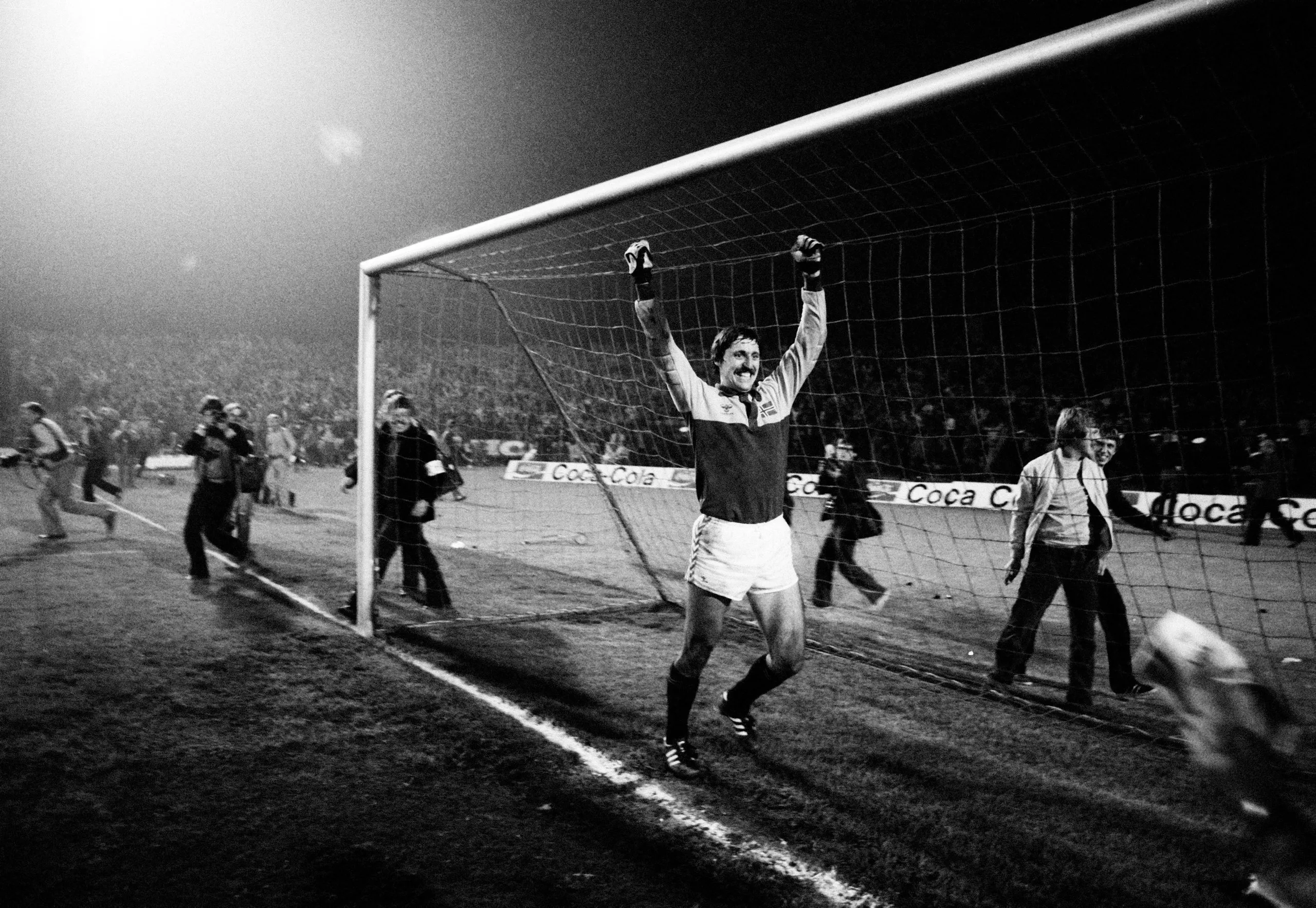
As the match drew to a close and entered added time, Lillelien felt that Polish referee Jerzy Kacprzak was taking too long to signal the final whistle. “Norway have beaten England 2-1 at football! We are the best in the world!” But just as this remark was made, Kacprzak finally blew the whistle, triggering another eruption from Lillelien. “We now have three generations of Norwegians who have received English football intravenously,” And the rest is history.
“It feels unreal. When I reflect on what I’ve experienced with the Norwegian national team over the last 25 years, it feels surreal that this is happening. I thought that reaching the round of 16 was already fantastic. And now we are playing to be one of the top four teams in the World Cup. It’s wild. I approach this task with great humility and a sense of responsibility. So many Norwegians will be watching this; I hope to do a good job.”
“Norway-England, of all things. A week ago, we thought that it couldn’t get bigger than Norway-Brazil, but there you go.”
For Norwegians, no opponent on the football pitch could ever hold more significance than England.
- Norway
- World Cup 2026
- World Cup
- England
- features