


The landscape of Scottish football is an intriguing one, especially for those who appreciate stability in their careers. Neil Doncaster, the chief executive of the Scottish Professional Football League, has been a fixture since he joined the Scottish Premier League in 2009. Meanwhile, Ian Maxwell has been steering the Scottish Football Association as its chief executive since 2018, having previously been brought in from a struggling Partick Thistle. Scot Gemmill has held the under-21 managerial position for a decade, despite less-than-stellar results.
This raises a question: does this signify a commendable continuity within the sport, or is it an indication that progress is lacking, causing individuals to seek greener pastures elsewhere?
Amidst this backdrop, the recent four-year contract extension granted to Steve Clarke as Scotland’s manager comes as no shock. Maxwell remarked, “It’s pretty staggering for anyone to say that giving him a new contract is a gamble.” Mike Mulraney, the president of the Scottish FA, echoed similar sentiments, stating, “I don’t need other people to vindicate my decision.”
Both Maxwell and Mulraney praised Clarke prior to Scotland’s struggles at Euro 2024; however, they were conspicuously absent when the nation expressed its frustration over the team’s disappointing exit from the tournament.
There has always been a sense that the Scottish FA is heavily reliant on Clarke, suggesting that he is in control of his destiny. Granting him a new contract just before the World Cup could be seen as a risky decision, especially considering that performance at the finals is crucial. The disregard for this fact is puzzling.
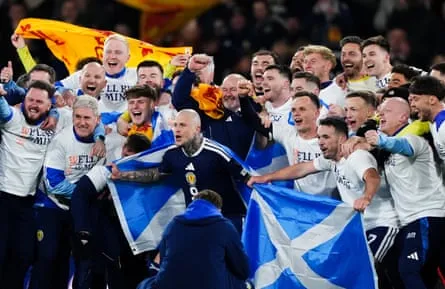
If Clarke’s impressive qualification record warranted a new deal, it should have been finalized right after Scotland’s remarkable win against Denmark, which secured their World Cup spot. Instead, the subject faded until Clarke expressed discomfort regarding his contract situation before the March friendlies.
The 62-year-old had previously seemed ready to step down after the World Cup but changed his mind, potentially extending his tenure to 11 years. Critics might argue that both Clarke and the Scottish FA realized that failing to qualify for Euro 2028—where Scotland is a host nation—would be much harder than making it to the tournament. Notably, Clarke has increased his salary each time the team exited a qualifying round.
Clarke has proven to be an exceptional manager for Scotland, significantly elevating standards and attitudes within the squad. His record includes three tournament qualifications in four attempts, showcasing his versatility as a coach. Over the past two years, he has been increasingly hands-on during training sessions, which has yielded positive responses from the players.
When he eventually departs, the challenge will be finding a successor who commands similar respect from the players. Currently, no obvious candidate stands out, which may justify the Scottish FA’s preference for familiarity. Their fixation on hiring a Scottish coach may limit their choices; the last time they sought foreign talent was with Berti Vogts.
Scotland’s aspirations for the World Cup hinge significantly on their opening match in Group C. A solid win against Haiti will likely secure their place in the knockout stages for the first time. Conversely, any other outcome could lead to dire consequences, especially with formidable opponents like Morocco and Brazil on the horizon.
Haiti recently made headlines with a 4-0 victory over New Zealand, yet they remain outside the top 80 in global rankings, making Scotland’s own 28-year World Cup absence seem brief by comparison. With top-notch facilities and a dedicated support staff, Scotland has no excuse not to capitalize on this moment.
While Scotland is a competent team, they are not yet among the elite. Their next test will come with a warm-up match against Bolivia in New Jersey on Saturday evening. The remarkable performance against Denmark was an anomaly; similar teams, such as Australia and the US, have successfully advanced from groups in recent tournaments. It is fitting for the Tartan Army to celebrate their return to the World Cup stage, but that should not overshadow their serious objective: to demonstrate they have learned from their past deficiencies in 2021 and 2024.
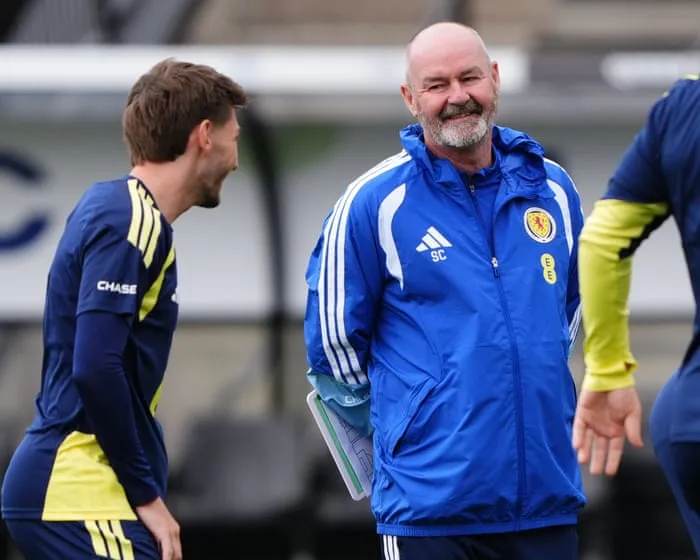
Clarke has also signaled a focus on the future by including Tyler Fletcher in his World Cup squad. The Manchester United midfielder possesses a higher potential than those he replaced on the roster. Although Lennon Miller may feel overlooked, Fletcher represents exactly the kind of talent Scotland can build around moving forward. This decision reflects Clarke’s foresight, and it’s no wonder he appears to be in good spirits.
It might have been wise for the Scottish FA to wait and see how the World Cup unfolds before extending Clarke’s contract. The status of managers is always in flux, influenced by recent performances rather than past achievements. Should the tournament take a turn for the worse, the officials at the Scottish FA will find themselves in a precarious situation. This leads many to question the wisdom behind their seemingly reckless gamble.