

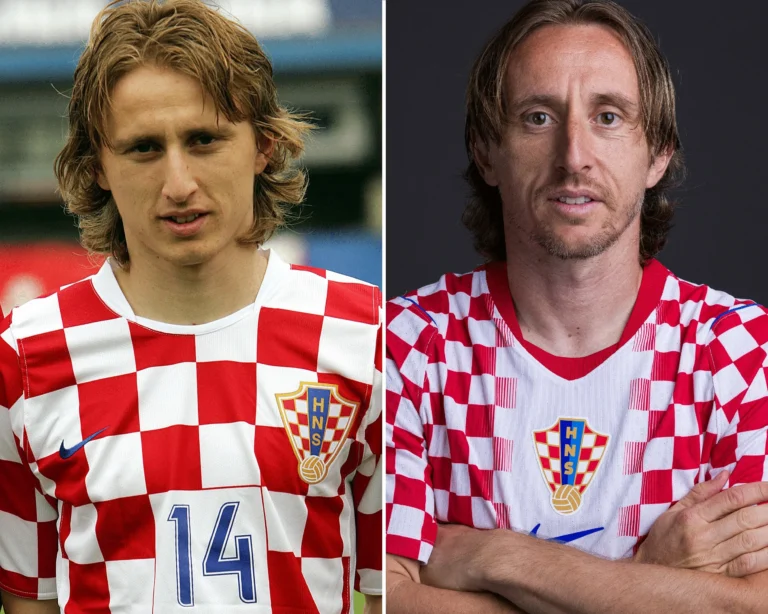
When Luka Modric first stepped onto the pitch against England, Tony Blair was still the Prime Minister, Arsenal had just transitioned from Highbury to the Emirates Stadium, and Italy had recently claimed the World Cup title. It was a time when social media was just emerging; Twitter had only been around for a few months, and Facebook had only just opened its doors to the public. In the music world, Amy Winehouse was on the verge of releasing her acclaimed album, Back to Black, and the highly anticipated film Borat was set to hit theaters.
Football enthusiasts in both England and Croatia might recall that match primarily due to its association with pop culture: the European Championship qualifier held in Zagreb on October 11, 2006.
As Gary Neville attempted a backpass to Paul Robinson, Borat’s face appeared on the advertising boards at Maksimir Stadium. The ball took an unfortunate bounce at the edge of the six-yard box, leading to a blunder by the England goalkeeper, resulting in a goal that cemented England’s woes, all while Sacha Baron Cohen’s iconic grin loomed in the background.
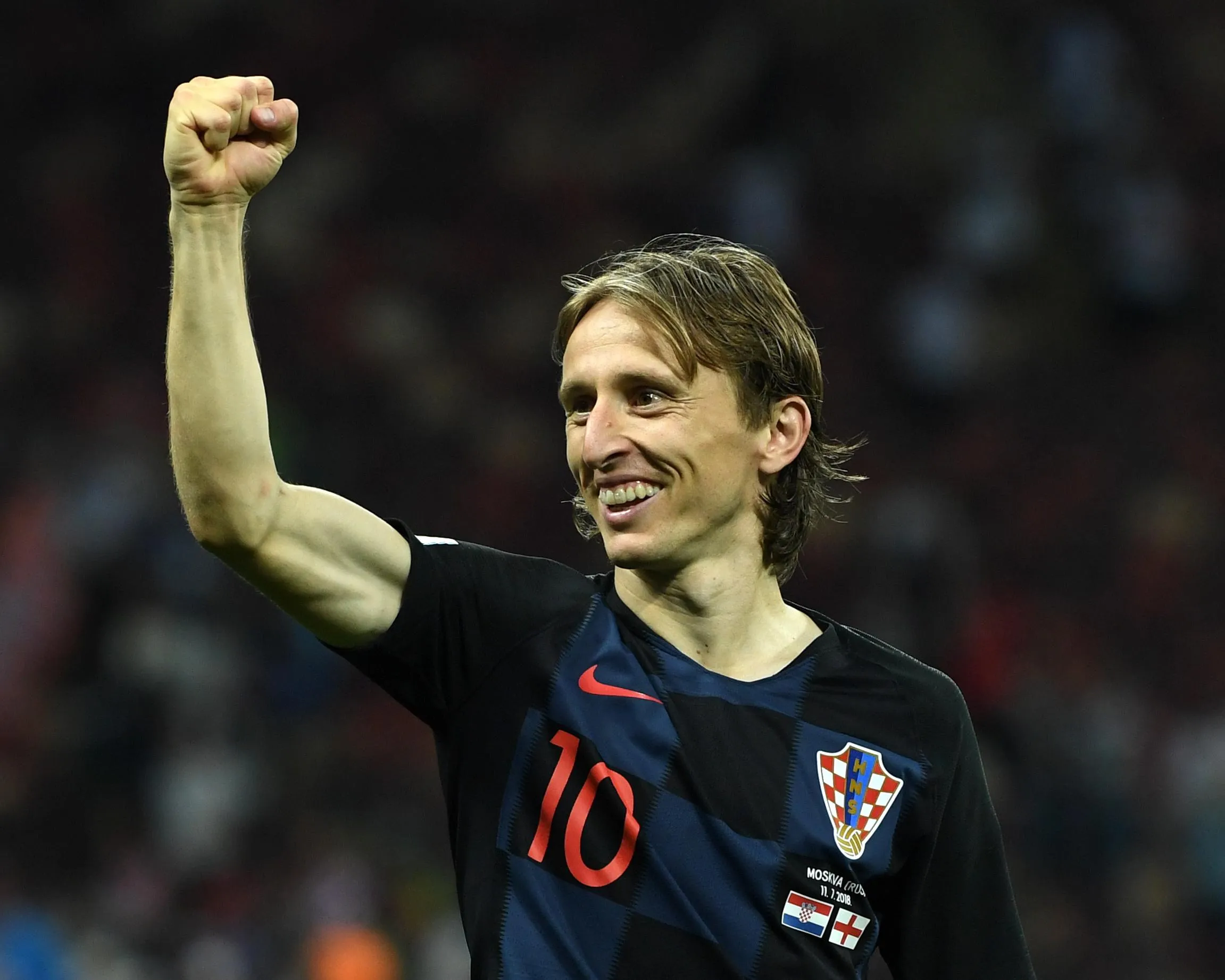
Modric, who played the entire match that Croatia won 2-0, had already earned 11 caps at that point; his debut came earlier that year in a friendly where Lionel Messi scored his first goal for Argentina.
This marked the onset of the Modric era for Croatia, though it was not immediately apparent. The young midfielder had not yet assumed a pivotal role in the squad, a position he would later embrace. However, in hindsight, this victory initiated a transformative journey for a small nation’s football team, propelling them into the global spotlight.
Indeed, this is a significant era, as there is no distinct ‘Modric generation’; rather, players have come and gone, with Modric remaining the sole constant, akin to a time traveler who transcends the linear passage of time.
At an indeterminate point—one that seems to shift with time—Modric claimed ownership of the team, demonstrating not only his leadership but also his unwavering determination. Over the past two World Cups, Croatia triumphed in seven knockout matches, accomplishing this feat without defeating or even outplaying any opponent in regulation time before succumbing to the eventual champions on both occasions.
England has played a crucial role in shaping Croatia’s development throughout this era. Since that inaugural match in October 2006, the two sides have faced each other eight more times, yielding a mix of victories, defeats, and draws, with Modric participating in all but one match—missing the 5-1 loss to Fabio Capello’s squad in 2009 due to a fractured fibula. Two encounters stand out significantly.
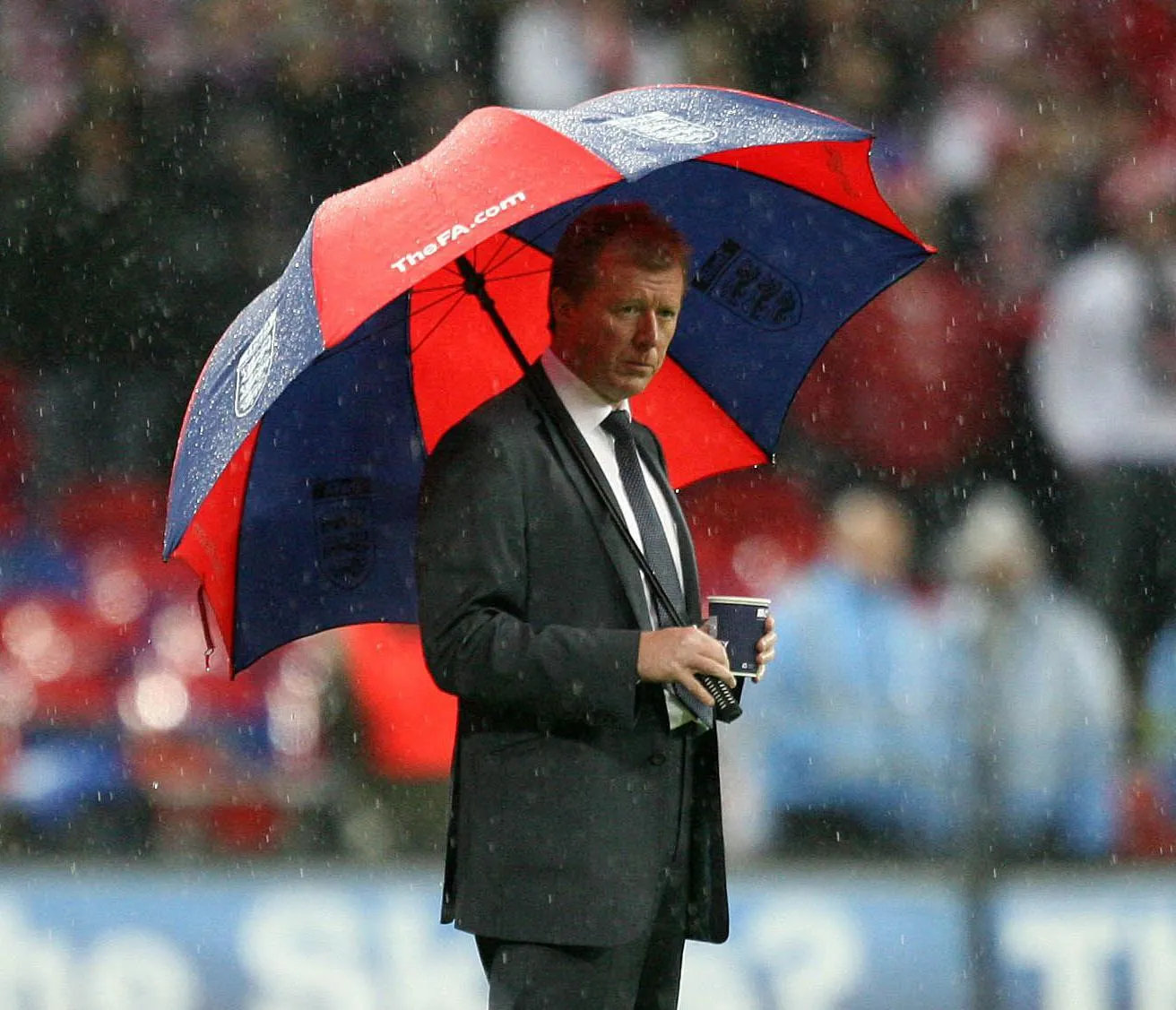
Following the bizarre Borat incident, the infamous