

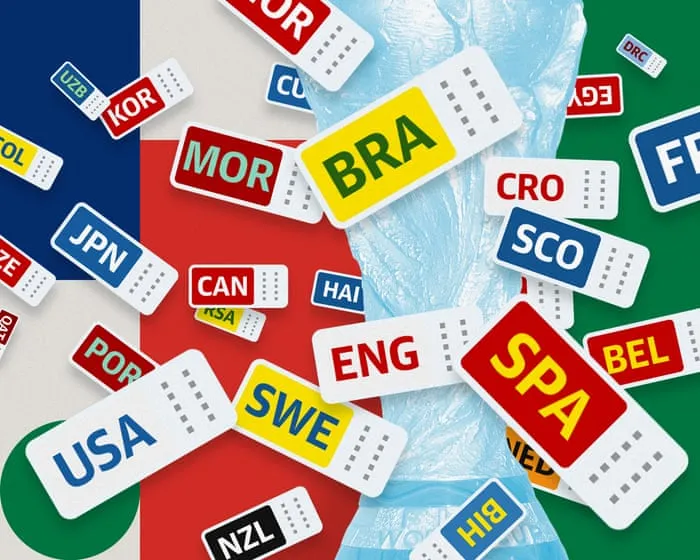
The adventure of the World Cup begins from the very first match, with every result influencing the flow of the tournament. Unlike numerous other competitions, there are no secondary draws to dictate future match pairings.
This framework aims to amplify suspense, ensuring that the more formidable squads do not oust each other prematurely, while simultaneously motivating all 48 nations to deploy their finest players in every single game.
The leading two teams from each group automatically progress to the knockout phase. It is anticipated that teams like France will remain vigilant even after securing enough points to advance, as they will seek to clinch victory in their final group match to potentially face more favorable adversaries in the round of 32.
On the flip side, teams that may finish in third place still have significant motivation to perform in their last group encounter, given that the top eight out of the twelve third-placed teams also qualify for the knockout stage.
Take England as a theoretical scenario. If they secure the top position in their group, they will be pitted against a third-placed team in the initial knockout round, possibly facing a squad such as Côte d’Ivoire or Algeria. Should they finish second, they might confront the runners-up from Group K, likely to be Colombia. However, if they end up in third place but surpass four other third-placed teams in points or goal difference, they could find themselves facing a more daunting opponent in the form of the Group K winners, potentially Portugal.
The simulation tool available includes all predefined pathways for every possible group combination, allowing for the identification of the eight strongest third-placed teams.
This innovative tool permits users to adjust the outcomes of various groups and observe how these changes affect the final 32 teams, as well as visualize potential victors of each knockout match to trace the journey of each team toward the championship finale.