


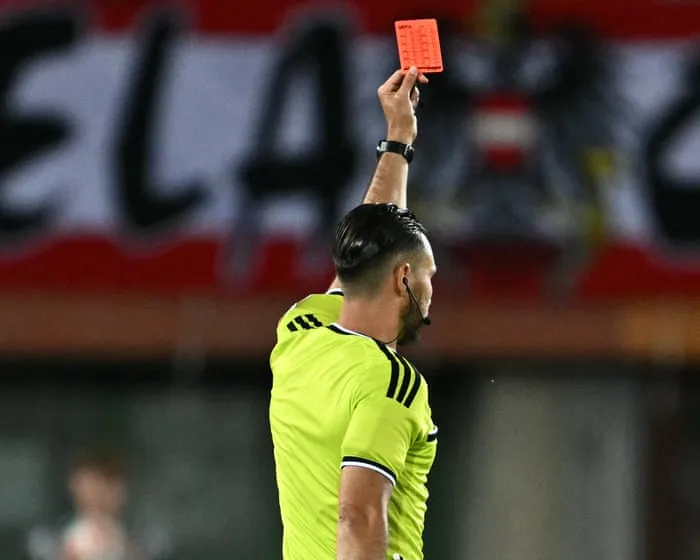
The upcoming 2026 World Cup is poised to be the largest, longest, and most costly tournament yet. Among the many innovations, a series of significant rule modifications will be introduced, aimed at enhancing the flow of the game. These changes include expanded responsibilities for video assistant referees (VAR), new offenses leading to red cards, and a host of initiatives designed to quicken the pace of play. Below is a comprehensive overview of the new regulations set to be implemented across the United States, Canada, and Mexico.
VAR to Monitor Corners and Second Yellow Cards
Despite widespread fan discontent regarding video officiating, FIFA is embracing VAR with even greater enthusiasm, broadening its scope. The revised protocol mandates that video officials review every situation that culminates in a corner kick. Under new guidelines from the International Football Association Board (Ifab), VAR intervention is expected only when it can occur promptly, though a specific time limit has not been established. Additionally, VAR will now assess incidents leading to the issuance of a second yellow card, resulting in a player’s dismissal. Previously, the technology focused solely on straight red card scenarios. Some Ifab members are skeptical about this expansion, particularly regarding corner reviews, which have become optional, with the Premier League likely to disregard it. Nevertheless, FIFA remains concerned about incorrect calls impacting crucial matches, as the original VAR protocol was designed to rectify significant oversights by match officials.
VAR to Review Fouls Prior to Set Pieces
In a surprising twist announced shortly before the World Cup, Ifab revealed yet another adjustment to the VAR procedures. This clarification extends the examination period for goals, penalties, or dismissals that follow a set piece. Video referees will be prompted to inspect any foul that occurred before the set piece was executed (while play was halted) if it is judged to have had a “direct impact” on the play’s outcome. This change is largely seen as a response to grappling incidents in the penalty area before corners and free kicks, exemplified by a missed foul preceding England’s friendly match against Uruguay.
New Red Card Offenses: Protests and Mouth Covering
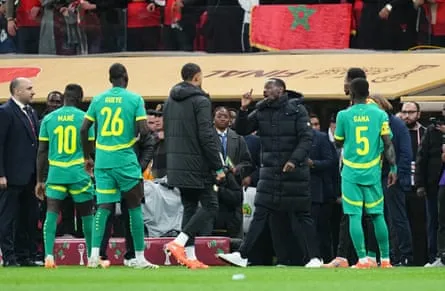
Two high-profile events this year have prompted the introduction of new red card infractions. The first stems from an incident involving Senegal’s coach, Pape Thiaw, and several players who exited the pitch in protest of a penalty awarded against them during the Africa Cup of Nations final. Henceforth, any player or official who “leaves the field of play in protest against a referee’s decision” will face a red card. This penalty will also apply to players who cover their mouths “in a confrontational situation.” This rule change follows an incident where Benfica midfielder Gianluca Prestianni hid his mouth under his shirt before confronting Vinícius Júnior during a Champions League match. While Real Madrid alleged that the abuse was racially motivated, Prestianni confessed to making homophobic remarks and subsequently received a ban. In an unusual move, FIFA President Gianni Infantino directly advocated for sending off players in such circumstances, and this rule, while optional, will be enforced during the World Cup.
Combating ‘Tactical Time Outs’
Another growing concern in the sport is the use of tactical timeouts, where players feign injury to provide coaches with an opportunity to communicate with them. These interruptions are viewed as exploiting loopholes and disrupting game flow, prompting lawmakers to address the issue during the World Cup. Players requiring treatment will still be expected to leave the pitch but must remain off the field for 60 seconds following treatment. Goalkeepers, often the primary offenders in tactical timeouts, will continue receiving treatment on the field. However, referees will adopt a rule from the National Women’s Soccer League (NWSL), which mandates that all other players must return to the center circle while treatment is ongoing and cannot approach their coach’s technical area.
The successful implementation of referee countdowns to expedite goal kicks has led to an expansion of this measure at the World Cup to encompass throw-ins as well. In both scenarios, referees will signal a five-second countdown for players who delay. Should the countdown reach zero, the throw-in will be awarded to the opposing team, or a corner kick will be granted if it involves a goal kick.
Lastly, a significant adjustment requires any substituted player to exit the field within ten seconds of their number being displayed. If they exceed this time, the incoming player will be kept off the field for an additional minute.