


This piece is part of the comprehensive analysis from the 2026 World Cup Experts’ Network, a collaborative effort among leading media outlets from the 48 teams that qualified. As the tournament approaches, presents insights from three nations daily, culminating in the kickoff set for June 11.
Strategic Vision
Under the guidance of Marcelo Bielsa, Uruguay has undergone a significant transformation. His implementation of a 4-3-3 formation emphasizes aggressive, direct play, enabling the team to maintain high pressure on their adversaries while relentlessly pursuing possession.
The past three years have been a tumultuous journey for Bielsa, including a World Cup qualifying campaign where Uruguay finished fourth out of ten in the Conmebol rankings and a commendable third-place finish in the 2024 Copa América. The latter part of 2023 saw Uruguay achieve remarkable victories over Argentina and Brazil, but this was followed by a troubling stretch, with only one win in twelve matches, including nine scoreless outings, from July 2024 to June 2025. A humbling 5-1 defeat to the United States in November prompted doubts regarding Bielsa’s future. However, confidence seemed to be restored with draws against England (1-1) and Algeria (0-0) in March.
Historically, Uruguay boasted formidable attacking prowess, but recent times have seen a decline. Luis Suárez, their all-time leading scorer, opted out of selection following a fallout with Bielsa in late 2024, although he later expressed willingness to return to the national squad before the World Cup. With Edinson Cavani’s retirement after the last World Cup in Qatar, all eyes are on Darwin Núñez, who has been searching for his form at Al-Hilal.
Ignacio Alonso, president of the Uruguayan Football Association, has set ambitious goals for the team: “Uruguay must aim for a top 10 global ranking, which necessitates reaching at least the quarter-finals.” He also addressed concerns regarding the team’s recent performance, stating, “Bielsa is highly motivated for the World Cup. He is focused on preparations and aspires to have a memorable tournament, reflecting his hard work and dedication.”
The Coach’s Journey
Following the 5-1 loss to the United States, Marcelo Bielsa faced significant scrutiny. Upon returning to Montevideo, he held a press conference where he affirmed his commitment to continue, stating he had the “strength” to persist, even acknowledging that some players questioned his methods.
In a candid 90-minute session, Bielsa openly discussed his own flaws, declaring, “I often describe myself with one word: toxic. Those who get to know me may find it challenging. Toxic. Some individuals focus solely on mistakes… This mindset stems from fear. You tend to fear losing more than you enjoy winning.”
Bielsa has previously coached Argentina in 2002 and Chile in 2010, marking this as his third World Cup appearance.
Star Player Spotlight
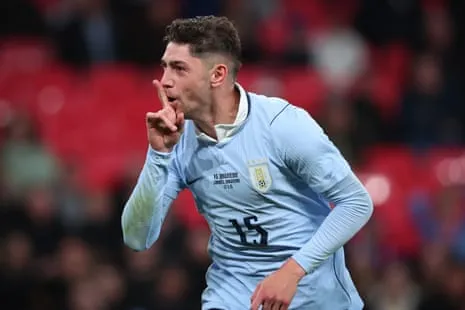
Federico Valverde stands out as a pivotal figure for Uruguay. The Real Madrid captain enters this World Cup at the peak of his career, at 27, and is recognized as one of the world’s elite players. Valverde is expected to lead his team as they aim for an extended run in the tournament. This will be his second World Cup, and he has notably improved since his last appearance in 2022. Everything revolves around him, and his performance will be crucial if Uruguay is to compete against the strongest midfields. He recently stated, “I feel great. The support and affection from Real Madrid fans and the club have been incredible.”
Emerging Talent
Maximiliano Araújo’s journey has been remarkable. Initially a right-back, he transitioned to a winger, which facilitated his move abroad to Puebla in Mexico. His impressive performances there led to a transfer to Toluca and eventually to Europe with Sporting, where he has returned to his roots as a right-back. Bielsa’s decision to include Araújo in the squad for the first time in 2023 has proven to be a masterstroke, as he embodies the qualities Bielsa seeks in his players – the ability to take on defenders and create numerical advantages.
Unsung Contributor
Federico Viñas could emerge as a vital player due to Núñez’s recent struggles. Viñas’s career path is one of resilience; he stepped away from football at 15, only to return two years later. His rise began in Uruguay’s second division, leading to a transfer to América, who were looking for a cost-effective striker. After a stint at Club León, he has spent two years in Spain, playing a key role in helping Real Oviedo secure promotion to La Liga by netting nine goals in the top division this season.
Projected Starting Lineup
Fan Expectations
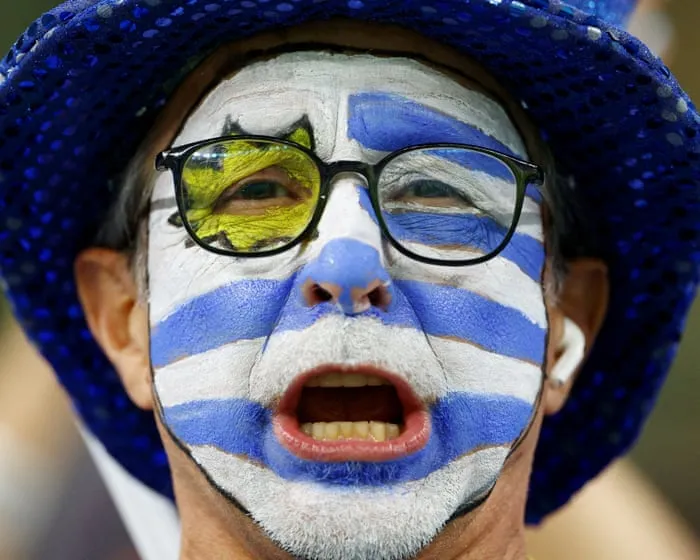
Supporters of Uruguay are expected to make their presence felt across the group’s matches in the US and Mexico, with many donning the sky blue colors. Those traveling to North America will join long-standing expats, creating a sense of reunion. An estimated 10,000 fans are anticipated to attend matches in the US, a significant turnout for a nation with a population of just 3 million.
Political Context
The ruling centre-left party in Uruguay, Frente Amplio, has openly criticized Donald Trump for his aggressive stance towards Cuba. In early May, the US president suggested that Cuba could be taken over “almost immediately” while signing an executive order that tightened sanctions against the Cuban government. Frente Amplio responded, stating, “Military intervention threats could threaten regional peace.” Interestingly, Montevideo is home to South America’s only Trump Tower, which was completed in 2022.