


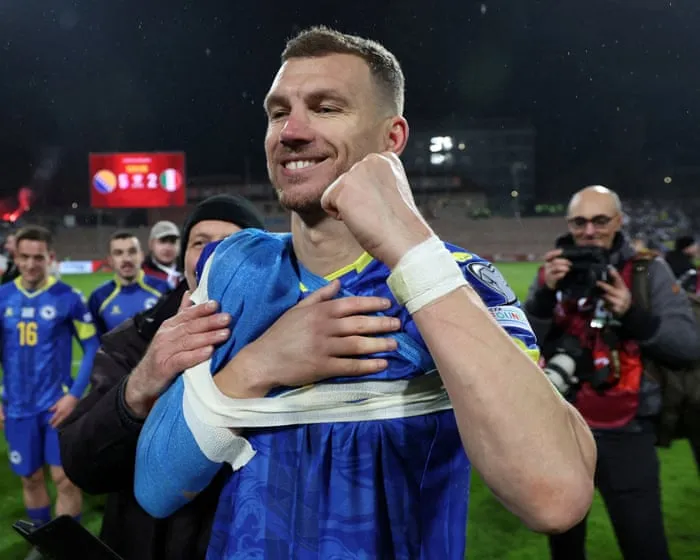
“There comes a time for everyone, and perhaps mine is approaching,” Edin Dzeko admits, but before that, he’s focused on leading Bosnia and Herzegovina in their second World Cup, armed with hard-earned wisdom. “At 17 or 18, people often said: ‘You gain experience by playing over the years,’” he recalls, a hint of nostalgia creeping into his expression, “but that’s the mindset of a teenager.” A grin spreads across Dzeko’s face. “Now that I’m older, I realize just how essential experience truly is.”
His transfer from Zeljeznicar in Sarajevo to Teplice in the Czech Republic as a young player surprised many, yet few could have predicted the illustrious career that would follow, taking him through Europe’s premier leagues and onto the grandest stages. Dzeko is among seven players over 40 expected to compete this summer, alongside icons like Cristiano Ronaldo and Luka Modric. Much of the fascination surrounding him stems from his remarkable longevity. What, then, are the keys to his enduring success?
“I never imagined I would still be playing at 40,” he reflects. “A decade ago, I would have told you that was impossible. However, I’ve learned to listen to my body and put in extra effort both before and after training to stay fit. I’m not as young as I used to be, and taking care of my legs is crucial. I still feel capable of contributing to the team, as I demonstrated in recent months with Schalke and the national squad.
“When you’re young, you often overlook the importance of arriving early for workouts or dedicating an extra 30 to 45 minutes in the gym for preventative exercises, or staying longer after practice. Young players might think, ‘I’d rather grab coffee or lunch with friends.’ As you age, it becomes clear that your body requires this commitment to remain competitive and sustain a long career in football.”
After a challenging stint with Fiorentina, where he struggled to find form, Dzeko joined Schalke in January, eager to reinvigorate his career in Germany, where he first made a name for himself as a top scorer at Wolfsburg. “They just needed someone to give them a boost, let’s say,” he comments on his return. His impressive goal-scoring continued, netting within 20 minutes of his debut and contributing to six goals that propelled Schalke back into the Bundesliga after a three-year absence. His manager, Miron Muslic, who fled Bosnia during the genocide, proved to be a pivotal figure in Dzeko’s resurgence. This move ensured Dzeko was not starting from scratch as they approached the World Cup playoff.
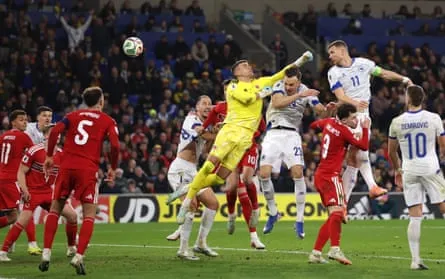
His crucial header against Wales in Cardiff was a significant moment, as it set Bosnia and Herzegovina on the path to this tournament. “Ah, my apologies, Welshman,” he quipped, giving a thumbs up to the Welsh representative facilitating the interview with Bundesliga. Shortly after, they triumphed over Italy in a penalty shootout, leading to celebrations filled with flares and fireworks in Sarajevo and beyond. Dzeko feels their achievement was overshadowed by Italy’s struggles. “During that time, everyone was focused on our stadium being small and Italy’s potential failure to qualify for their third consecutive World Cup,” he says. “Hardly anyone acknowledged our performance as a strong team filled with promising young players who showcased their skills against Italy.”
Dzeko’s inaugural World Cup experience came in Brazil in 2014, where a goal from Lionel Messi secured a victory for Argentina in Bosnia and Herzegovina’s debut match in Rio. He recalls the bittersweet memories, including a disallowed goal during a loss to Nigeria that ended their tournament run. “I wish I could have enjoyed it more, but when you’re playing, it’s hard to appreciate the beauty of the country,” he reflects. “For us, it was our first major competition, and to play in Brazil, the home of football, was incredible. Competing at Maracanã against Argentina was a highlight, but we missed the chance to advance.”
This summer, Dzeko, alongside former forward Sergej Barbarez, aspires for a different narrative. Bosnia and Herzegovina find themselves in Group B, facing co-hosts Canada in their opening match, followed by Qatar and Switzerland. “I have a fondness for the Swiss mountains,” Dzeko shares. “During my time at Inter, I often visited with my wife and children. I’ll definitely return. Switzerland is the favorite in our group, boasting many talented players and a wealth of experience in major tournaments. Other teams might be contemplating second and third places.”
For the moment, Dzeko, who played soccer amidst the ruins of war in Sarajevo, is eager to embrace this new chapter in his career. Queries about his future can wait.
“First, I need to discuss plans with Schalke, and then we’ll make decisions,” he states regarding his future. “This is an incredible club with passionate fans who have shown me immense support. I can confidently say that the past four months have exceeded my expectations.”