


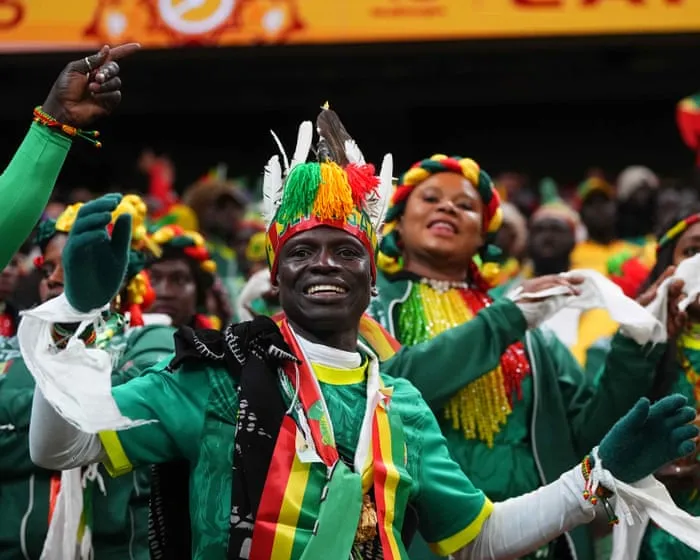
This summer heralds a monumental occasion as ten African countries gear up to participate in the inaugural World Cup featuring 48 teams. Following Morocco’s historic semi-final appearance in Qatar, a pressing question arises: can any of these nations advance even further?
The aspiration for an African nation to secure the World Cup title has felt tantalizingly close since Cameroon shocked the football community by defeating Diego Maradona’s Argentina, the reigning champions, during the 1990 World Cup opener. Nevertheless, their journey concluded with a narrow defeat to England in the quarter-finals. Over the last eight tournaments, African teams have frequently fallen short of high expectations.
The legendary Pelé once predicted that “An African nation will win the World Cup before the year 2000.” Yet, as time passes, the wait continues—not for lack of talent, but rather due to self-imposed administrative challenges. Joseph-Antoine Bell, a former Cameroon goalkeeper who participated in the 1982, 1990, and 1994 World Cups, shares his unvarnished views on this topic.
“Our football is not really improving … we don’t challenge ourselves to be excellent,” Bell asserts, shedding light on the continent’s hurdles. “Before the 1960s, Africa already had good players in Europe, which means that we are not lacking players. What have we won at the World Cup? Now that the tournament has been increased to 48 teams, are we naïve enough to believe we have greater chances to win?”
Reflecting on the 2010 World Cup held on African soil, Bell recalls the widespread belief that an African team might finally triumph. “Nonsense,” he remarks. “In terms of winning [the World Cup], we are not gaining more opportunities.”
This year, Algeria, Cape Verde, Côte d’Ivoire, DR Congo, Egypt, Ghana, Morocco, Senegal, South Africa, and Tunisia will represent Africa, while notable absentees include Cameroon and Nigeria. Bell notes, “Many view Cameroon as the leader in African football, but Morocco stands out as the true frontrunner, being the first to reach the knockout stage [in 1986] and the first to make it to the semi-finals in Qatar.”
“I believe they present the best chance for Africa at this World Cup alongside Senegal, Côte d’Ivoire, and possibly Egypt, which seems to consistently qualify. If you show up repeatedly and improve each time, you can aspire to go further.”
However, he stresses that merely progressing beyond the initial round is no longer a fitting objective. “With 48 teams, the first round is not the same as when we had 32 teams. The goal is to win [the World Cup], and the gap [to the trophy] is no longer the same.”
Off-the-field challenges are as formidable as those on it, with numerous African nations facing administrative disarray. Pape Thiaw, the coach of Senegal, initially refused to board the plane to the World Cup due to the Senegal Football Federation’s failure to pay months’ worth of salaries and unresolved contract disputes since guiding the team to the Africa Cup of Nations final in January. It required swift governmental intervention to resolve the matter.
“Becoming the best team, the best country in the world means that you have good players, a good coach, and good staff, but it also requires effective governance to support you,” Bell clarifies. “The complete package must be in place. When your team hails from a nation that forgets to pay the coach’s salary, and you claim you want to win the World Cup, it insults the rest of the world, where individuals truly strive to get it right. We must begin taking this seriously.”
“Winning the World Cup requires much more than talented players: it demands individuals, it demands managers who think strategically before players step onto the field.”
For fans, numerous supporters from the qualifying nations face hurdles in obtaining travel visas, casting a shadow over the tournament’s inclusivity. Segun Odegbami, former captain of Nigeria and 1980 Africa Cup of Nations champion, reflects on this concern: “The absence of vibrant, enthusiastic African spectators, due to travel difficulties, high costs, and visa challenges for entry into the United States is significant.”
“I have been waiting for 14 months to secure a date for an interview [at the US embassy in Abuja] … I am not a first-time visitor. I have had to cancel my travel plans.”
Odegbami’s situation is particularly poignant, given his previous role as an administrative manager for the Super Eagles during the 1994 World Cup in the US. Nevertheless, he remains hopeful about Africa’s prospects in the upcoming tournament. “We have moved beyond merely participating; we are now competitors and contenders for the top four. We are on the verge.”
Opening that door to the final and ultimately to the trophy will necessitate the utmost professionalism, as victories can hinge on mere details. The continent’s 1.5 billion inhabitants would undoubtedly rejoice at the chance to be part of the action at the MetLife Stadium on July 19.