


For Thomas Tuchel, the challenges surrounding the Harry Kane-led team could not be clearer, especially when recalling the dismal aftermath of the 2014 World Cup. England’s B-team ended their campaign with a lackluster 0-0 draw against Costa Rica in Belo Horizonte, leaving many to ponder the future.
Those days were bleak, with England exiting the tournament after suffering losses in their initial group matches in Brazil. The Football Association faced the harsh reality that such humiliating performances no longer felt surprising.
Roy Hodgson described the situation as a team “in a realm of despair,” and things only worsened with the infamous defeat to Iceland at Euro 2016. However, these setbacks belong to a past era. Under Gareth Southgate, a resurgence occurred, mending the morale and cohesion of a young squad, culminating in a near miss at Euro 2024. Tuchel’s assertion about pursuing a second star for the team can hardly be deemed unrealistic given this new context.
As England gears up for the 2026 World Cup, apprehensions linger regarding their over-reliance on Kane for scoring. Following the captain’s brilliant header that secured victory against New Zealand in a recent warm-up match in Tampa, Tuchel appeared unfazed. Kane is in exceptional form, having netted 61 goals across competitions for Bayern Munich this season, positioning him as a frontrunner for the Ballon d’Or should he help England claim silverware for the first time since 1966.
Yet, concerns are persistent. What will England do if Kane is closely marked during a crucial match? Or worse, what if he suffers an injury on the challenging American surfaces?
Tuchel’s backup strikers, while competent, lack elite status. Ollie Watkins concluded the season strongly with Aston Villa, capable of stretching defenses, yet he squandered his only chance against New Zealand. Meanwhile, Ivan Toney also missed opportunities against the All Whites and was primarily selected to divert attention from Kane in critical moments.
This discussion extends beyond just Watkins and Toney; it emphasizes the need for contributions from the wide players and attacking midfielders.
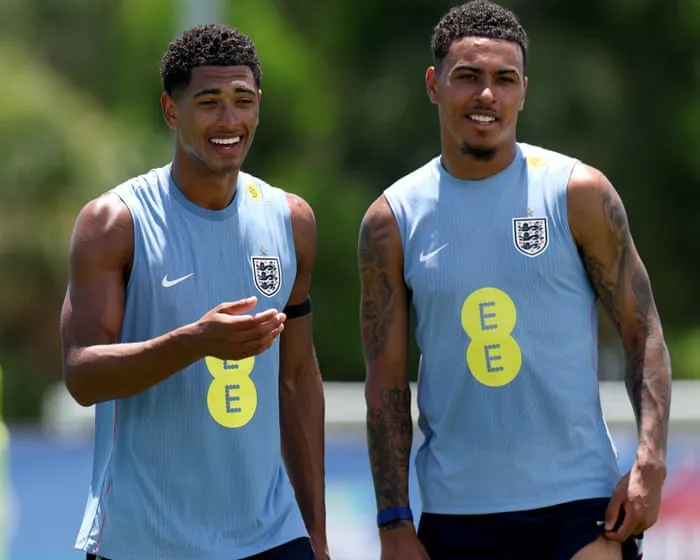
Tuchel is looking for greater output from the attackers surrounding Kane, especially as England prepares to face Costa Rica in their final warm-up match on Wednesday night. Marcus Rashford, who has scored 18 times in 71 appearances, is the squad’s second-highest scorer, but he seemed hesitant with his chances against New Zealand. More assertiveness is essential. Bukayo Saka boasts a superior scoring record than Rashford, with 14 goals in 48 appearances, while Anthony Gordon and Noni Madueke have two and one goals respectively for the national team. In terms of playmakers, Jude Bellingham has six goals, Eberechi Eze has three, and Morgan Rogers has one.
“The overall statistics of our wide players and others are not the impressive figures we anticipate,” Tuchel remarked in March. He expressed a desire for enhanced creativity from his attacking players. Observing England’s competitors, he noted Ousmane Dembélé and Kylian Mbappé on the sidelines as Michael Olise netted a hat-trick in France’s victory over Northern Ireland on Monday. Spain’s Pedri also made headlines, scoring after surging from midfield in their 3-1 win against Peru. Nations like Argentina, Brazil, Portugal, Germany, and Belgium have demonstrated a more balanced approach to scoring.
England requires a more diversified attacking strategy; they need players beyond Kane to take charge of matches. Rashford, who is vying with Gordon for a left-wing position, has had a solid season at Barcelona but hasn’t scored in open play for his country in nearly three years. Despite having a wealth of talent, England has struggled to find a suitable replacement for Raheem Sterling, who was an excellent partner for Kane and adept at finishing crosses from the wing during his prime.
Saka has netted just two goals since the Euros, and Bellingham has yet to score under Tuchel. The upcoming match against Costa Rica presents a vital opportunity for Kane’s teammates to gain confidence. Although there is considerable emphasis on England’s prowess at set pieces, it’s worth noting that officials will be monitoring grappling and blocking closely in the box. Emulating Premier League corner tactics may prove challenging; thus, England must display creativity during open play.
This effort begins with establishing possession against Costa Rica, a team that failed to qualify for the World Cup. Tuchel experimented with different lineups during the New Zealand match, focusing on building fitness in the Florida heat, but the squad in Orlando is expected to resemble that which will face Croatia in their Group L opener next Wednesday.
Several players are likely to see 60 to 70 minutes of play against Costa Rica. A pivotal selection decision looms: has Bellingham done enough to replace Rogers at No. 10 after a commendable second half against New Zealand? Tuchel has leaned towards Rogers thus far, valuing the 23-year-old’s counterpressing and overall connectivity. However, the lack of synergy between Bellingham and Kane under Tuchel remains a concern; they have played together four times since his appointment, yet their combined total stands at just one goal from 38 appearances for England.
Are Bellingham and Kane in sync? This question poses a significant challenge for Tuchel. The prospect of Bellingham not starting against Croatia seems unlikely. The match against Costa Rica offers a chance to determine whether the partnership between Kane and Bellingham can achieve the desired balance in attack.
Tuchel recognizes the necessity for forwards who can make impactful contributions. Recent statistics indicate that England has increasingly depended on Kane’s goals since Southgate’s exit. At some juncture, others must rise to the occasion, and amidst all the discussions surrounding Tuchel’s strategies, no one appears more equipped to embrace that challenge than Bellingham.