


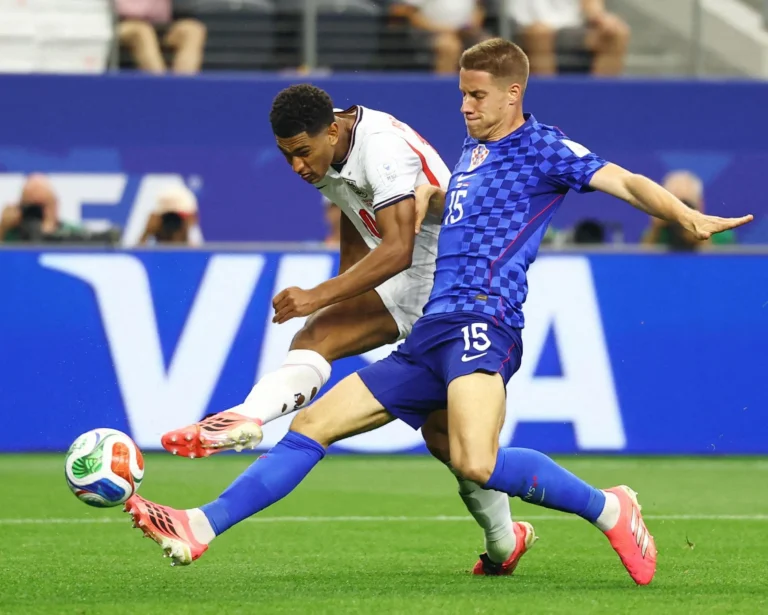
Relief washed over the England squad as they emerged from a challenging first half in Dallas. Under the expansive Victorian roof of the stadium, England’s initial performance resembled a clumsy robot attempting to mimic Michael Jackson’s iconic dance moves. They were persistent but lacked fluidity, ultimately leading to a 2-2 halftime score punctuated by two set-piece goals from Harry Kane, the first a penalty following a corner kick.
Was this how England’s story was destined to unfold? Would they succumb to a lifeless style of play, reduced to mechanical movements and predictable set pieces? Thomas Tuchel had predicted this in September: throw-ins were making a comeback, and corners were the latest craze. In that opening half, England showcased these elements but failed to demonstrate much creativity beyond them.
Then, a pivotal moment occurred, one that would define not just this match but Tuchel’s tenure with the team. The halftime adjustments made by the manager, along with Jude Bellingham’s inspiring goal, shifted the momentum. This goal was not merely a point on the scoreboard; it represented a burst of energy and determination, contrasting sharply with the earlier lackluster display.
Bellingham’s goal wasn’t a product of individual flair or a dazzling dribble. Instead, it was a display of sheer willpower. He seized a simple pass and surged forward, skillfully evading two defenders with impressive speed before executing a precise finish into the far corner. This moment marked a turning point for England.
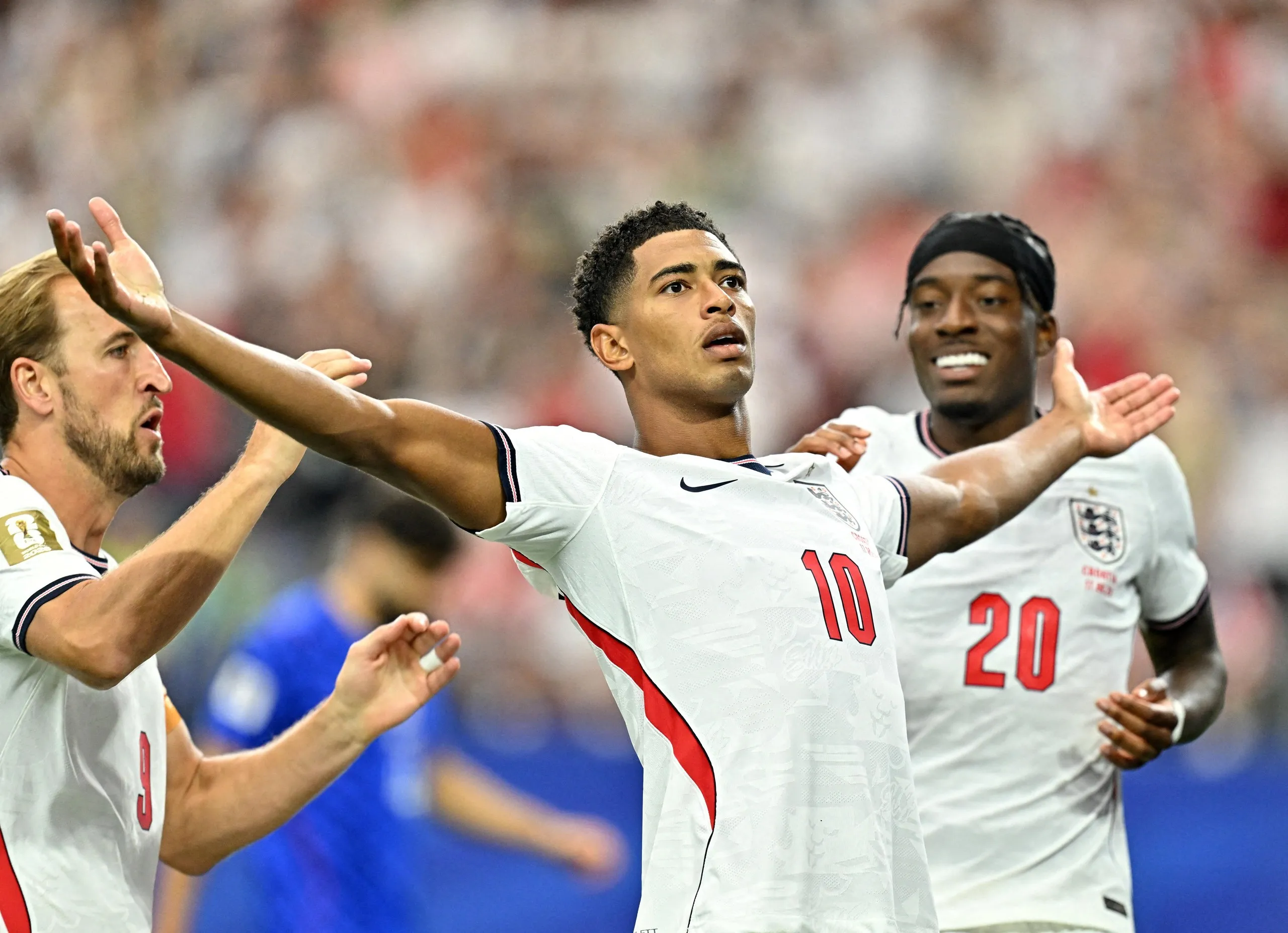
At that moment, England wasn’t just leading 3-2; they appeared unified and eager to engage in the beautiful game. They played with a newfound enthusiasm, shedding any remnants of fear or self-doubt. For the next ten minutes, they dominated Croatia, creating multiple scoring opportunities and showcasing their muscle, speed, and ruthless efficiency.
Bellingham’s role in this transformation was vital, as he injected an element of unpredictability into the team’s play. Critics often question whether he possesses the depth and strength of an elite player, but at just 22, Bellingham is already making a significant impact with his elite moments. His contributions can reshape the dynamics of a match and invigorate the team’s spirit.
By the end of the game, with Marcus Rashford also scoring, England’s performance had evolved into something entirely different—energetic, free-flowing, and slightly chaotic. It raised the question: could England maintain this level of play throughout the tournament?
The Dallas Stadium itself is an impressive venue, soaring out of the Texas landscape like a futuristic spacecraft. Inside, one steps into a climate of excitement, where the atmosphere is electric, and every detail—from the massive screen to the sea of red and white—heightens the experience.
Before kick-off, the view from the press box was breathtaking, with the crowd’s vibrant flags representing their hometowns, a testament to the traveling support for the team. The first 12 minutes were dominated by Kane, who scored from a retaken penalty, before adding another goal from a corner taken by Declan Rice.
However, England’s momentum faltered, and they seemed to lose their footing as the game progressed. Tuchel, dressed in black, resembled a determined settler as he observed the match closely. His influence was clear, as the team managed to regain control and shift their energy in the latter stages.
As the game unfolded, the balance in midfield became increasingly evident. England’s success in the US will hinge on how well Rice and Elliot Anderson can steer the game. Tuchel appears to favor players who fit a particular mold: tall, agile, and technically skilled.
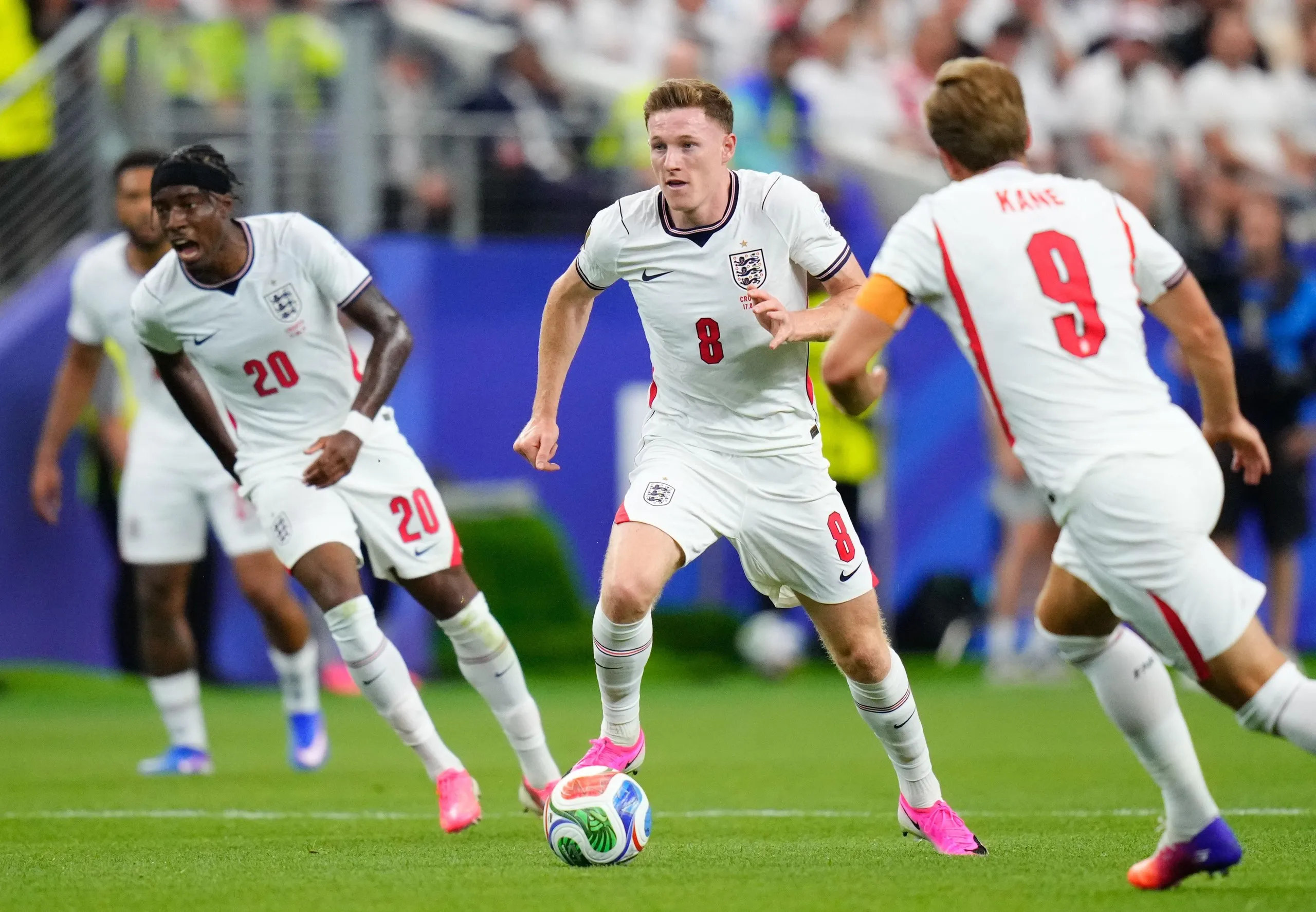
While it may be too dramatic to label this victory as retribution for 2018, England did manage to outplay the seasoned Luka Modric, who, despite his age, remains a formidable presence on the field. Modric departed shortly after England surged ahead, and Croatia appeared vulnerable throughout.
Ultimately, the match brought a blend of hope and energy, showcasing a more human side to England’s play. The performance hinted at what the team could potentially achieve in the tournament ahead.