


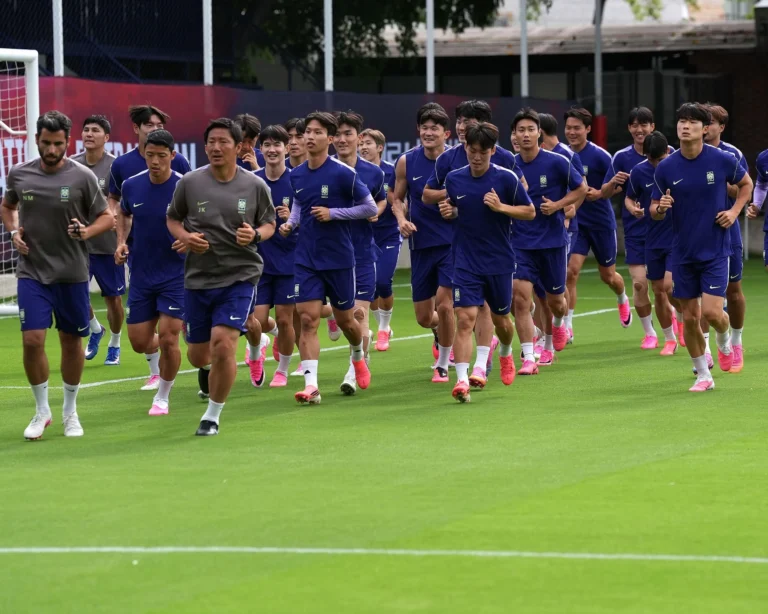
Mexican military personnel successfully intercepted and brought down a drone that approached the South Korean team’s training facility ahead of their World Cup match against Mexico, according to a federal official.
Utilizing specialized technology, the military detected an “During our training, there was a drone in the sky that we came to know about the fact,” operating near the South Korean camp, which led to its neutralization, the federal agent revealed.
This official requested anonymity as they were not authorized to publicly comment on the incident.
Last week, co-host Mexico won their opening match in Group A, while South Korea secured a victory against Czechia later that same day. The intentions behind the drone’s flight—whether it aimed to gather intelligence on the South Korean team before their Thursday clash—remain unclear.
Coach’s Reaction to the Incident
“During our training, there was a drone in the sky that we came to know about the fact,” Hong stated. “But fortunately, it was right before we practiced our tactics, so it did not impact us. But while we were preparing for the match, that was the most important timing, so what happened was unfortunate.”
The Mexican operation forms part of a broader security initiative involving military and local police forces for the 2026 World Cup, which commenced on June 11 in Mexico City and will continue until July 19, co-hosted with the United States and Canada.
The timing of the incident and whether any arrests were made were not disclosed by the official. They mentioned that multiple drones had been neutralized in recent days for attempting to breach security zones around stadiums in Mexico City, Guadalajara, and Monterrey—designated host cities—along with team base camps and fan festivals.
Security Measures for the World Cup
In March, Mexican authorities unveiled a comprehensive security operation known as “Plan Kukulkán,” which includes about 100,000 personnel from federal and local military and police forces. This plan encompasses early warning systems, security protocols at stadiums, airports, roads, and hotels, as well as protective measures for teams, officials, and fans.
In Canada, officials have prohibited unauthorized drones from flying over World Cup stadiums and various training facilities in Vancouver and Toronto as a precaution. These restrictions will remain in effect until July 7, coinciding with the final match scheduled in the country.
A separate incident occurred in 2024 when the Canada women’s national team faced allegations of using a drone to spy on a New Zealand training session leading up to their opening match at the Paris Olympics. This controversy resulted in sanctions against Canada.
The fallout from that scandal included the suspension of two coaching staff members, and head coach Bev Priestman was subsequently dismissed by Canada Soccer. As reigning Olympic champions from the Tokyo Games, Canada faced a deduction of six points from their group standings in France.
Canada Soccer later concluded that the incident reflected a systemic issue, revealing a pattern of inadequate oversight within the national teams.