


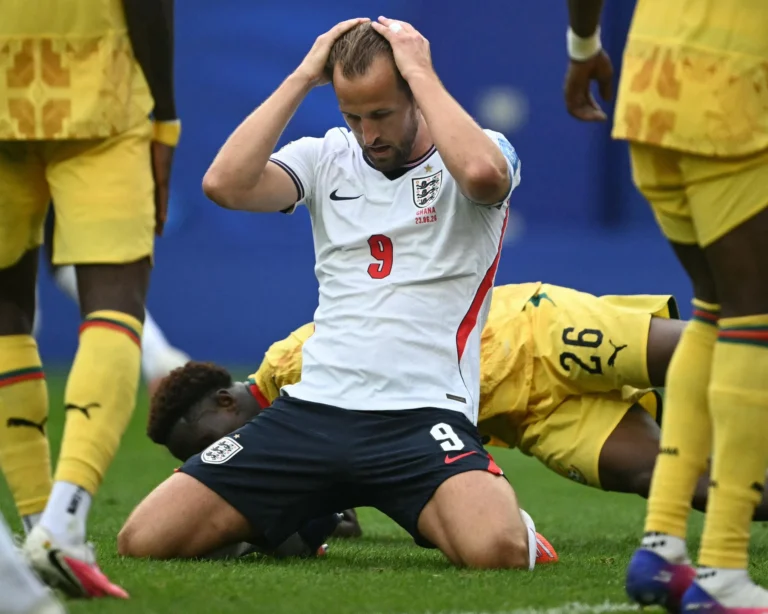
Before the match, the England squad was buzzing with conversation, particularly sparked by Harry Kane, who emphasized the importance of avoiding past pitfalls. In their previous three tournaments, the team faltered in their second game, with disappointing draws against Scotland and Denmark during the European Championship and a stalemate against the United States in the last World Cup. Kane’s message was clear: improvement was essential this time around.
However, England fell short of expectations. Following their 4-2 victory over Croatia in their Group L opener, they aimed to build on that success but instead struggled against a resolute Ghana side. The match was characterized by missed opportunities and a lack of urgency, with England only coming close to scoring in the dying moments.
Thomas Tuchel, the England coach, relied on his bench to bring some spark, and his substitutions almost paid off. Bukayo Saka tested Ghana’s goalkeeper, Benjamin Asare, with a low strike, while Nico O’Reilly’s header struck the crossbar after a well-placed cross from Reece James. Following the rebound, Kane squandered a golden opportunity by sending his shot over the bar. In stoppage time, Marc Guéhi’s header was cleared off the line, highlighting England’s frustrations.
Despite the lack of a win, England at least avoided defeat, and many reflected on whether securing a point was preferable to risking a loss in pursuit of three points. The match was certainly more cautious compared to their previous encounter with Croatia.
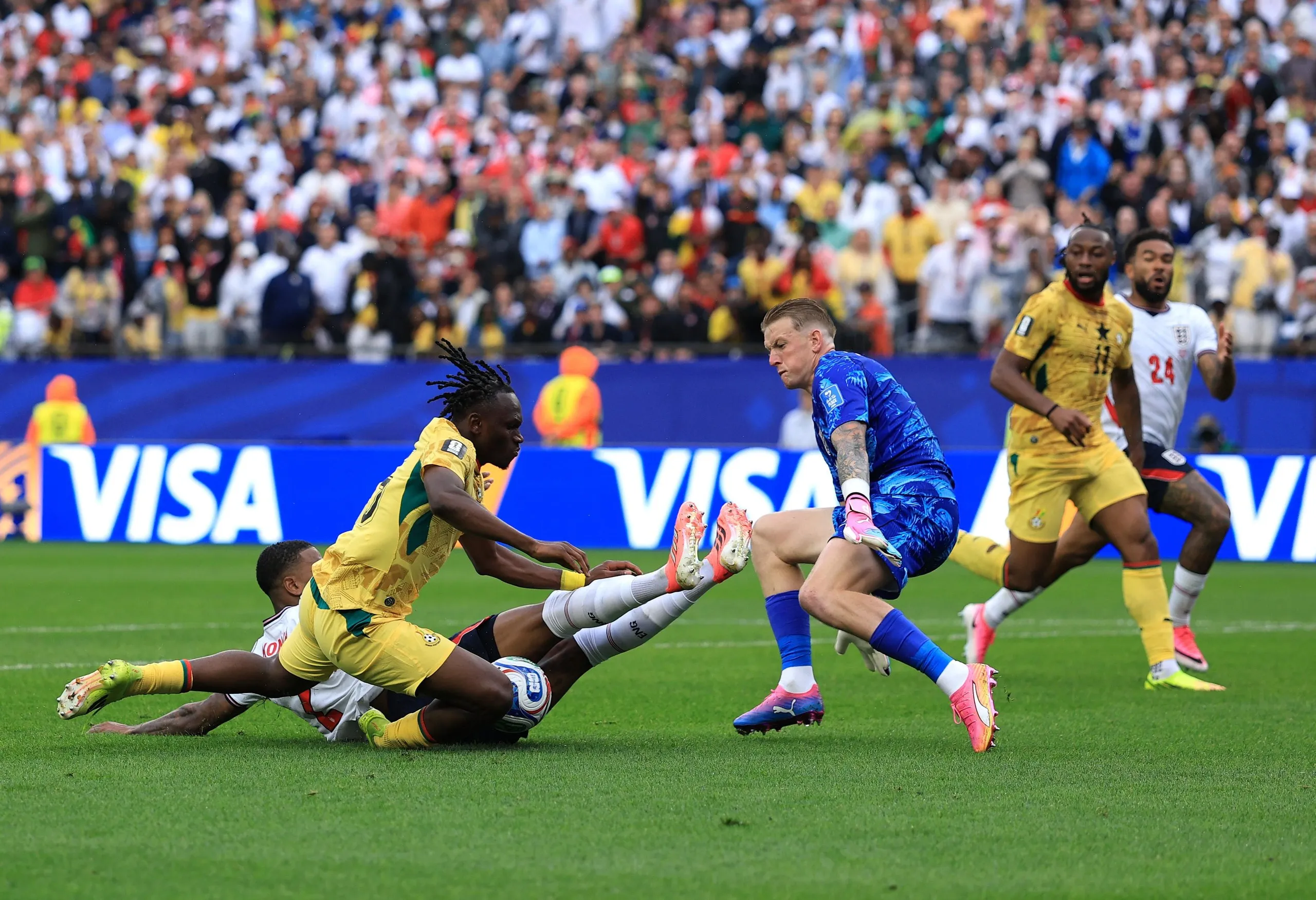
Defensively, England appeared solid for most of the game, but they survived a scare in the 79th minute. Ghana’s substitute, Prince Kwabena Adu, broke through, leading to a controversial challenge from Ezri Konsa in the box. Although Ghana protested for a penalty, Konsa was ultimately spared any punishment.
The conditions were far from ideal, with a rainy and windy atmosphere raising questions about England’s ability to perform in such circumstances. This was not the type of scenario they had prepared for during their warm-weather training in Florida. England’s struggles against Ghana’s defensive setup suggested that the promised transformation of their style had yet to materialize.
Tuchel recognized that Ghana would pose a distinct challenge compared to Croatia. With Carlos Queiroz recently appointed as Ghana’s manager, this was just his fourth match in charge, making it difficult for England to prepare adequately. Queiroz’s approach was predictably defensive, employing a compact 4-5-1 formation that prioritized defensive solidity over ball possession.
England needed to navigate through a sea of yellow shirts, requiring sharp movements and quick passing to break through Ghana’s defense. Tuchel had hoped for a replication of the second-half performance against Croatia, but that level of play did not materialize.
The opening phase of the match set an uninspiring tone, leading to a hydration break that was unnecessary and met with jeers from the crowd. England’s dominance in possession did not translate into meaningful chances, with Noni Madueke frequently reverting back on the right flank. Ghana’s strategy was clear: keep England in front of them and limit their opportunities.
Ghana made no apologies for their defensive tactics, and their supporters voiced their approval, celebrating their team’s efforts at halftime and again at the final whistle. Despite managing only two shots throughout the match, Ghana measured their success by their disciplined defense.
England’s inability to create significant chances before the break was evidenced by their six attempts, none of which troubled Asare. Jude Bellingham’s clash with Jerome Opoku in the 45th minute encapsulated the growing frustration within the England ranks, leading to a heated exchange with Queiroz, which did not go unnoticed by the Ghana bench.
Patience was essential, as Tuchel’s assistant, Anthony Barry, highlighted during halftime interviews. He stated that Ghana’s defense was even deeper than England had anticipated and described the first half as “absolutely OK from our point of view.”
Seeking to inject some attacking flair, the England management opted for a more encouraging approach. They understood the challenges such a match presented and wanted to avoid giving Ghana any momentum, which almost occurred right after the second half began.
Bellingham showcased his defensive prowess with a crucial tackle on Antoine Semenyo, while Djed Spence remained vigilant against Marvin Senaya. A critical moment arose in the 67th minute when Adu advanced towards goal, forcing Jordan Pickford into a risky challenge outside his area. Pickford was fortunate to receive a free-kick in his favor after the collision.
Tuchel made several attacking substitutions, bringing on Saka first, followed by Morgan Rogers and Eberechi Eze, who took over from Elliot Anderson in midfield—a tactical shift. Despite these changes, England struggled to find their rhythm in the second half until a late surge. The outcome could have differed had Kane converted his chance, but ultimately, England fell short of making a significant impact.
- World Cup 2026
- England
- Ghana football team
- World Cup
- match reports