


This piece is part of the collaborative effort known as the 2026 World Cup Experts’ Network, which includes top media outlets from the 48 countries that have qualified. As the tournament approaches, daily previews are being published leading up to the kickoff on June 11.
The Journey to Qualification
A year ago, Graham Arnold’s appointment as head coach was met with skepticism. Many doubted his ability to lead Iraq to the World Cup, especially after a disappointing 2-1 loss to Palestine, where Iraq squandered a late lead. The Lions of Mesopotamia seemed on track to qualify, but after a lackluster start that saw them earn just a point from two matches, the team parted ways with coach Jesús Casas.
In their initial meeting, the Australian mentor inscribed the word “believe” on a board, challenging players to envision their potential for qualification. The 62-year-old has implemented a 4-3-3 system, recently experimenting with a daring 4-4-2 formation featuring two strikers. Gradually, the players began to embrace Arnold’s vision, emphasizing discipline and a shift in mindset, all aimed at reaching the World Cup.
The turning point came when Iraq was awarded a penalty via VAR in the dying moments of a match against the UAE in Basra last November. With the score tied at 1-1, a victory was essential for Iraq to advance to the Inter-Confederation playoff. As the tension mounted, Amir Al-Ammari, Iraq’s penalty shooter, strategically observed the UAE goalkeeper’s tendency to dive early and chose to wait until the last second to place his shot to the right, securing the goal.
Iraq: Group I Fixtures
16 June vs. Norway, Boston (6 PM local time, 11 PM BST, 17 June 8 AM AEST)
22 June vs. France, Philadelphia (5 PM local time, 10 PM BST, 23 June 7 AM AEST)
26 June vs. Senegal, Toronto (3 PM local time, 8 PM BST, 27 June 5 AM AEST)
Iraq stood just one game away from securing their spot in the World Cup for the first time in four decades, preparing for a decisive match against Bolivia in Monterrey, marking their 21st qualifier. However, complications arose when conflict erupted in the region, leading to closed airspace and grounded flights. Arnold, stranded in a UAE hotel, urgently requested FIFA to postpone the playoff. Eventually, after a grueling 12-hour drive from Baghdad to Amman followed by a 17-hour flight to Mexico, the team arrived a mere ten days before the match.
“Play for your families and make them proud,” Arnold urged his players. Iraq took the lead just ten minutes into the match, but Bolivia equalized, leaving the score at 1-1 at half-time. Aymen Hussein then found the net, solidifying Iraq’s place as the 48th and final team to qualify for the World Cup. Arnold remarked, “The players faced immense stress and pressure from 46 million Iraqis eager to see their nation back at the World Cup after 40 years. Each match represented either heartbreak or survival.”
The Head Coach
Graham Arnold holds the distinction of being the first Australian to coach two different nations to World Cup appearances, having previously led the Socceroos to the 2022 tournament in Qatar via the playoffs. When he stepped down from his role with Australia two years ago, believing he had done all he could for his country, few anticipated he would take the helm of Iraq’s squad. The Lions of Mesopotamia now find themselves in a challenging group, which Arnold refers to as the “group of excitement,” featuring formidable opponents like France, Norway, and Senegal.
“We have nothing to lose,” Arnold declared, emphasizing that the pressure lies with their competitors. “Let’s embrace the challenge, shock the world, and enjoy the experience.”
Star Player Spotlight
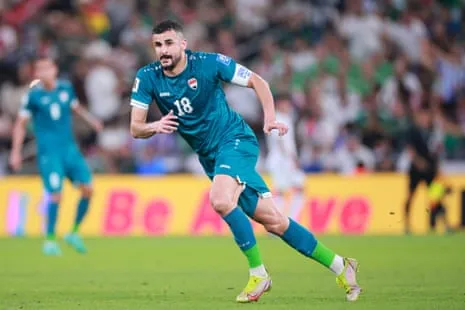
Aymen Hussein’s journey has been remarkable; once criticized for his lack of performance and a distinctive ponytail, he now stands as a national hero after scoring the goal that led Iraq to their first World Cup in four decades. “This has been a lifelong dream for me. I felt the support of 46 million Iraqis as we pursued this shared dream,” he shared.
His story is even more poignant considering the personal losses he endured following the turmoil post-2003 US-led invasion, which claimed the lives of his father and brother. Despite facing intense scrutiny and mockery for his earlier misses—so much so that one coach had to step onto the pitch to suggest he abstain from taking a penalty—Hussein has risen to the occasion. After netting the decisive goal in Monterrey, he was rewarded with a diplomatic passport, three Chevrolet Tahoe vehicles, a villa, a luxury apartment, and a gold iPhone 17 Pro Max, along with a substantial plot of land. Now, he ranks among Iraq’s all-time top five goal scorers and holds the title of the highest-paid player in the Iraqi Stars League, playing for Al-Karma.
A Player to Watch
Footage exists of a young Marko Farji, effortlessly maneuvering past players and scoring goals. Those early days, spent honing his craft on a field with his father in Grimstad, Norway, ignited his passion for football at just five years old, attracting interest from clubs like Aston Villa, Liverpool, and Manchester City. Following an unsuccessful trial with City, where coaches advised him to build physical strength and resilience, he faced a challenging setback at the age of 11. Now, at 22, armed with experience, strength, and determination, he has experienced a breakout season, netting nine goals for Strømsgodset in Norway’s Eliteserien, which led to a €1.3 million transfer to Serie A’s Venezia.
The Unsung Hero
Drawing parallels to Italy’s midfield maestro Demetrio Albertini from the 1994 and 1998 World Cups, Amir Al-Ammari is now an integral part of Iraq’s squad. A graduate of Brøndby IF, Al-Ammari took time to find his ideal role, initially viewing himself as a box-to-box player. However, he has developed into a reliable modern No. 6. His crucial penalty that secured Iraq’s advancement to the playoff in Monterrey was a significant moment, helping him overcome the lingering memories of a previous misstep during the 2023 Asian Cup round of 16 against Jordan, where his pass led to an early concession.
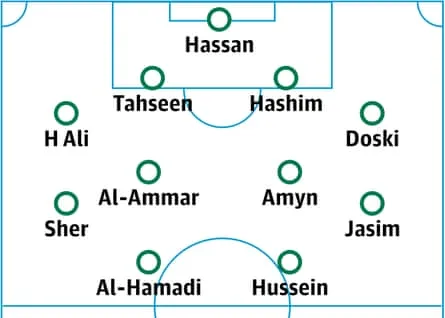
Expected Starting Lineup
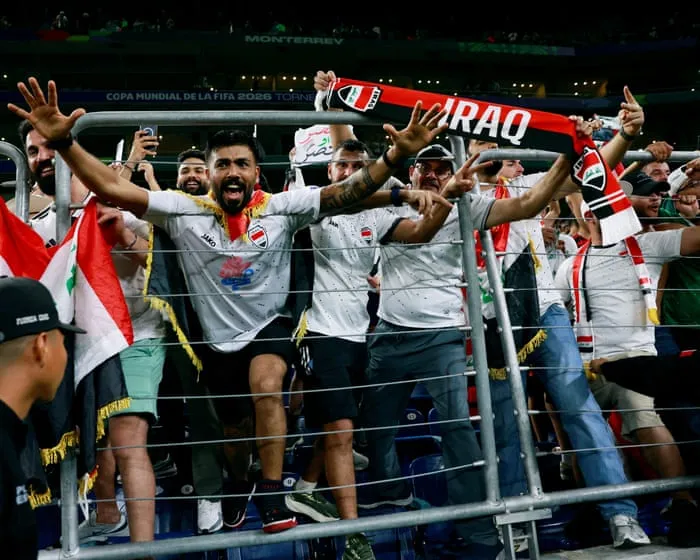
What to Anticipate from Fans
Fans from Iraq are set to travel to Foxborough, Philadelphia, and Toronto to support their team. The Iraqi-American community is widespread across the United States, with significant populations in Michigan, California, and Illinois, as well as a considerable presence in Ontario, Canada. Years of conflict have dispersed Iraqis globally, and they will gather at the World Cup, embodying the country’s rich history and aspirations. After four decades, Iraqis are elated to re-enter the global football community. If chants like “Who told you to play Toba [football]” resonate against rival fans, it will signify a positive performance on the pitch—a popular taunt among supporters. Additionally, the rallying cry “With spirit, with blood, we redeem you, Iraq” may echo, a chant from the Saddam Hussein era, now repurposed to honor the nation itself.
Iraq’s Connection with the US
Over 30 years ago, Adnan Dirjal, then president of the Iraq FA and coach, remarked that qualifying for the 1994 World Cup in the US would be “the biggest slap to the monster America.” While the intersection of politics and sports is often debated, the World Cup will highlight how they remain intertwined. Donald Trump has publicly stated that the US invasion of Iraq in the 2000s was a mistake. For Iraqi supporters, the primary concern is simply to have their visa applications approved, navigate US Customs and Border Protection smoothly, ensure security at matches, and enjoy reasonably priced tickets.