


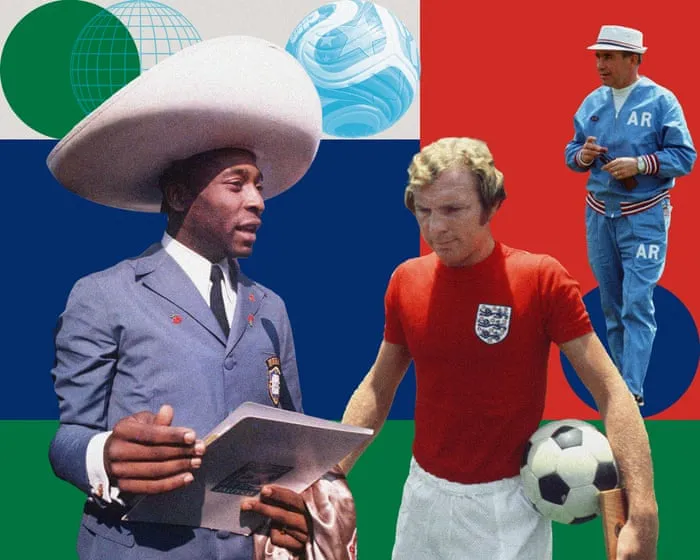
The intense heat and high altitude posed significant challenges for teams during the 1970 World Cup in Mexico, signaling an unusual tournament experience. In an attempt to adapt, Bulgarian officials moved their squad south of Sofia to acclimatize to the elevation. This strategy proved flawed when it became evident that the temperatures in the Pirin Mountains were nowhere near the warm mid-20s Celsius of Mexico, but rather close to freezing. To address the heat, they limited players’ water intake, aiming to simulate a dehydrated state.
Unfortunately, this approach did not yield favorable outcomes. Bulgaria suffered losses in their first two matches and was eliminated by the time they managed a draw against Morocco. It is reasonable to expect that preparations for the upcoming World Cup will be far more advanced than those from 56 years ago. Back then, many nations believed that training at high altitudes was the ideal method to prepare for competitions in cities like Mexico City, Monterrey, and Guadalajara. Israel even trained in both Ethiopia and Colorado, while Uruguay opted for Quito and Bogotá. Mexico hosted an extensive five-month training camp, which included 13 international friendlies before facing Dundee United from Scotland.
England, the reigning world champions, were particularly anxious about the conditions they would face in Mexico. Their team physician, Neil Phillips, studied the effects of heat, altitude, and tropical diseases, advocating for players to take salt tablets. Additionally, he enlisted Dr. Griffith Pugh, a physiologist with experience from Edmund Hillary’s Everest expedition. However, some of their other strategies were less practical.
Manager Alf Ramsey, despite his coaching talent, was known for his xenophobic tendencies. He recalled the greasy food served during England’s 1950 loss to the USA and was haunted by that memory. A subsequent trip to Brazil in 1964 and another tour of Latin America in 1969 only fueled his mistrust. Consequently, Ramsey decided that England would bring their own bus, food, and water supplies. This decision, coupled with a series of undiplomatic remarks from Ramsey, infuriated Mexican officials, who then claimed that the UK was facing a foot-and-mouth disease outbreak. They confiscated and incinerated all frozen meat at the docks, forcing England to subsist on Findus fishsticks and ready-made meals.
England’s pre-tournament preparations involved a three-week stay in Mexico City, where life was meticulously structured. Ramsey would time players sunbathing by the pool with a stopwatch, signaling them to flip over every 20 minutes. Following this, the team traveled to play friendlies at high altitudes in Bogotá and Quito. During a layover in Colombia, their captain, Bobby Moore, faced arrest for allegedly stealing a bracelet from a jewelry store in the hotel lobby. He was under house arrest for several days at the residence of Alfonso Senior, a high-ranking official in the Colombian football federation. After intense diplomatic negotiations, Moore made it to Mexico just in time to participate in England’s opening match, a narrow 1-0 victory against Romania, and was later cleared of the accusations.
In contrast, Brazil’s preparation was notably comprehensive. Late in 1969, João Saldanha, the coach during their qualification, met with two army officers, Cláudio Coutinho and Lamartine Da Costa, at a churrascaria near Sugarloaf Mountain to strategize on getting the players ready for the demanding conditions. Coutinho would later assume the role of Brazil’s coach and had recently completed his tenure with the LA Aztecs before his tragic diving accident in 1981. Da Costa, a biometeorology expert from the Pontificia Universidade Católica do Rio de Janeiro, had also attended the 1968 Mexico Olympics, where he made key observations to enhance their training.
The stereotype of Brazilian football as instinctive players casually wandering off the beach to secure victories has always been misleading. The country’s golden era, which saw them clinch three World Cups in four tournaments from 1958 to 1970, relied heavily on rigorous preparation. Leading up to the 1970 tournament, players underwent a 100-day training regimen at military facilities. Every detail was closely monitored, including custom-fitted kits designed to minimize sweat accumulation. Plans to implement a NASA training program were discussed, although they primarily utilized the Cooper test to assess fitness levels based on distance covered in a 12-minute run. The team arrived in Mexico City a full 32 days before their first match against Czechoslovakia. This meticulous planning paid off, as 12 of Brazil’s 19 goals during the tournament were scored in the second half, showcasing their endurance alongside their superior skills.
This provides a valuable lesson for the 2026 World Cup. While preparation is not the sole determinant of success—especially considering the constraints of the domestic calendar—being equipped for the conditions and having a strategic gameplan will provide a significant advantage. Football is inherently unpredictable, with many outcomes determined on the day of the match; however, teams that establish a solid foundation increase their chances of success. Relying on Findus ready meals has never proven to be a winning strategy for World Cup triumphs.
On This Date …
Cameroon’s lead-up to the 1990 World Cup in Italy was fraught with chaos. Their coach, Valery Nepomnyashchy from Russia, had initially arrived two years earlier to oversee youth development but was unexpectedly elevated to the senior team’s head coach. He struggled with the language barrier and failed to earn the players’ respect. After a disappointing performance that saw them exit the 1990 Cup of Nations in the group stage, the team’s troubles continued when they relocated from Bordeaux to Yugoslavia for a pre-tournament camp, only to find their equipment delayed. Grégoire M’Bida, an attacking midfielder, was sent home for missing the team bus, while veteran forward Roger Milla, who had semi-retired, was called back to the squad at the request of President Paul Biya.
Before their opening match against Argentina on June 8, 1990, goalkeeper Joseph-Antoine Bell infamously stated in an interview that a 3-0 loss to the reigning champions would be acceptable. Following this, he was replaced by Thomas N’Kono at the last moment, so abruptly that N’Kono’s wife missed the game, believing he would only be on the bench. Remarkably, Cameroon managed to win 1-0 despite having two players sent off. This historic victory marked the first time a sub-Saharan African team had won a World Cup match, and Cameroon advanced to the quarter-finals that tournament.
- This article is part of Soccer Desk: World Cup edition, a newsletter that will be published regularly during the tournament.
This article is part of Soccer Desk: World Cup edition, a newsletter that will be published regularly during the tournament.