


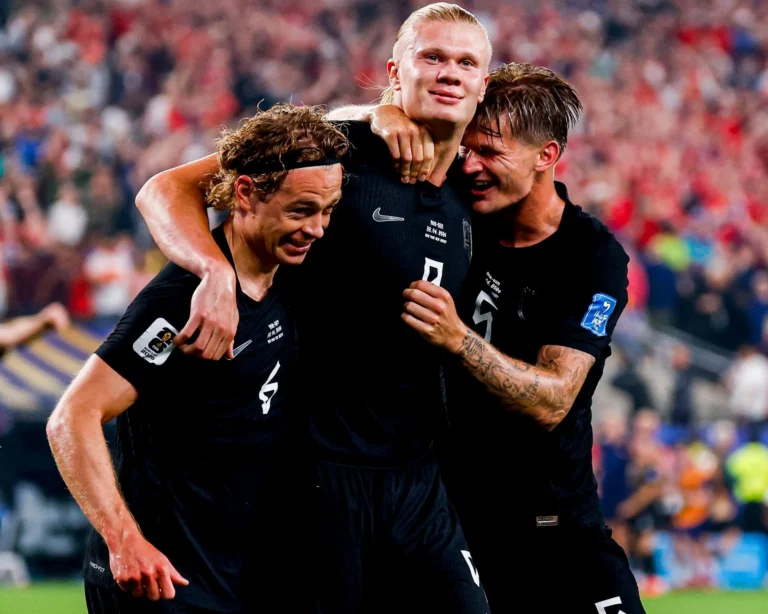
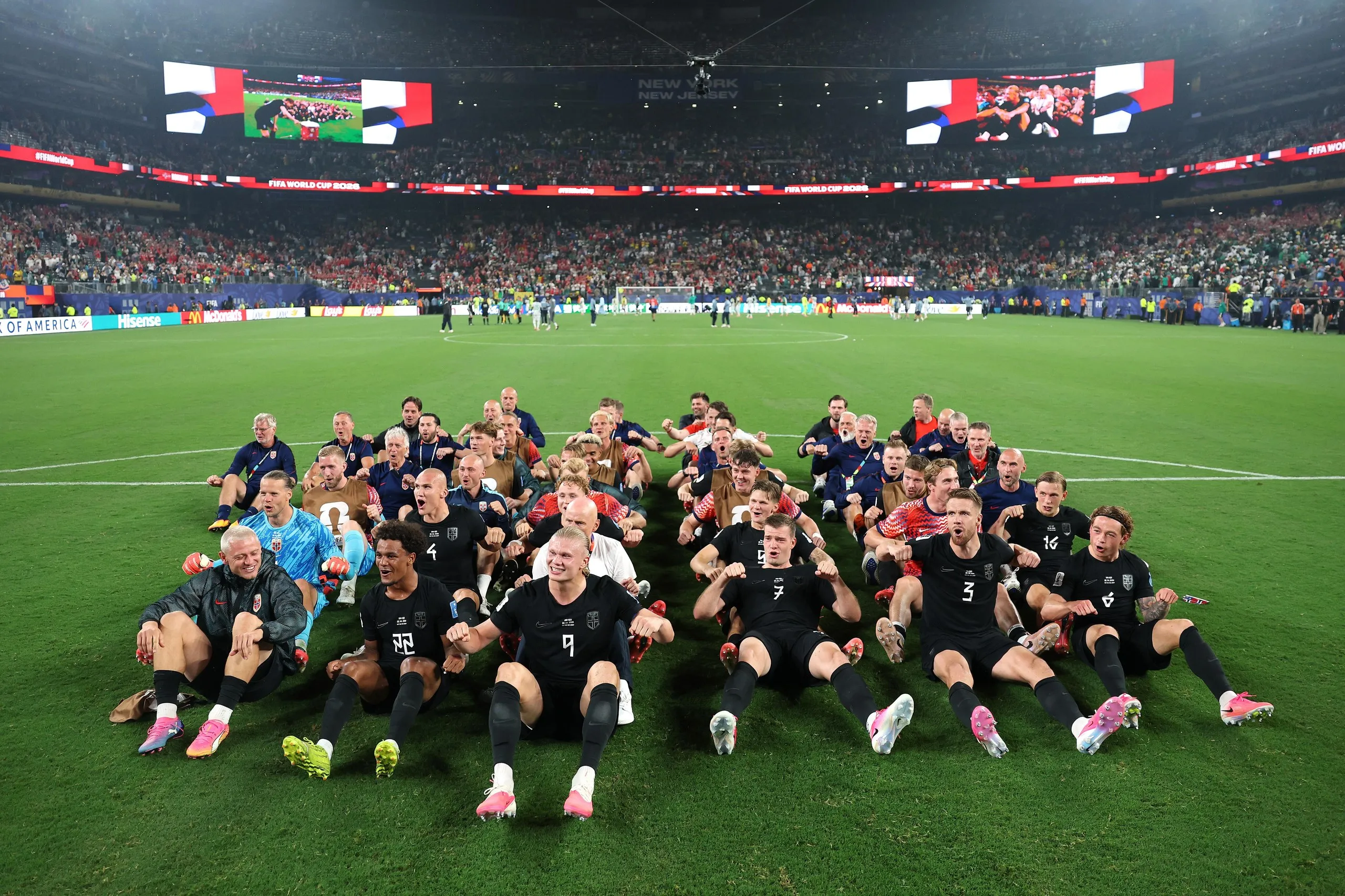
As the final whistle blew in New Jersey, Norway’s players collapsed onto the rain-soaked field, joyfully embracing one another in a heartfelt celebration. They then gathered in a tight circle before their supporters, reminiscent of schoolchildren in a crowded assembly.
On the sidelines, Martin Ødegaard began to beat on a drum brought for the occasion, while teammates and staff joined their fans in a Viking rowing cheer, a ritual they have showcased throughout this World Cup.
This was a delightful scene, widely shared on social media, marking a genuine celebration of Norway’s 3-2 win over Senegal, which secures their place in the knockout stage for the first time since the 1998 World Cup.
Norway was never really viewed as dark horses in this tournament; instead, they were a talented team with notable depth, although it’s clear that much of their success hinges on the extraordinary Erling Haaland, who has become a phenomenon on the field.
Norway initially struggled but swiftly turned the match around, scoring three goals within 15 minutes around halftime. While Haaland’s contribution might have seemed modest with just two goals, it raised his World Cup tally to four and pushed his overall international record to an astonishing 57 goals in 51 appearances, including 16 in his last eight games. His statistics are so remarkable they almost appear fabricated, raising the question: what are we witnessing with Haaland and Norway?
Norway now shares the top spot in Group I with France, both teams amassing six points. Meanwhile, Senegal and Iraq sit at the bottom with none, highlighting the drawbacks of the tournament format. After two losses and six goals conceded, Senegal should be contemplating their exit rather than pondering potential matchups in the next round, which could include England.
Kalidou Koulibaly particularly struggled during this match, contributing to all three Norwegian goals due to a series of glaring errors.
The match felt as if it were being played on the deck of a massive ship in the North Sea, with dark storm clouds looming ominously over the New York New Jersey Stadium, leaving spectators to wonder if a wave might wash the game away.
New Jersey experienced constant rain throughout the afternoon, creating an atmosphere where the sky seemed to envelop everything in a thick grey fog. The temperature was notably cooler, a stark contrast to the heat of previous days.
This venue is set to host the final next month, despite being less modern than other arenas. The stadium’s design resembles a large, clunky object emerging from the tarmac, evoking an alien hubcap. Inside, it boasts a coliseum-like ambiance, with three tiers of open seating and large, ominous black speakers overhead, resembling enormous bats at rest.
Norway donned black uniforms while Senegal appeared in white. Norway immediately applied pressure, winning several corners and positioning their taller players strategically, reminiscent of Arsenal’s tactics. Defending a corner against Norway poses significant challenges, as Kristoffer Ajer nearly scored from one, heading the ball at Édouard Mendy from just three yards out.
Senegal managed to push forward on the right without much precision, with Nicolas Jackson showing energy and mobility, albeit often finding himself offside.
Julian Ryerson left the game early with what appeared to be a muscular injury, replaced by Marcus Holmgren Pedersen, who quickly made an impact by delivering a cross for Ødegaard, whose shot was sent over the bar.
The first quarter of the match was disjointed and lacking quality. However, Norway created the best chance thus far in the 36th minute when Antonio Nusa curled a cross to Haaland, who cleverly headed the ball back to Ødegaard, whose volley was well saved by Mendy.
As halftime approached, Norway recognized their opponents were struggling. The opening goal resulted from two errors by Senegal, combined with a sharp finish. Koulibaly surrendered possession to Pedersen, who made a run and scored with a shot that Mendy should have saved.
Haaland almost added another goal during stoppage time when Mendy made a disastrous mistake, but his shot hit the far post. Yet, Haaland was destined to score against a vulnerable center back and an uncertain goalkeeper.
The second goal arrived just three minutes into the second half, a dream scenario for Norway. Ødegaard advanced the ball, delaying just enough to execute a perfectly weighted pass that found Haaland’s run, deceiving Koulibaly into falling. Haaland’s left-footed strike was instantaneous and lethal, smashing into the far top corner—an exemplary display of his finishing prowess.
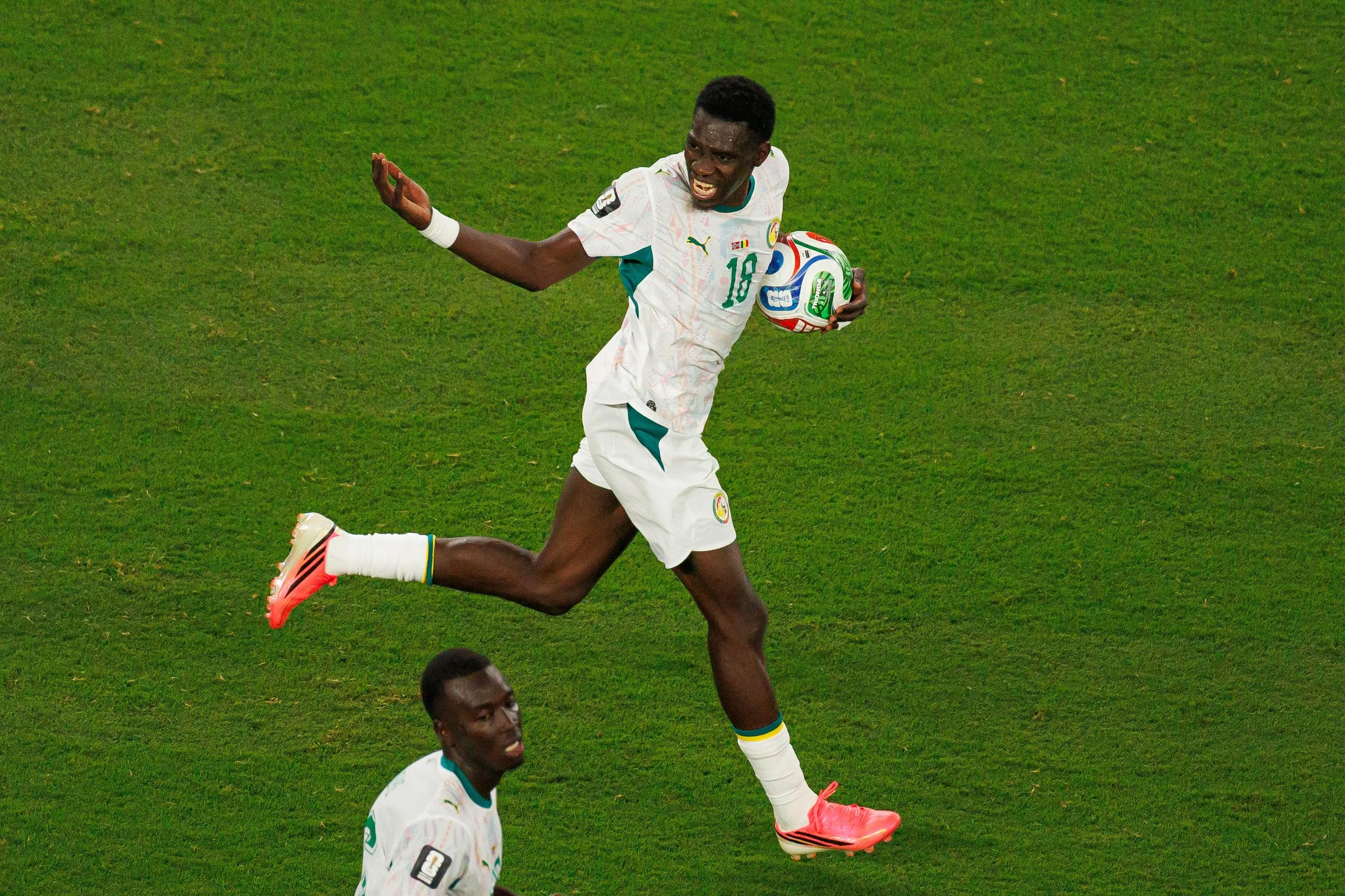
Senegal responded well and netted their first goal in the 52nd minute through a swift passing play, with Sadio Mané finding Ismaïla Sarr, who managed to bypass a defender and score past Ørjan Nyland.
However, Haaland struck again in the 57th minute, capitalizing on another mistake by Koulibaly, who struggled to control the ball. Patrick Berg set up the chance, and Haaland executed a superb volley, inching it just under the bar.
Senegal pressed for more goals late in the game, managing to score again through Sarr. Yet, their lackluster performance never matched the pre-tournament confidence that had surrounded the team. A few weeks ago, Senegal’s coach Pape Thiaw expressed his commitment to the belief that Senegal could win the World Cup. For now, he remains in charge, with a chance to advance still alive if they secure a victory against Iraq.
Thiaw also remarked that he believes Norway is currently the best European team, and they showcased impressive play at times, demonstrating not just solidity but also creativity and speed in their attacks. Norway enjoys strong support and carries no heavy expectations. Most importantly, they possess the insatiable goal-scoring talent of Haaland. Indeed, they are formidable contenders, but they are not far behind the favorites in an unusually open World Cup.