


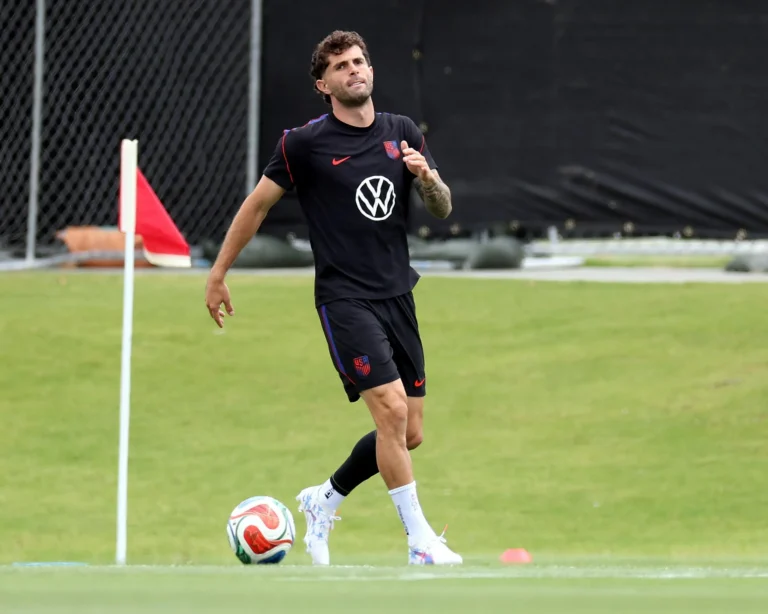
Mauricio Pochettino faces a crucial decision as the new World Cup format unfolds. After the United States’ commanding 4-1 victory over Paraguay, he opted to substitute Christian Pulisic at halftime to avoid further injury risk to his calf. Pulisic expressed optimism about his recovery, stating he has endured similar challenges in the past; however, he was seen training separately from the team on Wednesday, sporting a sleeve on his left calf.
This situation raises an important question that has been on many minds since FIFA announced the expansion of the tournament to 48 teams: how much risk will teams take with player fitness after securing an anticipated three points that could guarantee advancement to the knockout stage? Following their strong performance against Paraguay, U.S. fans are contemplating the bigger picture. However, when they take on an Australian side motivated by recent comments made about them in U.S. media, the stakes become even higher.
Pochettino’s decision to keep Pulisic sidelined during training could create a degree of uncertainty for the Australian squad, who will be preparing for a U.S. team that made a significant statement in their opener. In a tournament like the World Cup, even the smallest advantage can prove pivotal.
Given the emphatic nature of their opening win, it may be prudent for the United States to safeguard Pulisic’s health for the remaining group matches. Yet, finding a direct replacement for him is not an easy task.
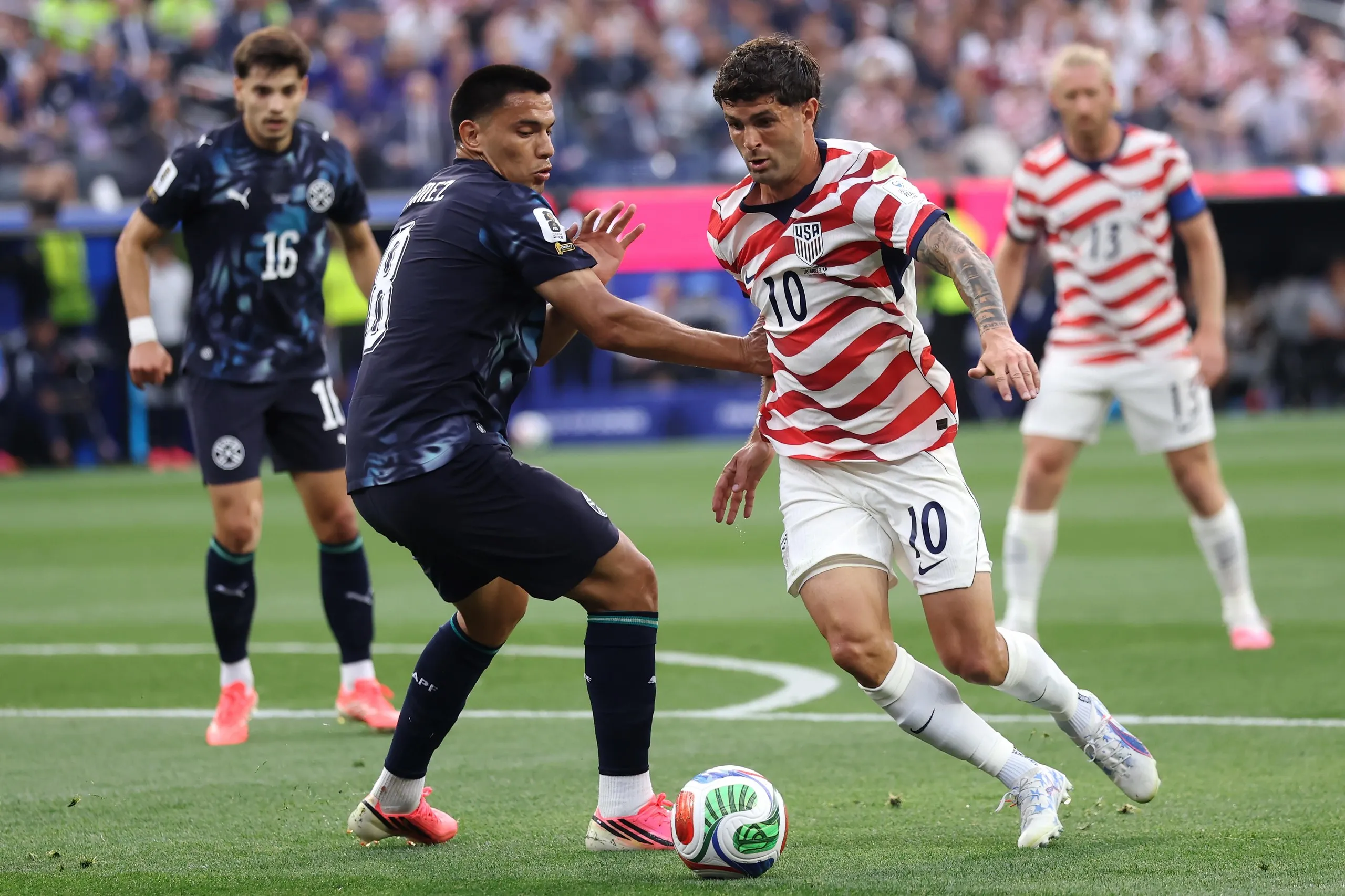
Option 1: The Rising Star with Something to Prove
Gio Reyna’s last full 60-minute appearance for club or country was on December 19, 2025. However, after his spectacular late goal against Paraguay, he could be in line for a more significant role against Australia.
Despite facing challenges in securing a regular spot at the club level, Reyna’s exceptional talent kept him in Pochettino’s plans as the coach explored alternatives in midfield. His ability to maintain possession and deliver precise passes makes him a valuable asset against tightly organized defenses.
Reyna was substituted at halftime in the friendly against Senegal, followed by brief appearances against Germany (30 minutes) and Paraguay (nine minutes). Initially expected to be a super-sub due to limited club time, Pulisic’s injury might open the door for Reyna to start against Australia.
Option 2: Tire Out the Socceroos Early
Pochettino might consider unleashing Reyna after Brenden Aaronson has worn down the Australian defense. Aaronson, who played a crucial role in Leeds’s return to the Premier League, is known for his relentless off-the-ball movement and pressing. His steady improvement in contribution is also noteworthy. However, it’s his unheralded efforts that have earned him favor with his coaches.
Nevertheless, Aaronson has not frequently featured in Pochettino’s starting lineups. He logged only 11 minutes during the March camp, 18 against Germany, and did not play against Paraguay. While his goal and assist tally for the U.S. remains low, he could create space for teammates such as Folarin Balogun and Weston McKennie while softening Australia’s defense.
Option 3: Create Width and Increase Shot Opportunities
With Balogun now a primary focus for opposing defenders, Pulisic has enjoyed increased time and space on the ball in recent matches, becoming the U.S.’s second most significant scoring threat. While Reyna’s remarkable goal against Paraguay highlighted his finishing ability, neither he nor Aaronson can match Pulisic’s scoring threat.
Tim Weah’s return to the lineup could be timely. A versatile player capable of operating along the right flank, Weah has also developed as a center-forward and can adapt to a wider attacking midfield role. The U.S. has not played the same style in consecutive matches during the Pochettino era, making it essential to mix roles to enhance team chemistry and movement.
Weah’s success in exploiting gaps in the Welsh defense during the last World Cup, where he scored the team’s first goal in Qatar, is a testament to his capabilities. This might necessitate a shift for McKennie to the left in the attacking midfield, but Weah’s inclusion could add another scoring threat.
Option 4: Reinforce the Midfield
Pulisic’s presence and McKennie’s effectiveness in a forward role have pushed Malik Tillman further back in the formation. Despite limited prior experience in central midfield, Tillman has made a strong impression, serving as a crucial link in the U.S.’s midfield. He recorded the second-most progressive passes (eight) and led the team with five entries into the opponent’s box against Paraguay, including an assist on Balogun’s second goal.
In their last encounter with Australia, none of the attacking midfielders mentioned contributed assists, as Cristian Roldan provided Haji Wright with two. Pochettino has shown increasing trust in Sebastian Berhalter to break through defensive lines. Additionally, as the team’s dead-ball specialist, Berhalter’s role could be significant, especially since Pulisic occasionally takes set-pieces.
In this scenario, Tillman and McKennie could partner in an advanced midfield role, while either Berhalter or Roldan could support Tyler Adams in central midfield. Given the potential for a tightly contested match, that extra midfield strength could be vital to maintaining control.