


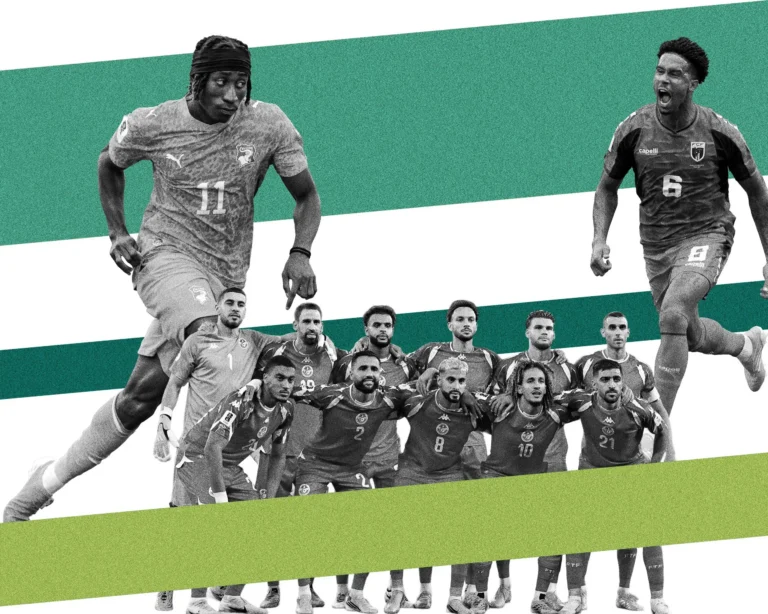
On Monday evening at New York New Jersey Stadium, Senegal will take on Norway in a match that is pivotal not only for qualification from Group I but also for assessing African teams’ performances in this World Cup. While it’s unjust to undervalue Senegal’s capabilities—who may yet be recognized as the reigning African champions by the Court of Arbitration for Sport—there exists a pressing need for a standout showing from Africa.
The expansion of the World Cup has notably favored Africa, with five of the 32 slots (16% of the total) allocated to the Confederation of African Football (Caf) during the 2022 tournament. This year, out of 48 available slots, nine were automatically given to Caf, alongside a tenth secured when DR Congo triumphed over Jamaica in an interconfederational playoff in March. Caf has long advocated for increased representation, arguing that it was inequitable to have only five slots for its 54 member nations, especially when Conmebol, the South American confederation, had four slots plus a playoff for its 10 members (21% of the total). Critics pointed out that while Conmebol teams had won the World Cup nine times, Caf teams had only reached the quarter-finals three times. By the end of the last World Cup, Conmebol’s count had risen to 10 victories, while Caf celebrated its first semi-finalist.
Caf’s rationale has consistently been that more teams at the finals would enhance their chances to showcase their talent, reducing the likelihood that African contenders would be derailed by injuries, poor form, or unfortunate circumstances. To substantiate Caf’s additional slots, it is essential that at least five of its teams advance to the knockout stage. How has this strategy unfolded thus far?
Mixed Results for African Teams
Beginning with the negatives, Tunisia has struggled significantly, hampered by poor leadership. The team dismissed manager Sabri Lamouchi following a 5-1 defeat to Sweden and subsequently suffered a 4-0 loss to Japan under Hervé Renard, marking their seventh managerial change since the qualification process began. South Africa, on the other hand, perplexingly opted for a defensive formation in their opening match, attempted an unfamiliar style of play, and were decisively defeated by Mexico. A late penalty salvaged a fortunate draw against Czechia, but they still have a chance to progress if they can defeat South Korea in their final group match. However, South Africa’s passive approach is not only detrimental; it feels like a departure from the progressive football that previously defined their play under Hugo Broos.
Algeria’s defensive vulnerabilities, previously highlighted by Nigeria in the Africa Cup of Nations quarter-finals, were again exposed in a 3-0 defeat to Argentina. If they struggle to contend with Akor Adams, their chances against Lionel Messi appear slim. The upcoming match against Jordan presents a crucial opportunity for Algeria to regain stability and confidence.
Positive Moments Amid Challenges
On a brighter note, both Morocco and Côte d’Ivoire have shown potential. Each team took the lead against a former World Cup champion but failed to capitalize on their advantage. Morocco dominated Brazil for significant periods before the first-half hydration break and deserved more than the lone goal they managed. Their 1-0 victory over Scotland similarly suggested that they could have scored additional goals.
Côte d’Ivoire held their own against Germany for the first hour of an entertaining match, even taking the lead. They employed a deep defensive strategy and launched counterattacks led by Amad Diallo and Yan Diomande. This was not merely a case of an underdog trying to survive; it was a competitive contest between two evenly matched teams. Ultimately, Germany’s depth proved decisive, resulting in a victory through two goals from substitute Deniz Undav.
Senegal may find themselves reflecting on a similar narrative following their encounter with France. While the 3-1 loss did not carry shame, they held the reigning champions comfortably in the first half before fading in the final quarter. This pattern of African teams losing steam late in games is disturbingly familiar and may indicate a lack of depth compared to the world’s elite.
Perhaps this trend stems from tactical deficiencies, psychological barriers, or a lingering doubt about defeating the European and South American powerhouses.
In contrast, Ghana defied expectations with a last-minute victory over Panama. Although they did not deliver an exceptional performance, their resilience and determination were clear. Carlos Queiroz’s former team, Egypt, also demonstrated their strength by overcoming New Zealand in the second half, having previously failed to maintain a lead against Belgium, and now finds themselves at the top of Group G.
Outlook for Remaining Matches
Other teams have more modest aspirations. The two lesser-known African teams, Cape Verde and DR Congo, have both put in commendable performances. DR Congo managed to respond well after falling behind early against Portugal, equalizing and holding their esteemed opponents at bay. The challenge remains whether they can replicate this level of performance against Colombia and Uzbekistan. Cape Verde, after holding Spain, engaged in a thrilling draw against Uruguay.
This brings us to the current standings: Egypt, Morocco, and Côte d’Ivoire appear poised to advance. Ghana stands a good chance, while Cape Verde and DR Congo have surpassed expectations. Algeria must secure a result in their next match, Senegal could be hindered by a tough draw, South Africa retains a slim hope, and Tunisia’s campaign is effectively over.
Ultimately, the total number of teams advancing is likely to hover around the five or six needed to justify the increase in representation. The next step for these teams is to transform leads against formidable opponents into victories.
- This is an extract from Soccer Desk: World Cup edition, a newsletter from the Guardian US that will run regularly during the tournament. Subscribe for free here.