


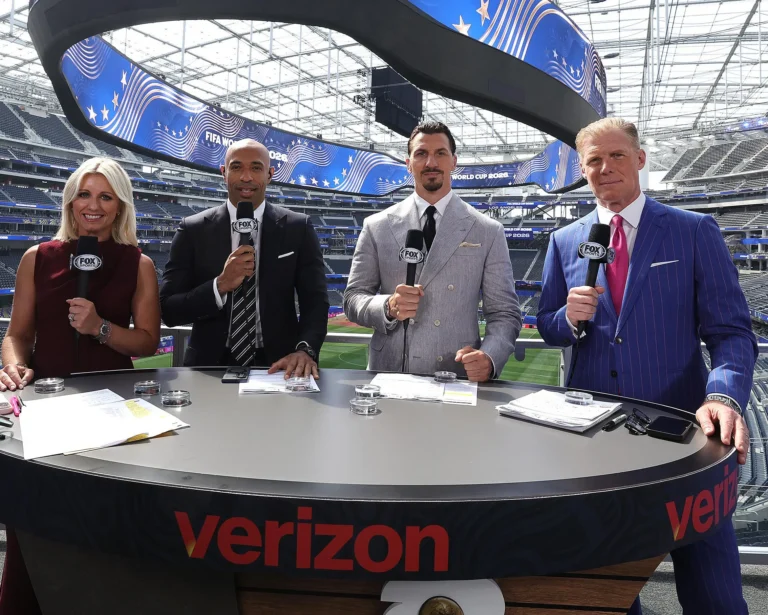
Many can relate to the persona of Alexi Lalas. He embodies the loudmouth who often fails to articulate anything meaningful, the center of attention at a gathering that few wish to attend, and the larger-than-life character who routinely misreads the atmosphere. He represents corporate America’s idea of a fun-loving individual, the kind of colleague whose hangover from a business trip never prevents him from being the first in line at the hotel breakfast buffet, hair still damp, and shirt untucked. He would undoubtedly shine at karaoke during a conference focused on infrastructure finance. If this defined Alexi Lalas’s influence, our culture might remain blissfully unaware of him. However, the reality is that Alexi Lalas stands as American soccer’s most prominent media figure, and he is omnipresent during this World Cup.
As Lalas’s familiar visage appeared on Fox at the tournament’s outset, many viewers likely experienced a sense of dread reminiscent of the Grand Theft Auto meme: “Ah shit, here we go again.” Lalas’s recurring presence at every World Cup feels akin to a prolonged conflict—unwanted and widely disliked, it inevitably devolves into a tedious effort at damage control. Yet, there was a flicker of hope this time around: Fox enlisted two elite European strikers, Thierry Henry and Zlatan Ibrahimović, aiming to challenge Lalas and inject some excitement into the proceedings. Guided by Rebecca Lowe, this revamped panel has promised a more nuanced take on the tournament compared to the brashness that characterized Fox’s coverage in the previous two World Cups.
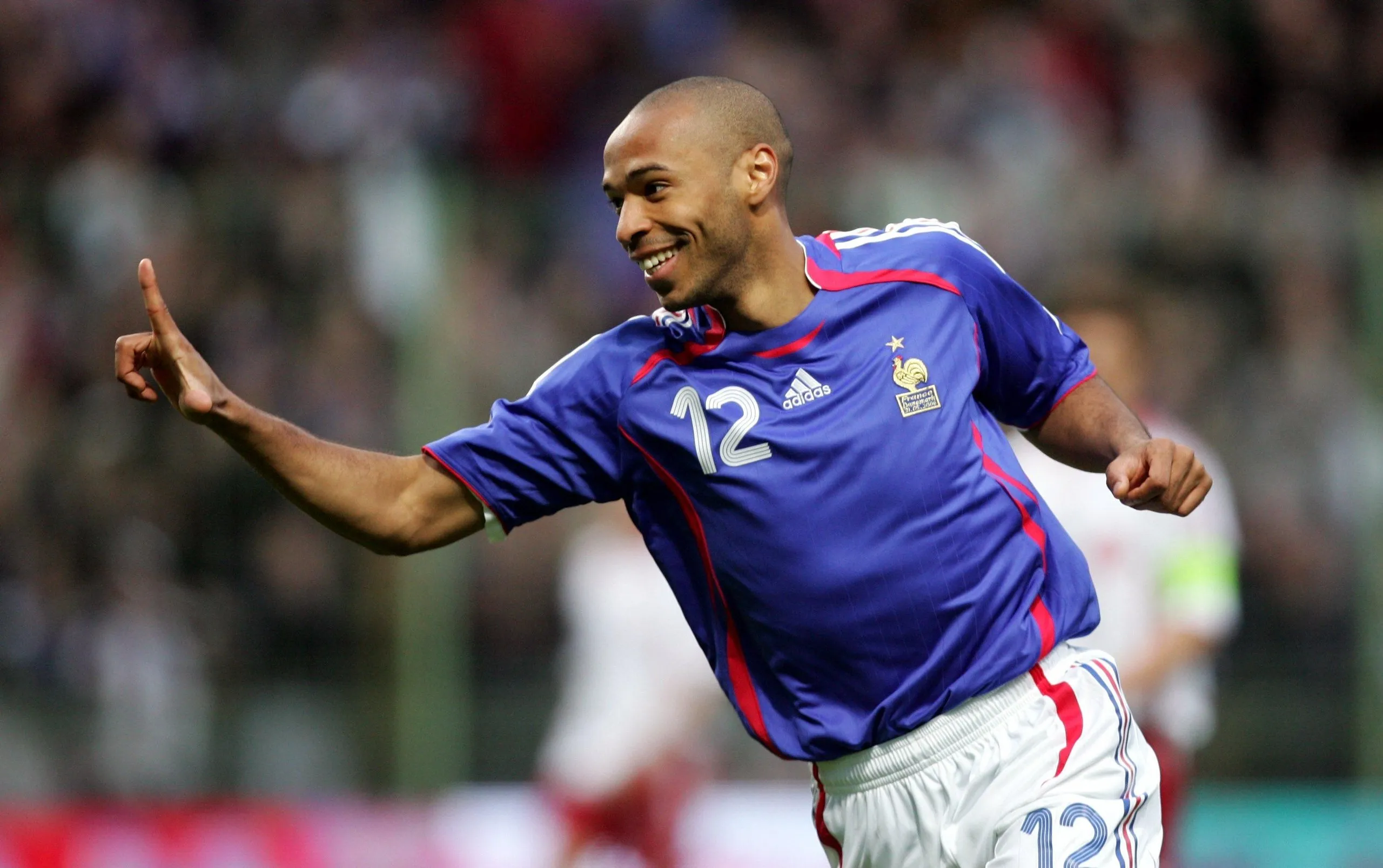
While Zlatan has proven lackluster, akin to a disinterested pundit, Thierry Henry has been nothing short of exceptional, a fact that comes as no surprise to those who follow his analysis during the Champions League season on CBS. He has already begun to cast a spell over the panel’s most boisterous member. Matches such as Brazil vs. Morocco, Netherlands vs. Japan, and France vs. Senegal have their highlights, yet none can rival the tension and drama of the on-set showdown between Henry and Lalas. This is the true spectacle of this World Cup.
Henry’s viral moment recently occurred during a studio kickaround segment, where he showcased his skills by effortlessly passing the ball with one foot while pulling it away from Lalas with the other, leaving the defender, who has 96 caps for the United States, flailing. This display was nothing short of humiliating, and the ensuing debates have felt like a slow-motion dismantling of Lalas. Fortunately, this matchup still has several weeks left to unfold.
In stark contrast to the tiresome camaraderie and excessive chatter that often pervades American television, Henry possesses a refreshingly unimpressed demeanor, characterized by raised eyebrows, exaggerated double takes, and subtle shrugs. Beyond his rehearsed expressions, he exhibits a quick wit and a sharp intellect. Whenever Henry is on screen, viewers can anticipate insightful commentary, references to tactical history, and memorable facial expressions. Conversely, Lalas brings a unique blend of irritating contrarianism, relentless nationalism, and a blunt insistence on America’s dominance in the sport.
While Lalas had a respectable playing career, he clearly does not belong in the same conversation as Henry, who is widely regarded as one of the greatest footballers in Premier League history. This significant disparity in experience has become increasingly evident as the tournament progresses, with Lalas retreating into silence whenever Henry shares his extensive footballing background. When Henry reminisces about playing alongside Messi or swapping jerseys with Ronaldo Nazário at the World Cup, what can Lalas contribute? Perhaps a memory of coming on as a substitute in a friendly against Scotland in 1998 or helping the Kansas City Wizards finish at the bottom of the MLS Western Conference in 1999? Did Lalas enjoy a distinguished career? No. Does he do the necessary research to compensate for his relative shortcomings in discussions with legends like Henry and Zlatan? Also no. But is he charming, humorous, or charismatic in front of the camera? Not particularly.
If Clint Dempsey represents the soccer version of the American dream—rising from a trailer park to become arguably the greatest player in USMNT history—Lalas might symbolize the American nightmare: a figure who burst into the national consciousness in 1994 with his flamboyant style has now become a source of ridicule. Once, he charmed audiences with his musical talents and quirky persona; now he finds himself on social media defending commercials during halftime breaks and tweeting at obscure accounts to proclaim his “offers something different” in calling the sport soccer instead of football (for the record: WHO CARES?).
In contrast, Henry brings a distinctive flair to his commentary, with his expressive vowel sounds and emphasized delivery adding a touch of European elegance. Among his many strengths as a broadcaster is his understanding that impactful communication does not always require shouting. While Lalas often spews nonsensical statements at full volume, Henry embodies a calm sophistication. As Lalas states the obvious, such as, “We need Christian Pulisic to step up!”, Henry remains a model of composed analysis, highlighting the contrast between their styles as the essence of their rivalry.
Throughout the tournament’s initial days, it has often felt as if Lalas’s co-panelists are compelled to feign interest in his commentary, a burden evident in their strained nods and forced laughter at his trademark antics. Lalas has provided an array of rants, improvised tunes, and climaxes leading nowhere, but his colleagues have dutifully played along to maintain the facade that he is engaging and insightful.
During a halftime recap of France vs. Senegal, Lalas referred to the French team as “Sarr! Over the bar! Hit it far!” a mispronunciation that inadvertently highlighted the very quality he aimed to criticize. He specifically pointed out the defending during a crucial moment for Senegal, where Ismaïla Sarr shot over the crossbar. Lalas exclaimed, “America wants to celebrate America and this team is giving America a reason to celebrate America, and man oh man Rob Stone, ain’t that America?”—a phrase that drew polite smiles from Lowe and Ibrahimović. In contrast, Henry laughed and shook his head, repeating “Sarr over the bar” as if commending a child’s successful attempt at rhyming. The brilliance of Henry’s performance throughout this TV showdown lies in how his Gallic nonchalance allows him to express disdain for Lalas while maintaining plausible deniability. Is Henry being unkind, or is he simply being French?
Zlatan has also shown his share of disdain for Lalas, but he lacks Henry’s finesse and variety in making Lalas appear foolish. The Frenchman is open to learning and researching players and countries he is unfamiliar with, while Lalas seems to believe he does not need to put in any effort simply because he is American, and America, baby, is No. 1. Ahead of the USA vs. Australia match on Friday, Henry provided an insightful defense of counterattacking strategies and a surprisingly detailed analysis of Socceroos midfielders Connor Metcalfe and Paul Okon-Engstler—two players that many, including Americans, likely knew little about prior to the tournament.
Meanwhile, in Seattle, with a throng of American fans cheering him on, Lalas mispronounced Socceroos defender Alessandro Circati as “Cicada.” Once that faux pas was behind him, he returned to his usual rhetoric: “America wants to celebrate America, and this team is giving America a reason to celebrate America. And man oh man, Rob Stone, ain’t that America?”
Lalas’s brand of over-the-top commentary is typical of sports cable networks, but it feels out of place in soccer, a sport that demands a level of analytical humility due to its global nature. This approach clashes with the sport’s cultural dynamics in the U.S., where soccer is largely embraced by migrants, urban liberals, and those who do not fit into the traditional American sports mold. The stark contrast between soccer’s reality in America and the brash nationalism of Fox’s World Cup coverage is epitomized by Lalas. While USMNT players engage in thoughtful discussions about topics like Juneteenth, Lalas, a vocal Trump supporter, promotes the Department of Homeland Security. It is hard to reconcile turning someone as divisive and off-putting as Lalas into the face of American soccer, akin to hiring John Wayne Gacy for a children’s birthday party.
Yet, Fox has unintentionally provided American viewers with a living example of how much better their soccer coverage could be by allowing Henry to shine while minimizing Lalas’s spotlight.
If the trajectory of American soccer, including its televised format, continues to improve, the sport may eventually outgrow Lalas. In the future, his style of commentary might be seen as a relic of a less sophisticated time, akin to a form of football minstrelsy. Perhaps the embarrassment associated with Lalas will become so profound that he will be erased from the historical records of this tournament, much like a purged official in Stalinist Russia, leaving behind only a blank screen with Carli Lloyd’s voice saying, “right on.” It’s a hopeful dream.
For now, we are treated to the satisfying spectacle of a footballing aristocrat gracing the set each day of the World Cup, skillfully outmaneuvering Fox’s resident jester.