


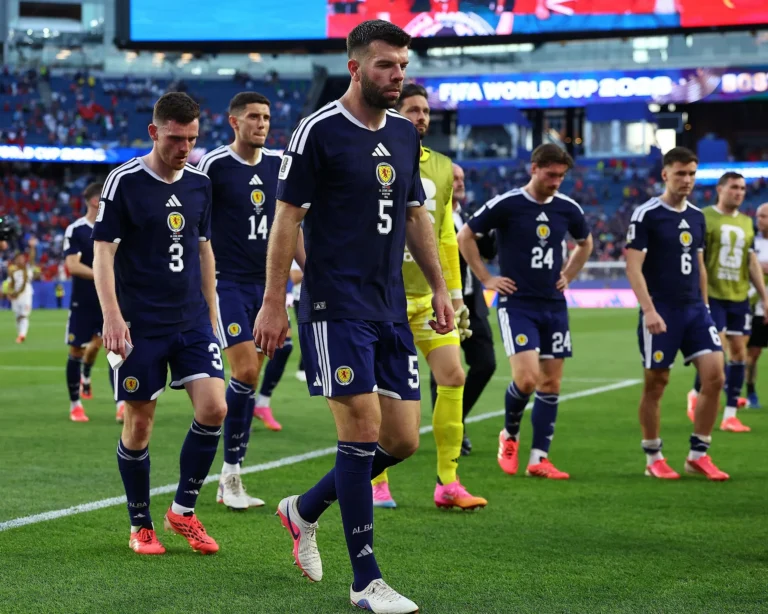
The permutations that Scotland’s manager, Steve Clarke, is eager to avoid have taken center stage for the Tartan Army. Just two minutes into their match against Morocco, Ismael Saibari’s goal heightened the stakes for Scotland, who found themselves struggling in Boston.
However, Scotland’s performance took a turn for the better. Despite Morocco’s early lead, the Scottish side managed to hold their ground, limiting the North African team’s chances for the remainder of the first half. They showed marked improvement after halftime, gaining more control over the game. The 1-0 defeat left their goal difference at zero, a slight relief compared to an early elimination scenario, especially with Brazil looming ahead.
Scotland stands at a pivotal moment. If they can avoid a heavy defeat against Brazil—the Morocco match demonstrated this is possible—they will still have a reasonable chance to advance to the last 32 of the tournament. Yet, the uncertainty surrounding the outcomes remains; many matches are still to unfold, and Group B poses challenges for Scotland. A win for Bosnia and Herzegovina against Qatar could propel three teams to at least four points, complicating Scotland’s path. Moreover, Group D features Australia and Paraguay, both already with three points, vying for crucial points in their final match. Clarke is understandably reluctant to dwell on potential scenarios for qualification.
“They will want to win the game. If they can’t win the game, they don’t want to lose it.” Clarke responded when questioned about how the group standings affect his squad’s mindset. “It took him a little bit of time to get into the game. Once he gets in there, you know Ben is going to give you unpredictability at that end of the pitch. He gives us a threat that is different. Ben does something different, we know that. Brazil is a different game and probably a different approach.”
However, there is a larger issue at play that cannot be overlooked. If Scotland manages to progress from Group C, it would largely be thanks to their narrow win over Haiti. This victory marked only their fourth goal in eight finals appearances under Clarke, with two goals resulting from deflections and one merely a consolation during a heavy defeat to Germany. At this elite level, Scotland appears painfully short of transformative talent. In contrast, the technical prowess of attacking players from similarly sized countries, like Norway, far exceeds what Clarke has available. While there is no denying the team’s commendable attitude and success after years of underperformance, they remain a limited side and often a challenging watch.
Should Scotland qualify for the last 32, it would be a significant achievement. However, comparing the current squad with historical teams, like that of 1974, would be absurd. Scottish fans bring vibrancy to tournament football, but the team’s performance has been less inspiring.
This predicament is a Scottish football issue rather than a problem solely for Clarke. It calls for immediate action, particularly by incentivizing clubs to nurture homegrown talent. This marks Scotland’s third tournament qualification in four attempts, yet the average age of the starting XI against Morocco was closer to 30 than 29. Clarke has committed to another four years with the aim of cultivating a new generation of players, a challenge that seems daunting. Tyler Fletcher, touted as a potential star, has spent as much time in the Scottish domestic league as he has in space.
Clarke, along with the Scottish Football Association and the Scottish Professional Football League, must adopt a collaborative approach to elevate standards significantly. The World Cup has highlighted these issues. During the current transfer window, Premiership clubs are likely to welcome players who are not competitive, further limiting opportunities for emerging Scottish talent.
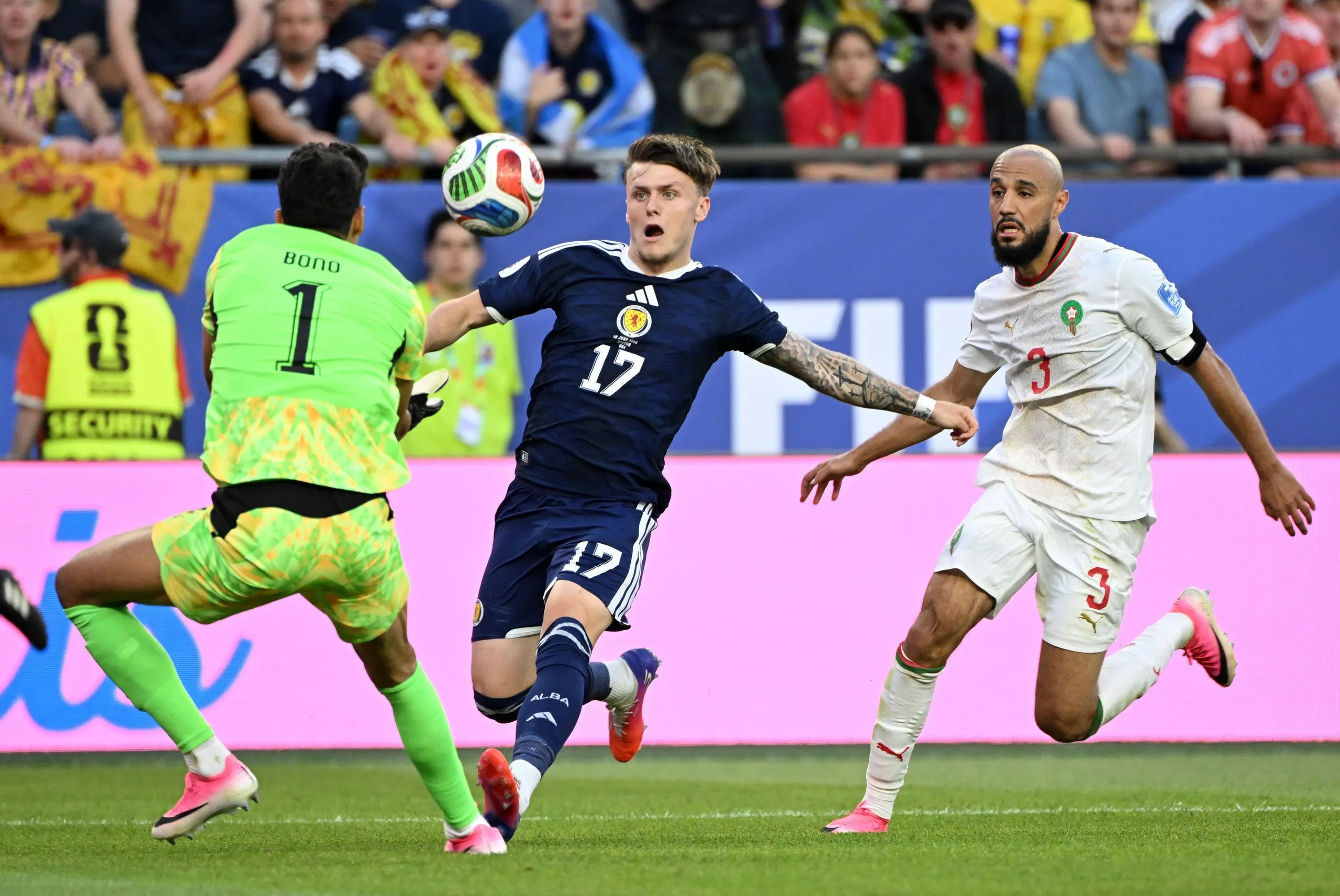
Ben Gannon-Doak is a beacon of hope amid these challenges. Clarke tends to downplay the hype surrounding the Bournemouth player, which is understandable from a managerial perspective. At just 20 years old, Gannon-Doak has limited club experience, yet the anticipation from fans is palpable as they yearn for a standout player.
“He is a terrific player,” Clarke remarked after Gannon-Doak’s impactful substitution against Morocco. “It took him a little bit of time to get into the game. Once he gets in there, you know Ben is going to give you unpredictability at that end of the pitch. He gives us a threat that is different. Ben does something different, we know that. Brazil is a different game and probably a different approach.”
This situation may not require overthinking. Nations with limited resources often select a player like Gannon-Doak for his pace and directness. Scotland, in need of players who can make a difference, should not hesitate to turn to him. By giving Gannon-Doak a chance, Clarke can address one criticism—that he lacks ambition.
Scotland expressed their grievances after the Morocco match, believing that John McGinn and Scott McTominay were denied penalties. While Clarke refrained from a full-blown outburst, he suggested that Morocco should have faced a red card. The absence of video assistant referees during matches appears to be a deliberate, yet welcome, decision in this World Cup, but it did not favor Scotland in this instance. It is worth noting that a penalty was also not awarded against Grant Hanley for handball in the Haiti match.
Scotland had previously exited Euro 2024 amid strong objections due to a referee’s failure to award a penalty in their final group match against Hungary. This sense of injustice feels familiar. The nation faces broader footballing issues that, upon even cursory examination, hold greater significance than any officiating errors.
Scotland’s future in the tournament rests firmly in their own hands. A draw against Brazil would likely secure their place in the knockout phase, while a loss would introduce uncontrollable variables into the equation.