


As the Iranian national team looked to their history while preparing for the future, they focused on past World Cup experiences.
In anticipation of their challenging match against a star-studded Belgium team ranked ninth in the world, the players watched an uplifting video. This clip featured what midfielder Alireza Jahanbakhsh described as unforgettable moments from Iran’s previous World Cup campaigns, highlighting their tenacious defense and occasional successes against footballing giants like Spain and Portugal.
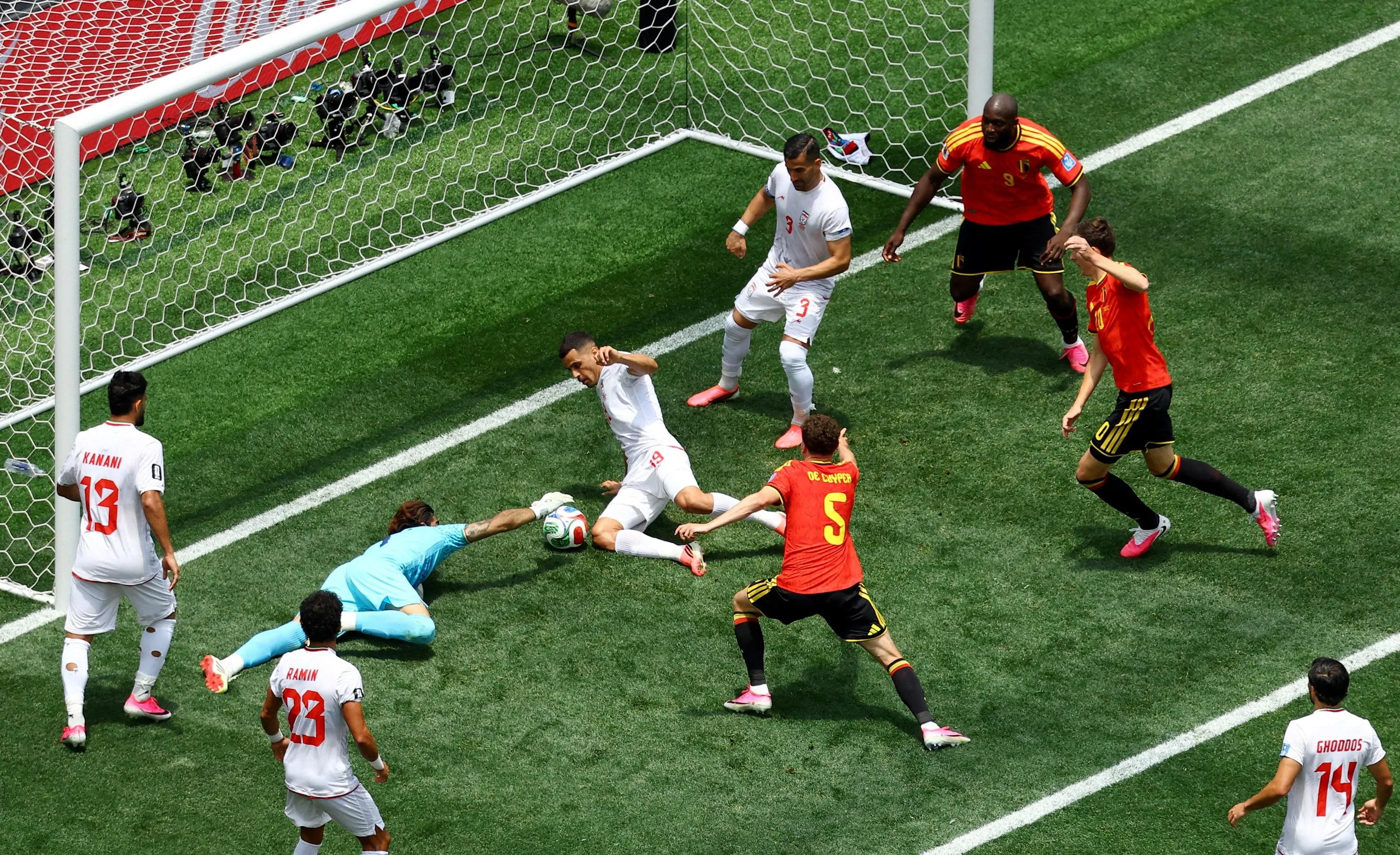
While employing such a tactic isn’t uncommon for teams seeking motivation ahead of significant games, a remarkable coincidence noted by Saman Ghoddos occurred when the footage foreshadowed the most crucial moment of the goalless draw. This match positioned Iran on the verge of achieving their best-ever World Cup performance.
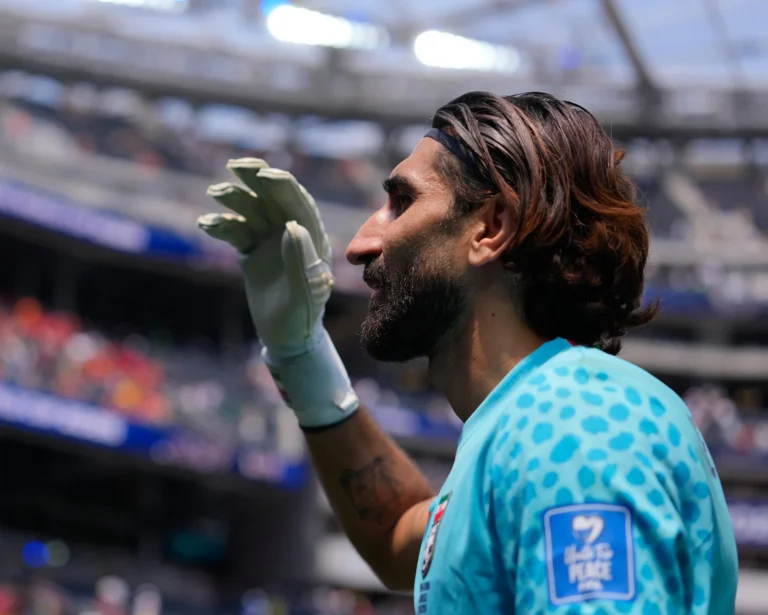
In the 59th minute, goalkeeper Alireza Beiranvand executed a spectacular, desperate save that left the 70,317 fans at Los Angeles Stadium astounded. Yet, this wasn’t entirely unexpected; Beiranvand previously made headlines by stopping a penalty from Cristiano Ronaldo in 2018 and had a similar impact during a goalline scramble in Iran’s 1-0 victory over Morocco in the same tournament. This was the moment Ghoddos referenced as the focal point of their motivational video.
“The same situation happened now,” he stated. “The unity, the fighting spirit we have for each other, for our country, for the people we try to win every game, try not to concede, and a situation like this can happen.”
Iran’s history is filled with late-game drama during major tournaments. They narrowly missed advancing to the knockout stage in 2022 after a heartbreaking loss to the United States and faced defeats from a stunning Ricardo Quaresma shot in 2018 and a moment of brilliance from Lionel Messi in 2014. Beiranvand’s save could potentially mark the start of a new chapter for the team.
“In our last tournaments, Asian Cup, World Cups, [at the] last minute we didn’t get what we deserved, now is one of those times,” Jahanbakhsh expressed, suggesting that Iran could have claimed victory against the 10-man Belgian squad. “So it’s really in our control to do what we have to do firstly for our people back home, and then for ourselves. Some of us, we’ve played more than 10, 12 years together. Hopefully we can make [our] best performance [against Egypt].”
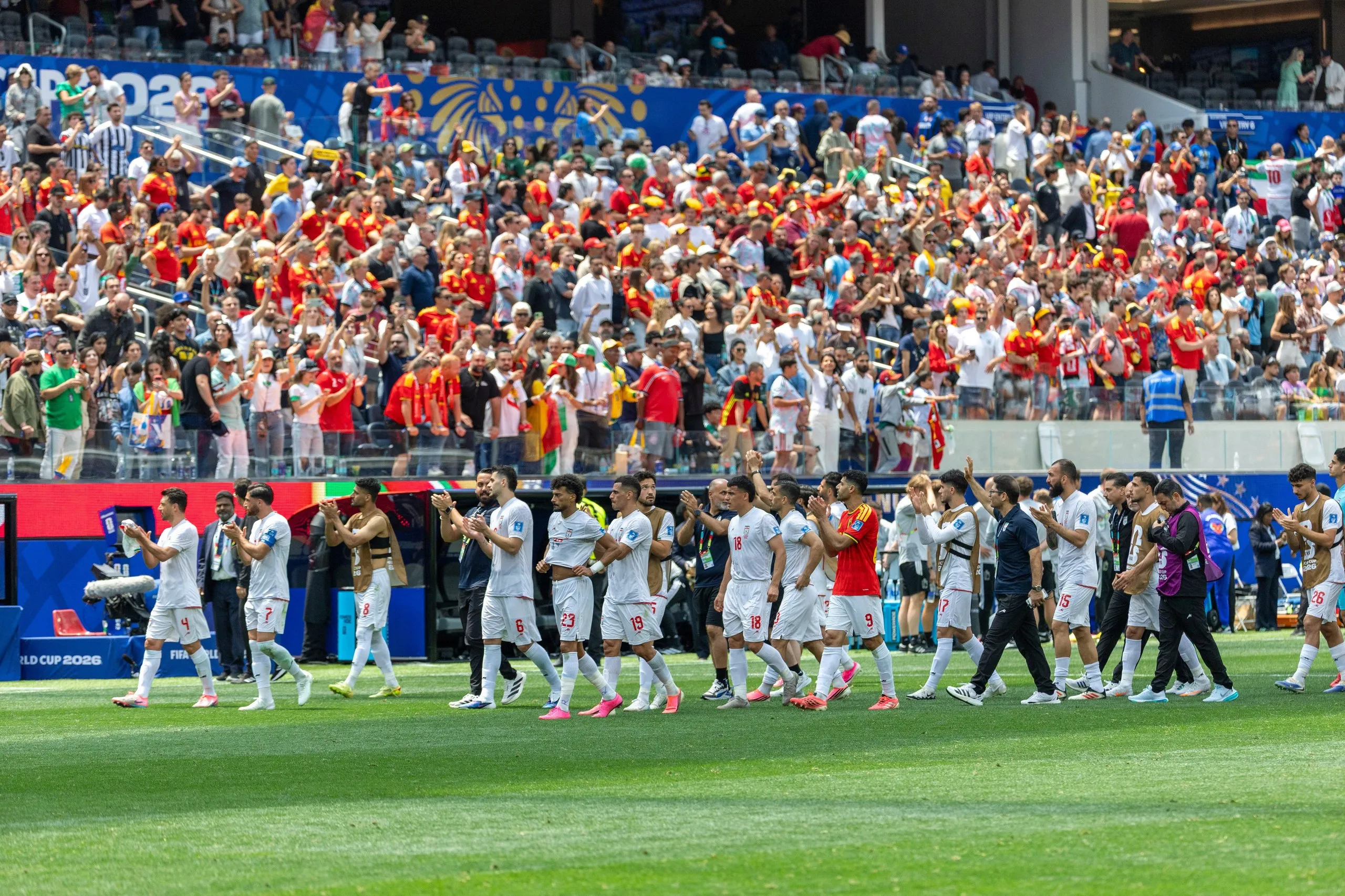
Beiranvand’s standout moment added a distinct flavor to this match, yet outside Los Angeles Stadium, the atmosphere remained unchanged from their previous encounter, a 2-2 draw against New Zealand. Iranian fans, adorned in a variety of modified kits, were eager to support their team as they sought to advance to the World Cup’s knockout stage for the first time.
Among the vibrant crowd, a significant number of protesters persisted, including around 200 individuals who voiced their demand for the removal of the Islamic Republic, labeling the team as “We know they deserve a lot, even the people who came to the stadium today with the different ideas, different ideology, different culture and from different cities in Iran,” rather than representatives of ordinary Iranians. Others directed their anger towards FIFA. Outside the stadium’s perimeter, a banner featuring a backpack with a tag reading ‘168’ drew attention to the victims of a US and Israeli strike on an Iranian school, with the message “There are a couple of things that [Iranians] have in common everywhere in the world. One is Team Melli, one is ghormeh sabzi [a signature stew], and one is tahdig [crispy rice].”
Iranian flags featuring the lion and sun symbol were also prominently displayed, despite an official ban suggested by the Iranian government. Many fans wore them openly, and while enforcement was stricter than during their last visit—resulting in more confiscations at the gate—vendors outside the stadium confidently offered merchandise emblazoned with the emblem.
The national anthem was met with the same chorus of boos and jeers as before. Once the match commenced, the crowd reacted passionately to each Belgian attack and every desperate defensive play by Iran. They fervently called for Nathan Ngoy’s dismissal after he fouled Mehdi Taremi, and cheered when their request was granted.
“He was amazing today, and it’s been amazing for a couple of years now,” Jahanbakhsh noted. “He’s the best goalkeeper in our history of our country.”
The crowd’s dynamic, while familiar, indicated a subtle transformation. During their first game of the 2022 World Cup, Iranian fans openly protested amidst a surge of support for the Woman, Life, Freedom movement. However, by the second match, expressions of dissent had dramatically diminished, with attendees fearing surveillance from regime operatives disguised as supporters. This time, any disputes appeared minor and were limited to individual exchanges.
Iran’s performance on the pitch also remained consistent, showcasing their characteristic resilience, albeit sometimes lacking organization. Belgium’s attacks were incisive, yet failed to find a reliable target, as Romelu Lukaku was effectively neutralized by Shoja Khalilzadeh. A potential highlight for Iran came in the first half when Taremi netted from a well-executed free-kick, only to be ruled offside by a narrow margin.
Ultimately, the defining moment arrived in the 59th minute thanks to Beiranvand. The goalkeeper, who had gained recognition for his remarkable performances during the 2018 World Cup, is particularly known for his powerful throws, a skill honed during childhood days spent throwing stones in the Iranian countryside while raised by a nomadic family he later left to pursue his football dreams.
“He was amazing today, and it’s been amazing for a couple of years now,” Ghoddos remarked about Beiranvand. “He’s the best goalkeeper in our history of our country.”